
Isaiah 21:13-17 is about the impending judgment and destruction that will come upon the nations, symbolized by a vision of the fall of Babylon and Edom, as a warning to all who rebel against God.
13 The oracle concerning Arabia. In the thickets in Arabia you will lodge, O caravans of Dedanites.
14 To the thirsty bring water;
meet the fugitive with bread,
O inhabitants of the land of Tema.
15 For they have fled from the swords, from the drawn sword, from the bent bow, and from the press of battle.
16 For thus the Lord said to me, “Within a year, according to the years of a hired worker, all the glory of Kedar will come to an end.
17 and he who is bowing down, the keeper of the tent.
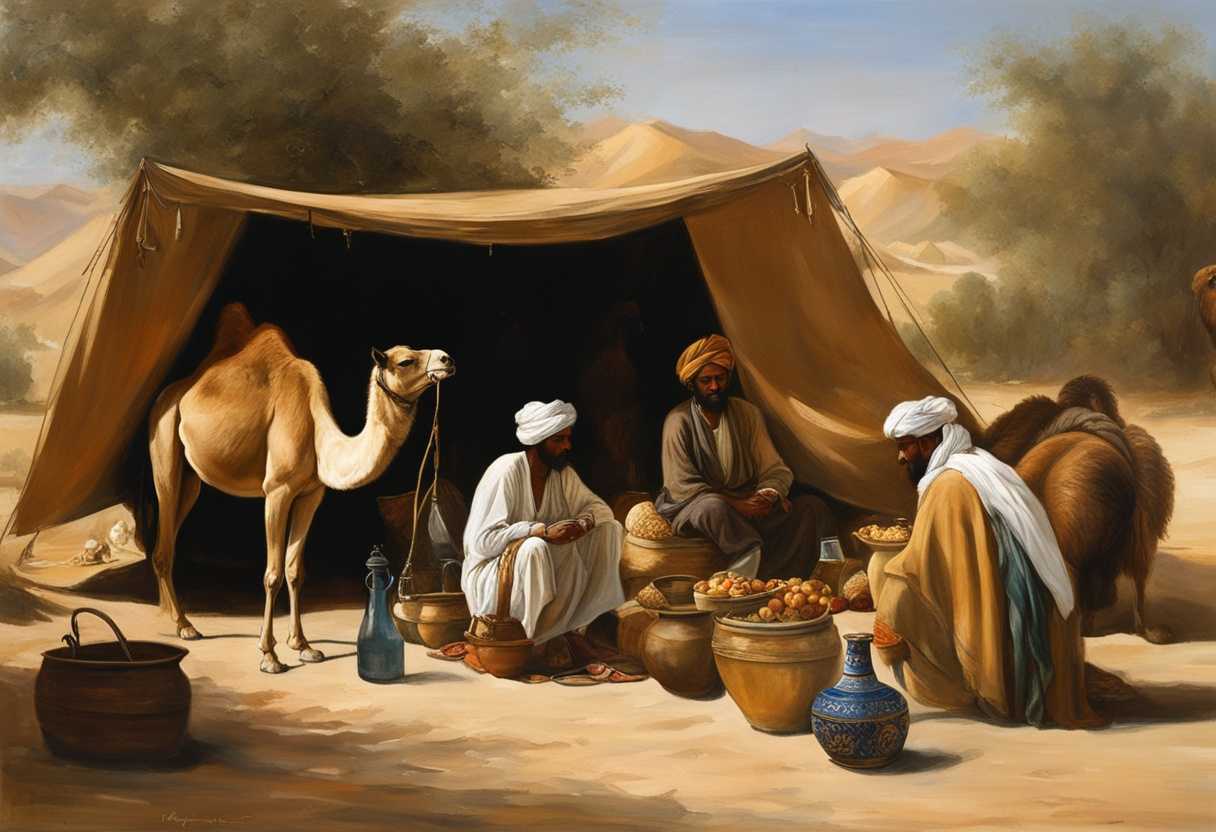
Setting the Scene for Isaiah 21:13-17
In Isaiah 21:13-17, the prophet Isaiah paints a vivid picture of a watchman stationed in the desert, keeping a lookout for any signs of danger or approaching armies. The scene is set in the vast and barren wilderness, with the watchman positioned strategically on a high watchtower made of rough-hewn stones. The watchman is on high alert, scanning the horizon for any signs of movement or disturbance.
As the watchman diligently fulfills his duty, he spots a chariot with a team of horses approaching. The watchman observes closely and notices that the chariot is carrying a message of great importance. The watchman then calls out to his fellow watchmen, urging them to pay attention and be prepared for what is to come.
The watchman’s role in this scene symbolizes the need for spiritual vigilance and readiness in the face of impending challenges or trials. The desert setting and the watchman’s solitary vigil create a sense of tension and anticipation, underscoring the importance of staying alert and watchful in the midst of uncertainty.
What is Isaiah 21:13-17 about?
Isaiah in this verse predicts the downfall of Babylon and the destruction of its idols. Babylon was a powerful and wealthy city known for its luxurious lifestyle, but it had also turned away from God and embraced idol worship. Through this prophecy, Isaiah is warning the people of Babylon of the consequences of their actions and the impending judgment they will face.
Have you ever encountered a situation where someone or something seemed powerful and unshakeable, but deep down you knew that their foundation was built on falsehoods? Just like Babylon, sometimes we are faced with the reality that material wealth, power, and idol worship cannot protect us from the ultimate judgment and consequences of our actions. This verse serves as a powerful reminder of the importance of staying true to our faith and values, even in the face of worldly temptations. As we reflect on this prophecy, let us consider the idols in our own lives that may be leading us astray. Are there things or beliefs that we have elevated above our relationship with God? Let us prioritize our spiritual well-being above all else and take heed of Isaiah’s warning to Babylon. We should strive to build our foundation on faith, love, and righteousness, knowing that our unwavering connection to the divine provides true strength and protection.
Understanding what Isaiah 21:13-17 really means
Isaiah 21:13-17 delves into a prophecy concerning Arabia, amidst the backdrop of the Assyrian empire’s expansion threatening smaller nations. The phrase “Burden upon Arabia” signifies a weighty message of judgment for the region, hinting at challenging times ahead. The imagery of lodging in the forest in Arabia suggests displacement and hardship, painting a picture of turmoil and uncertainty. Even the nomadic tribes of Dedan, symbolized by “O ye travelling companies of Dedanim,” are not exempt from the impending difficulties, emphasizing the widespread impact of the prophecy.
Moreover, the mention of the inhabitants of Tema providing water to the thirsty showcases acts of kindness and hospitality in the face of adversity. This gesture highlights the importance of compassion and generosity, even in times of distress and impending judgment. The specific timeframe given for the fulfillment of the prophecy, “Within a year, according to the years of an hireling, and all the glory of Kedar shall fail,” underscores the precision and reliability of God’s word, demonstrating His sovereignty over history and events.
Drawing parallels with related biblical passages such as Jeremiah 49:28-33 and Psalm 120:5-7 reinforces the theme of judgment against Arabian tribes and the distress caused by hostile environments. Genesis 25:13-15 provides a genealogical background, linking the descendants of Ishmael, including Kedar, to the tribes mentioned in Isaiah. These connections deepen the understanding of the historical and cultural context surrounding the prophecy against Arabia.
In a contemporary context, Isaiah 21:13-17 serves as a poignant reminder of the fleeting nature of human power and the certainty of divine judgment. It prompts reflection on the importance of extending kindness and hospitality to others, mirroring the actions of the inhabitants of Tema. Just as a community coming together in the face of a disaster exemplifies solidarity and compassion, this passage encourages readers to exhibit empathy and support towards one another, even amidst challenging circumstances.
In conclusion, Isaiah 21:13-17 encapsulates profound truths about the nature of human existence, the inevitability of divine judgment, and the significance of showing compassion and hospitality. It calls individuals to trust in God’s sovereignty, to embody kindness towards others, and to recognize the enduring impact of acts of goodwill, even in times of uncertainty and upheaval.
What is my response to the coming judgment?
The response to the coming judgment should be one of readiness and vigilance. The impending judgment is a call for people to prepare themselves spiritually and to be aware of the consequences of their actions. It is a warning to take heed of the signs and to turn towards righteousness.
The coming judgment signifies a reckoning for one’s deeds, a time when each individual will be held accountable for their actions. It serves as a reminder that ultimately, everyone will face the consequences of their choices. Therefore, the response to the coming judgment should be one of introspection, repentance, and seeking forgiveness. The verse ultimately conveys the message that the judgment is a certainty and that individuals must be prepared for it. It emphasizes the importance of acknowledging one’s shortcomings, seeking redemption, and striving to live a life in line with moral and ethical principles.
Application
Dear believer, imagine your life as a thriving office where you must always be alert and prepared to act swiftly on important tasks. Just like in a bustling family household, we must be willing to respond promptly to any call for action. Will you leap at the opportunity to show your commitment and dedication to God’s work in your life?

Reverend Michael Johnson is an experienced Church Minister with a profound expertise in spirituality and guidance. With a serene presence and a compassionate heart, he has faithfully served his congregation for over 20 years, leading them on a spiritual journey towards inner peace and enlightenment. Reverend Johnson’s extensive knowledge of religious philosophies and profound understanding of human nature have made him a trusted confidant and mentor to many, as he seamlessly weaves his profound wisdom into life teachings. Reverend Johnson’s calming demeanor and empathetic nature continue to uplift and heal souls, nurturing a sense of unity and tranquility within his community.