
1 Ah, the proud crown of the drunkards of Ephraim,
and the fading flower of its glorious beauty,
which is on the head of the rich valley of those overcome with wine!
2 Behold, the Lord has one who is mighty and strong; like a storm of hail, a destroying tempest, like a storm of mighty, overflowing waters, he casts down to the earth with his hand.
3 The proud crown of the drunkards of Ephraim will be trodden underfoot.
4 and the fading flower of its glorious beauty, which is on the head of the rich valley, will be like a first-ripe fig before the summer: when someone sees it, he swallows it as soon as it is in his hand.
5 In that day the Lord of hosts will be a crown of glory, and a diadem of beauty, to the remnant of his people,
6 and a spirit of justice to him who sits in judgment,
and strength to those who turn back the battle at the gate.
7 These also reel with wine
and stagger with strong drink;
the priest and the prophet reel with strong drink,
they are swallowed by wine,
they stagger with strong drink,
they reel in vision,
they stumble in giving judgment.
8 For all tables are full of filthy vomit, with no space left.
9 “To whom will he teach knowledge, and to whom will he explain the message? Those who are weaned from the milk, those taken from the breast?”
10 For it is precept upon precept, precept upon precept, line upon line, line upon line, here a little, there a little.”
11 For by people of strange lips and with a foreign tongue the Lord will speak to this people,
12 to whom he has said, “This is rest; give rest to the weary; and this is repose”; yet they would not hear.
13 And the word of the Lord will be to them precept upon precept, precept upon precept, line upon line, line upon line, here a little, there a little, that they may go, and fall backward, and be broken, and snared, and taken.
14 Therefore hear the word of the Lord, you scoffers, who rule this people in Jerusalem!
15 Because you have said, “We have made a covenant with death, and with Sheol we have an agreement, when the overwhelming whip passes through it will not come to us, for we have made lies our refuge, and in falsehood we have taken shelter”;
16 Therefore thus says the Lord God, “Behold, I am the one who has laid as a foundation in Zion, a stone, a tested stone, a precious cornerstone, of a sure foundation: ‘Whoever believes will not be in haste.’”
17 And I will make justice the line, and righteousness the plumb line; and hail will sweep away the refuge of lies, and waters will overwhelm the shelter.”
18 Then your covenant with death will be annulled, and your agreement with Sheol will not stand; when the overwhelming scourge passes through, you will be beaten down by it.
19 As often as it passes through it will take you; for morning by morning it will pass through, by day and by night; and it will be sheer terror to understand the message.
20 For the bed is too short to stretch oneself on, and the covering too narrow to wrap oneself in.
21 For the Lord will rise up as on Mount Perazim;
as in the Valley of Gibeon he will be roused;
to do his deed—strange is his deed!
and to work his work—alien is his work!
22 Now therefore be not mockers, lest your bonds be made strong; for I have heard a decree of destruction from the Lord God of hosts upon the whole land.
23 Give ear, and hear my voice;
give attention, and hear my speech.
24 Does he not work by measure? Does he not plow for sowing? And does he not thresh for his dill, or harrow for his cumin?
25 When he has leveled its surface,
does he not scatter dill, sow cumin,
and put in wheat in rows
and barley in its proper place,
and emmer as the border?
26 For he instructs him to his way, his God teaches him.
27 Dill is not threshed with a threshing sledge, nor is a cart wheel rolled over cumin, but dill is beaten out with a stick, and cumin with a rod.
28 When one prepares a fine flour, he does sift it, but the refuse he will not put into his bread.
29 This also comes from the Lord of hosts; he is wonderful in counsel and excellent in wisdom.
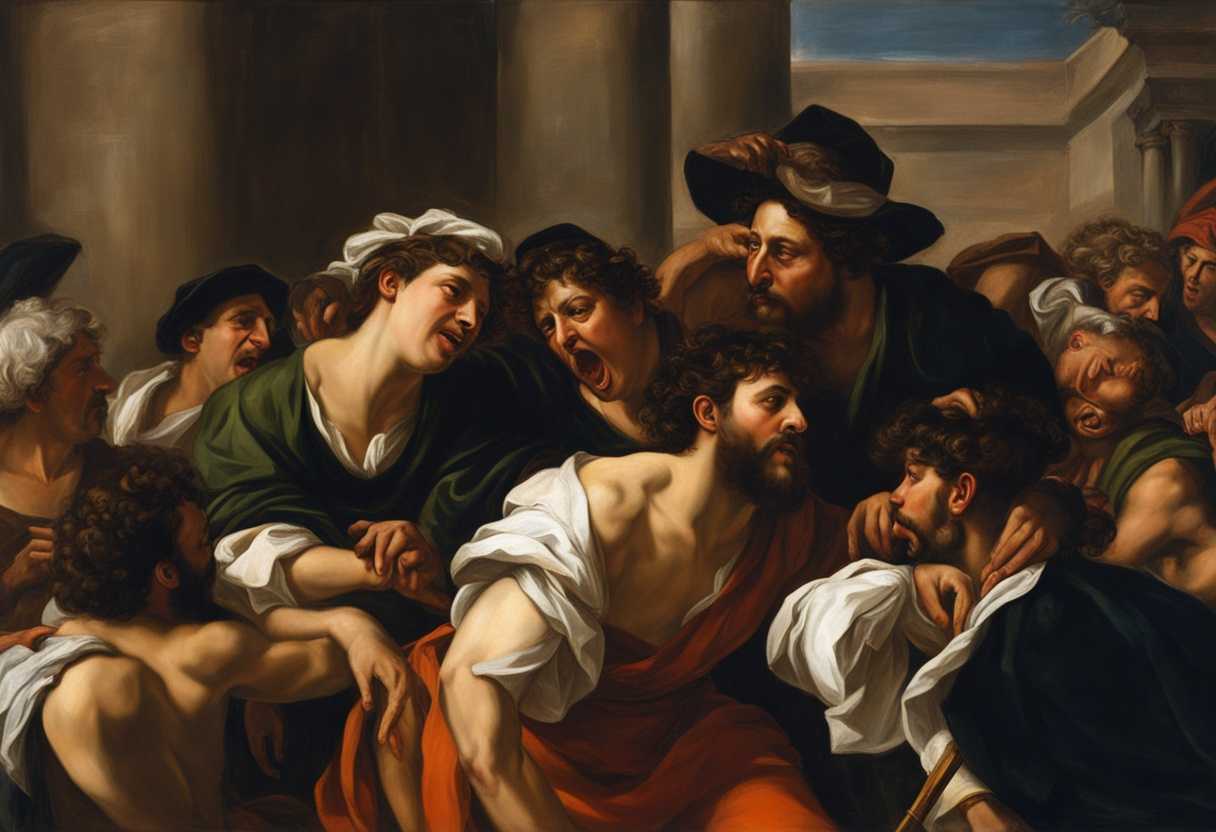
The True Meaning of Isaiah 28
The book of Isaiah was written by the prophet Isaiah, who lived during the reigns of several Judean kings in the 8th century BCE. Isaiah was known for his powerful messages of judgment and hope, often delivered through vivid imagery and symbolic actions. Isaiah addresses the people of Ephraim, the northern kingdom of Israel, as well as the leaders of Jerusalem in this chapter. He warns them of the impending judgment that will come upon them if they continue in their ways of drunkenness, corruption, and rejection of God’s word. However, Isaiah also offers a glimmer of hope, speaking of the coming Messiah who will establish a righteous kingdom. Isaiah’s words echo the warnings found in other biblical books, such as Hosea’s condemnation of Israel’s spiritual adultery (Hosea 4:11-12) and Jeremiah’s lament over the destruction of Jerusalem (Jeremiah 9:21-22). Yet, even in the midst of judgment, Isaiah points to the promise of a cornerstone that will be laid in Zion, a clear reference to the Messiah who will one day come to redeem his people (Isaiah 28:16).
Isaiah 28:1-4
Isaiah delivers a message of judgment against the kingdom of Ephraim in Isaiah 28:1-4, which was one of the northern tribes of Israel. The passage begins by describing Ephraim as a fading flower of beauty at the head of the fertile valleys. This metaphor emphasizes the once thriving and prominent status of Ephraim among the tribes of Israel. However, despite its former glory, Ephraim is now on the verge of destruction due to its disobedience and sin against God.
The verses mention the pride of Ephraim’s drunkards, who are portrayed as crowning the city with their blossoms. This imagery highlights the arrogance and indulgence of the people, who are consumed by their worldly pleasures and have strayed from God’s ways. The leaders and inhabitants of Ephraim are depicted as being drunk and overcome by their own pride, leading to their spiritual downfall and impending judgment.
The judgment pronounced upon Ephraim is described as a mighty and strong one, symbolized by a storm of hail and a destructive tempest. This fierce judgment serves as a reminder of God’s sovereignty and ultimate authority over the nations. It also underscores the consequences of disobedience and the importance of living in alignment with God’s will. This passage serves as a warning against pride, indulgence, and disobedience to God. It illustrates the consequences of turning away from God and emphasizes the importance of humility, obedience, and repentance. It echoes themes found throughout the Bible, such as the repercussions of sin (Romans 6:23), the call to repentance (2 Chronicles 7:14), and the need for humility before God (James 4:10). The passage conveys timeless messages about the dangers of arrogance and the necessity of remaining faithful to God’s commands by delving into the downfall of Ephraim. It calls upon readers to examine their own hearts and actions, to seek forgiveness and restoration through repentance, and to humbly submit to God’s will in order to avoid the fate of Ephraim.
Isaiah 28:5-6
The verses in Isaiah 28:5-6 read: “In that day the Lord Almighty will be a glorious crown, a beautiful wreath for the remnant of his people.” He will be a spirit of justice to the one who sits in judgment, a source of strength to those who turn back the battle at the gate.” It is important to break down these verses into two main sections for a comprehensive understanding. The Lord Almighty will be the “glorious crown” and “beautiful wreath” for the remnant of His people. Here, God is depicted as both a symbol of authority and a source of beauty and adornment for His chosen ones. This signifies God’s sovereignty over His people and emphasizes the honor and prestige that come with being under His care and guidance. The imagery of a crown is often associated with kingship and rulership, showcasing God as the ultimate authority over His people, while the wreath symbolizes victory and celebration, underscoring the joy and delight that come from being part of God’s remnant.
The second section refers to God being a “spirit of justice to the one who sits in judgment” and a “source of strength to those who turn back the battle at the gate.” Here, God is portrayed as the ultimate source of justice and strength for His people. When individuals are in positions of authority and judgment, God promises to guide them in upholding justice and righteousness. This highlights the importance of relying on God’s wisdom and discernment when making decisions that impact others. Additionally, God is acknowledged as the source of strength for those who are fighting battles, particularly at the gate, which was a significant strategic location for defending against enemies in ancient times. This verse underscores the idea that God provides the strength and courage needed to overcome challenges and obstacles, especially in critical moments of conflict and warfare.
These verses in Isaiah 28 resonate with the theme of God’s sovereignty, justice, and strength throughout the Bible. They remind believers of God’s role as the supreme authority, the source of all righteousness, and the provider of strength in times of need. This message is echoed in other parts of the Bible, such as Psalm 89:15, which states, “Blessed are those who have learned to acclaim you, who walk in the light of your presence, Lord.” This verse emphasizes the blessings that come from recognizing God’s presence and authority in our lives, echoing the sentiments expressed in Isaiah 28:5-6. These verses serve as a powerful reminder of God’s unwavering support and guidance for His people, reinforcing the timeless message of trust and reliance on the Almighty in all circumstances.
Isaiah 28:7-13
Isaiah condemns the priests and prophets of Judah for their spiritual drunkenness and lack of understanding in Isaiah 28:7-13. Identify the subject: “Let’s”
Rewritten sentence: Let’s break down this passage into sections and delve deeper into the meanings and implications of each part.
Verse 7 starts by describing the way the priests and prophets of Judah have erred in their teachings, likening them to drunken men staggering in a vision. This imagery highlights the seriousness of their spiritual condition and their inability to lead the people effectively. The role of priests and prophets in ancient Israel was crucial; they were meant to guide the people in understanding God’s will and leading them in righteousness. However, in this verse, they are portrayed as being ineffective and misguided, leading the people astray.
Moving on to verse 8, we see a contrast being drawn between the spiritual ineptitude of the religious leaders and the remnant of the people who still seek to understand and follow God. Despite the failings of the leaders, there are some among the people who are hungry for spiritual truth and are seeking to know and follow God’s ways. This serves as a reminder that even in times of spiritual drought and confusion, there are always those who remain faithful and seek after God with sincerity.
Verse 9 provides a scathing critique of the priests and prophets, accusing them of being so caught up in their own self-importance and desire for personal gain that they have lost sight of the true purpose of their calling. Instead of faithfully conveying God’s message to the people, they are more concerned with their own status and gratification. This is a timeless message that serves as a warning against the dangers of pride, selfish ambition, and corrupt leadership within religious institutions. Isaiah employs a powerful literary device in verses 10-13 to drive home his message. He speaks of teaching the people through repetition and simple language, akin to how one would instruct a child just learning to speak. The repetition of words and phrases (“precept upon precept, line upon line”) is meant to emphasize the clarity and simplicity of God’s message, which the priests and prophets have failed to convey. Isaiah underscores the importance of staying true to the core truths of the faith and not getting entangled in human arrogance and self-serving agendas by contrasting their convoluted teachings with the straightforward wisdom of God. This passage in Isaiah 28 serves as a poignant reminder of the dangers of spiritual complacency, pride, and corruption within religious leadership. It underscores the importance of humility, sincerity, and a genuine seeking after God’s truth. It challenges us to examine our own motives and actions in matters of faith and to remain steadfast in our commitment to following God wholeheartedly. We should reflect on this passage, reminding ourselves to stay rooted in God’s Word, humbly seek His guidance, and uphold the principles of righteousness and justice in all aspects of our lives.
Isaiah 28:14-22
Isaiah delivers a message from the Lord to the rulers of Jerusalem in Isaiah 28:14-22, warning them of the impending judgment that will come upon them due to their disobedience and rejection of God’s instructions. Let’s break down this passage into key sections for a deeper analysis:
-
“Therefore hear the word of the Lord, you scoffers who rule this people in Jerusalem.”
This verse sets the tone for the message that follows. Isaiah is addressing the leaders of Jerusalem, calling them “scoffers” who have turned away from God’s ways and are leading the people astray. The rulers are being rebuked for their pride, arrogance, and disregard for God’s laws, which have resulted in corruption and injustice among the people they are meant to shepherd. -
“Because you have said, ‘We have made a covenant with death, and with Sheol we have an agreement, when the overwhelming whip passes through it will not come to us, for we have made lies our refuge, and in falsehood we have taken shelter.’”
Here, Isaiah condemns the rulers for placing their trust in alliances with pagan nations and deceptive practices rather than trusting in the Lord. They have made a pact with death and Sheol, believing that their false security will protect them from harm. This serves as a cautionary lesson about the dangers of relying on earthly powers and deceitful schemes instead of placing faith in God’s promises and righteousness. -
“Therefore thus says the Lord God, ‘Behold, I am the one who has laid as a foundation in Zion, a stone, a tested stone, a precious cornerstone, of a sure foundation: ‘Whoever believes will not be in haste. God reaffirms His sovereignty and promises to establish a firm foundation in Zion, in contrast to the rulers’ misguided trust in worldly alliances. This foreshadows the coming of Jesus Christ, who is often symbolized as the cornerstone in the New Testament (Ephesians 2:20). Those who believe in Him will not be disappointed or put to shame (Romans 10:11) and will find security in Him alone.
-
“And I will make justice the line, and righteousness the plumb line; and hail will sweep away the refuge of lies, and waters will overwhelm the shelter.”
God declares that justice and righteousness will be the standard by which His judgment will be measured. The rulers’ reliance on falsehood and deception will prove futile when faced with the hail of God’s judgment. This imagery highlights the importance of living lives aligned with God’s truth and moral values, as anything built on lies will ultimately be swept away (Matthew 7:24-27). -
“Then your covenant with death will be annulled, and your agreement with Sheol will not stand; when the overwhelming scourge passes through, you will be beaten down by it.”
Despite their false sense of security, the rulers will not be able to escape the consequences of their actions. God’s judgment will nullify their pact with death and Sheol, and they will be brought low by the calamity they sought to avoid. This serves as a sobering reminder that ultimately, no alliance or refuge outside of God can provide true protection or salvation. Isaiah 28:14-22 delivers a powerful message about the consequences of pride, disobedience, and misplaced trust. It emphasizes the importance of placing faith in God alone, living in alignment with His righteousness, and recognizing the futility of relying on worldly powers and deceitful schemes. The passage also points towards the ultimate cornerstone, Jesus Christ, who offers true security and salvation to all who believe in Him.
Isaiah 28:23-29
The passage in Isaiah 28:23-29 begins with an agricultural illustration.” This call to attention sets the tone for a powerful message that follows. The passage goes on to describe the process of farming: the farmer plows the land, scatters seeds, and carefully cultivates the crops. However, even in these ordinary activities, the guidance of God is required. The farmer’s knowledge and skills are of no avail without the blessing and wisdom of God.
This section of Isaiah emphasizes the sovereignty and providence of God in all aspects of life, including farming. It underscores the importance of relying on God for success and prosperity, rather than placing confidence solely in human efforts. This theme resonates throughout the Bible, emphasizing the need for faith and obedience to God in order to receive His blessings.
The passage then shifts to a more allegorical interpretation, comparing the farmer’s methods to God’s ways of instructing and guiding His people. God, like the farmer, carefully plans and executes His divine purposes in the lives of His children. Just as the farmer adapts his methods to different types of crops, God tailors His guidance to suit the individual needs and circumstances of His people.
Within this context, the mention of “line upon line, precept upon precept” echoes a teaching method employed by God in imparting His wisdom and knowledge to His people. This gradual, systematic approach to instruction underscores the importance of patience, persistence, and a willingness to learn and grow in faith. It reminds believers that spiritual growth is a process that requires diligence and commitment. The passage concludes with a warning to the scoffers and mockers who reject God’s teachings and refuse to heed His instructions. These individuals are likened to those who are ensnared and trapped in their own disobedience and rebellion. The imagery of a yoke and a rod serves as a metaphor for the consequences of disobedience and the discipline that God employs to correct His wayward children.
This passage in Isaiah 28 serves as a reminder of the importance of obedience, faith, and humility in the lives of believers. It highlights the contrast between those who align themselves with God’s will and those who resist His guidance. God’s word ultimately points to the redemptive and transformative power in shaping the hearts and lives of His people. This timeless message of God’s sovereignty, wisdom, and discipline continues to resonate with readers today, calling them to surrender to His will and trust in His plans for their lives.
After Isaiah 28
The prophet Isaiah had delivered a stern warning to the people of Judah. They had turned away from God and placed their trust in their own strength and alliances. But the Lord had a message for them – their plans would crumble, and their false security would be shattered. Isaiah offered a glimmer of hope as the chapter drew to a close. He spoke of a cornerstone that the Lord would lay in Zion, a sure foundation upon which the faithful could build their lives. This cornerstone would be a refuge for the righteous, a place of safety and security amidst the storms of life.
Yet, the prophet knew that many would still reject this gift of grace. They would scoff at the Lord’s offer of salvation, preferring to cling to their own devices. And so, Isaiah issued a solemn warning: those who refused to trust in the Lord would be swept away, their plans reduced to rubble. The choice was theirs – to embrace the cornerstone or to be crushed by it.

Reverend Michael Johnson is an experienced Church Minister with a profound expertise in spirituality and guidance. With a serene presence and a compassionate heart, he has faithfully served his congregation for over 20 years, leading them on a spiritual journey towards inner peace and enlightenment. Reverend Johnson’s extensive knowledge of religious philosophies and profound understanding of human nature have made him a trusted confidant and mentor to many, as he seamlessly weaves his profound wisdom into life teachings. Reverend Johnson’s calming demeanor and empathetic nature continue to uplift and heal souls, nurturing a sense of unity and tranquility within his community.