
Isaiah 29:17-21 is about God’s promise to restore His people’s spiritual sight, leading them to see and understand His truth, while also condemning those who rely on human wisdom and deception.
17 Is it not yet a very little while until Lebanon shall be turned into a fruitful field, and the fruitful field shall be regarded as a forest?
18 In that day the deaf shall hear the words of a book,
and out of their gloom and darkness
the eyes of the blind shall see.
19 The meek shall obtain fresh joy in the Lord,
and the poor among mankind shall exult in the Holy One of Israel.
20 For the ruthless shall come to nothing and the scoffer cease, and all who watch to do evil shall be cut off,
21 those who by a word make a man out to be an offender, and lay a snare for him who reproves in the gate, and with an empty plea turn aside him who is in the right.
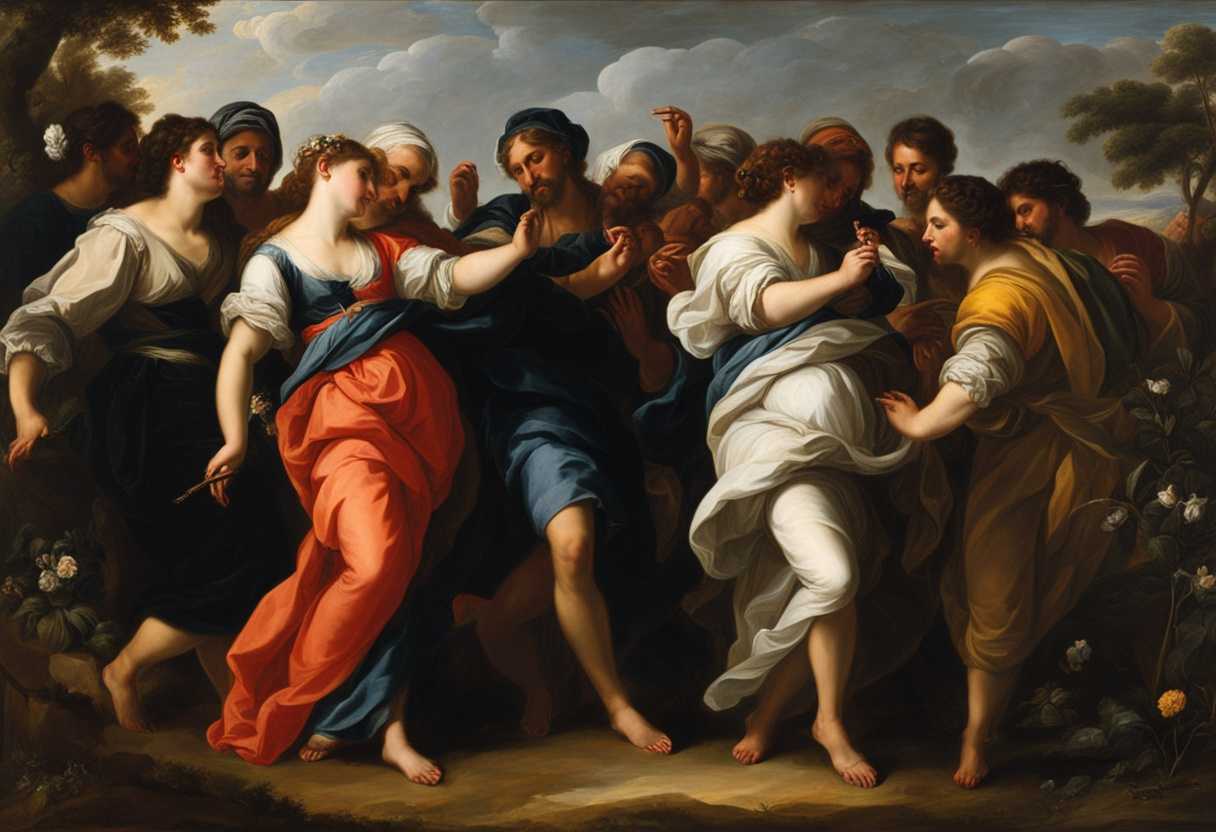
Setting the Scene for Isaiah 29:17-21
In Isaiah chapter 29, we find a scene set in ancient Jerusalem during a time of great spiritual turmoil. The prophet Isaiah, known for his visions and prophecies, is addressing the people of Judah who have strayed from their faith and are facing the consequences of their actions. The city is in a state of unrest, with tensions running high among the inhabitants.
Among those present in this scene are King Hezekiah, the ruler of Judah at the time, along with his advisors and court officials. They have gathered in the royal court to hear Isaiah’s message and seek guidance on how to navigate the challenges facing their kingdom. The atmosphere is tense yet expectant, as the people wait to hear what the prophet has to say about their future.
Surrounding the court are the grandeur and opulence of the royal palace, with intricate tapestries adorning the walls and flickering torches casting a warm glow over the room. The air is heavy with the scent of incense, adding to the solemnity of the occasion. As Isaiah delivers his message of hope and redemption, the room falls silent, with all eyes fixed on the prophet as he speaks words of both warning and comfort to the people of Judah.
What is Isaiah 29:17-21 about?
This verse is a beautiful reminder of God’s faithfulness and love for His people. It speaks of restoration, blessing, justice, and healing that God promises to provide to those who are faithful to Him. God will always be there for us, ready to bring restoration to our lives, bless us abundantly, and provide justice and healing for those who are suffering.
Reflect on the powerful imagery of God’s restoring and healing touch in this verse. Encourage your students to ponder on the ways God has brought restoration and healing in their own lives or those around them. Ask them to consider how they can be a channel of God’s blessings and justice to others as well. Encourage them to trust in God’s promises even in the midst of challenges and difficulties, knowing that His love and grace will ultimately prevail.
Understanding what Isaiah 29:17-21 really means
Isaiah 29:17-21 is a profound passage within the larger context of Isaiah’s prophecy, focusing on the transformation and redemption of Israel. The chapter delves into the spiritual blindness and hypocrisy prevalent among the people but also offers a glimmer of hope for renewal and justice. One key phrase, “Lebanon will be turned into a fertile field,” symbolizes a profound transformation and renewal. This imagery of Lebanon, known for its lush forests, becoming a place of growth and productivity signifies the potential for remarkable change and abundance in seemingly desolate situations.
Another significant phrase, “The deaf will hear the words of the scroll,” signifies a spiritual awakening and understanding. It speaks to the idea that those who were previously ignorant or unresponsive to God’s word will now comprehend it with clarity and insight. Similarly, “The eyes of the blind will see” conveys the promise of enlightenment and revelation, suggesting that people will gain profound insight and understanding where there was once darkness and confusion. These phrases collectively paint a picture of a transformative spiritual journey towards enlightenment and understanding.
“The humble will rejoice in the Lord” emphasizes the profound joy and fulfillment that comes from humility and faithfulness. It highlights the importance of humility in finding true happiness and contentment in one’s relationship with God. Conversely, the promise that “the ruthless will vanish” signifies a future where justice prevails, and oppression and wickedness are eradicated. This assurance of justice and the removal of oppression offers hope for a world where righteousness triumphs over evil.
In relating these themes to contemporary society, Isaiah 29:17-21 offers a message of hope, spiritual awakening, justice, and humility. Just as Lebanon is prophesied to be transformed into a fertile field, individuals and communities today can experience renewal and growth through faith and perseverance. In a world where many feel spiritually blind or deaf to God’s word, this passage serves as a beacon of hope for enlightenment and understanding, reminding us that transformation is always within reach.
An anecdote illustrating this transformative power can be seen in a community that, despite facing years of hardship and neglect, experiences positive changes through collective effort and faith. This community witnesses the birth of new schools, cleaner streets, and a renewed sense of hope, mirroring the transformation described in Isaiah where desolation gives way to abundance, and the humble find joy in the Lord.
In conclusion, Isaiah 29:17-21 serves as a poignant reminder of God’s promise for renewal, justice, and spiritual awakening. It urges us to hold onto hope and remain faithful, knowing that transformation is not only possible but promised, even in the most challenging circumstances.
How can we cultivate understanding and humility in conflicts?
One way to cultivate understanding and humility in conflicts is by recognizing that there may be underlying reasons for the disagreements or misunderstandings that are not immediately apparent. We can begin to understand their position better and find common ground for resolution by taking the time to listen to the other person’s perspective and trying to see the situation from their point of view. This requires humility, as it entails being open to the possibility that our own understanding may be limited or incomplete. Practice empathy towards the other person is also important in conflicts. We can better appreciate where they are coming from and approach the situation with compassion rather than defensiveness by putting ourselves in their shoes and trying to understand their emotions and motivations. This can help to de-escalate tensions and create space for constructive dialogue and reconciliation. Seeking understanding and approaching conflicts with humility can ultimately lead to more peaceful resolutions and stronger relationships. We can cultivate a spirit of cooperation and mutual respect that paves the way for reconciliation and growth by acknowledging our own limitations and being open to learning from others.
Application
Embrace the wisdom of Isaiah 29:17-21. Focus on the essentials and let God’s guidance steer you. Prioritize righteousness and show compassion. Will you join in creating a more just and compassionate world?

Reverend Michael Johnson is an experienced Church Minister with a profound expertise in spirituality and guidance. With a serene presence and a compassionate heart, he has faithfully served his congregation for over 20 years, leading them on a spiritual journey towards inner peace and enlightenment. Reverend Johnson’s extensive knowledge of religious philosophies and profound understanding of human nature have made him a trusted confidant and mentor to many, as he seamlessly weaves his profound wisdom into life teachings. Reverend Johnson’s calming demeanor and empathetic nature continue to uplift and heal souls, nurturing a sense of unity and tranquility within his community.