
Isaiah 2:1-10 is about the exaltation of Jerusalem as the spiritual center of the world and a call for all nations to walk in the light of God’s teachings and turn away from pride and self-reliance.
2 It shall come to pass in the latter days that the mountain of the house of the Lord shall be established as the highest of the mountains, and shall be lifted up above the hills; and all the nations shall flow to it,
2 It shall come to pass in the latter days that the mountain of the house of the Lord shall be established as the highest of the mountains, and shall be lifted up above the hills; and all the nations shall flow to it,
3 And many peoples shall come, and say: “Come, let us go up to the mountain of the Lord, to the house of the God of Jacob, that he may teach us his ways and that we may walk in his paths.”
4 He shall judge between the nations, and shall decide disputes for many peoples; and they shall beat their swords into plowshares, and their spears into pruning hooks; nation shall not lift up sword against nation, neither shall they learn war anymore.
5 O house of Jacob, come, let us walk
in the light of the Lord.
6 For you have rejected your people,
the house of Jacob,
because they are full of things from the east
and of fortune-tellers like the Philistines,
and they strike hands with the children of foreigners.
7 Their land is filled with silver and gold,
and there is no end to their treasures;
their land is filled with horses,
and there is no end to their chariots.
8 Their land is filled with idols;
they bow down to the work of their hands,
to what their own fingers have made.
9 So man is humbled, and each one is brought low— do not forgive them!
10 Enter into the rock and hide in the dust from before the terror of the Lord, and from the splendor of his majesty.
Setting the Scene for Isaiah 2:1-10
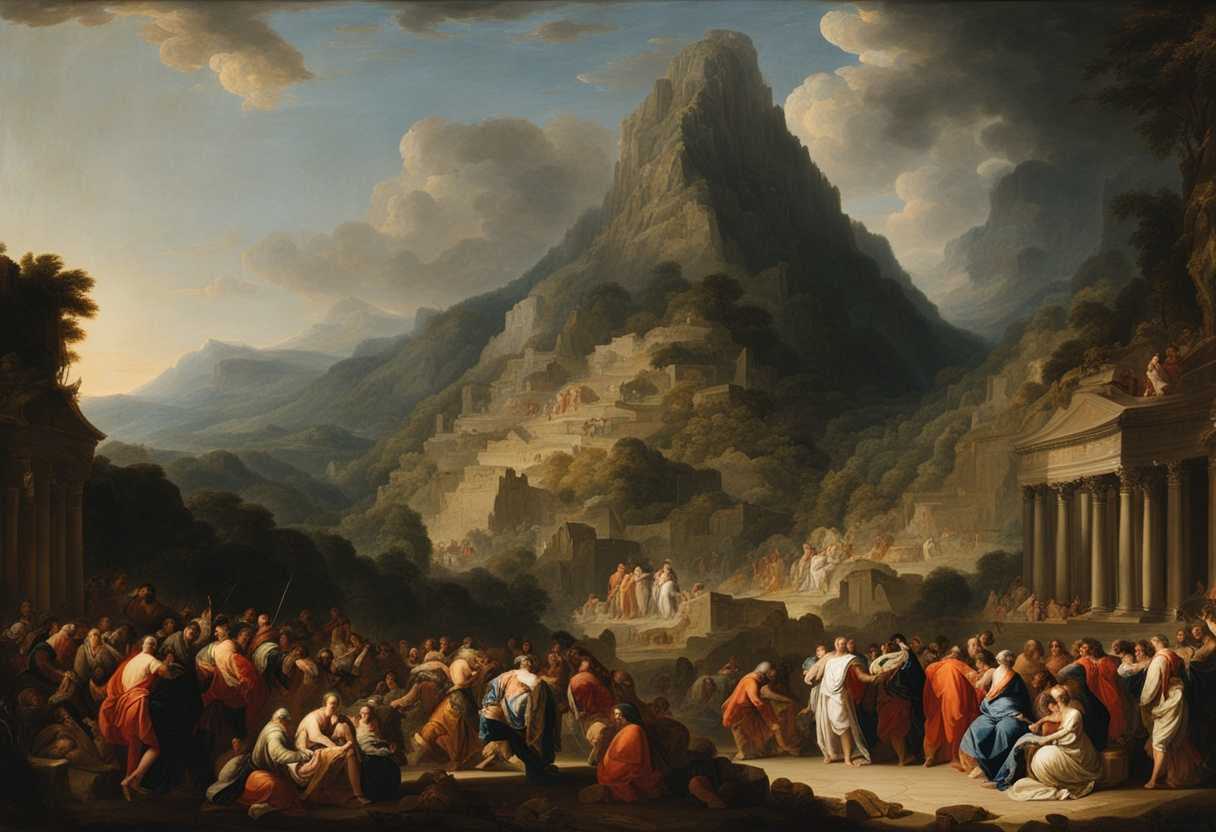
The scene in Isaiah chapter 2 opens with the prophet Isaiah standing in the courtyard of the temple in Jerusalem. The air is filled with the scent of incense, and the sound of prayers being offered reverberates through the sacred space. Isaiah is surrounded by a group of devout worshippers who have gathered to hear his words. Among them are King Uzziah and his advisors, who have come seeking guidance and wisdom from the prophet.
As Isaiah begins to speak, his voice carries a weight of authority and conviction. He prophesies about the future of Judah and Jerusalem, warning of the consequences of turning away from God and the impending judgment that will come upon the nation if they do not repent. The people listen intently, their faces reflecting a mix of fear and awe at the words being spoken.
The sun is beginning to set, casting a warm golden glow over the temple courtyard as Isaiah concludes his message with a call to return to the Lord and walk in His ways. The scene is one of solemnity and urgency, as the fate of the nation hangs in the balance, and the people are left to ponder the prophet’s words long after he has finished speaking.
What is Isaiah 2:1-10 about?
Isaiah in this verse looks towards the future and prophesies about the exaltation of Jerusalem. He envisions a time when Jerusalem, representing the people of God, will be lifted up and honored among all nations. This exaltation signifies a time of restoration, prosperity, and divine favor for the people of God. It is a promise of hope and redemption after times of struggle and hardship.
At the same time, Isaiah also warns about the judgment of the proud. The proud and arrogant will be brought low, and their lofty ways will be humbled by God’s justice. This serves as a reminder that true exaltation comes from humility and righteousness, rather than pride and self-importance. It is a call to live with humility and reverence towards God, recognizing His sovereignty and authority over all things. We are challenged to examine our own lives as we reflect on this verse. Are we seeking exaltation through humble service and obedience to God? Or are we prideful and self-seeking, risking the judgment that comes with arrogance? We should strive to follow the example of humility set by Christ and trust in God’s promise of exaltation for those who walk in His ways.
Understanding what Isaiah 2:1-10 really means
Isaiah 2:1-10 presents a prophetic vision that offers hope and guidance for the future of Judah and Jerusalem. The passage speaks of a time when peace will reign, and God’s ways will be exalted. The phrase “In the last days” points to a future period when God’s kingdom will be fully established, bringing about a time of divine fulfillment. The imagery of “The mountain of the Lord’s temple will be established as the highest of the mountains” symbolizes the supreme authority and prominence of God’s kingdom, surpassing all earthly powers.
Moreover, the mention of “All nations will stream to it” signifies a universal recognition and acceptance of God’s sovereignty, emphasizing the inclusive nature of His kingdom. The call to “walk in the light of the Lord” echoes a timeless invitation to live in accordance with God’s guidance and truth, guiding our steps in righteousness. The transformation of weapons into tools of peace, as described in “They will beat their swords into plowshares and their spears into pruning hooks,” paints a powerful picture of turning conflict into productivity and harmony.
This vision of peace and unity holds relevance for people today, especially in a world marked by division and strife. The invitation to walk in God’s light serves as a reminder of the enduring call to live purposefully and righteously. The image of repurposing instruments of harm for growth and cooperation offers hope to those striving for reconciliation and justice in their communities.
Consider a community torn by violence and discord. Picture a local church initiating a community garden, inviting individuals from diverse backgrounds to participate. Over time, the garden becomes a symbol of peace and collaboration, transforming relationships and fostering unity. This narrative mirrors the prophetic vision of turning swords into plowshares, where tools of destruction are repurposed for growth and harmony.
Reflecting on the themes and phrases of Isaiah 2:1-10 can inspire us to seek divine wisdom, pursue peace, and contribute to a more just world. The imagery of God’s kingdom as the highest mountain reminds us of His ultimate authority, while the vision of nations streaming to Him underscores the inclusivity of His reign. Let us heed the call to walk in His light, embodying His truth and love as we strive for a world where swords are turned into plowshares and spears into pruning hooks.
How can we humble ourselves before God?
We can humble ourselves before God by acknowledging His supremacy and greatness above all else. This involves recognizing our human limitations and weaknesses compared to His infinite power and wisdom. We demonstrate humility before Him by submitting ourselves to His will and recognizing His authority over our lives.
Another way to humble ourselves before God is through repentance and seeking forgiveness for our sins. When we acknowledge our faults and mistakes, we show humility by admitting our need for His mercy and grace. This act of contrition demonstrates our reliance on God and our desire to align our lives with His righteousness.
Additionally, we can humble ourselves before God by cultivating a spirit of gratitude and thankfulness. We demonstrate our recognition of His goodness and faithfulness by expressing gratitude for His blessings and provisions. This attitude of thankfulness helps us remain humble before God, acknowledging that all we have comes from Him and is to be used for His glory.
Application
Embrace the vision of transforming conflict into growth and abundance as described in Isaiah 2:1-10. Let the idea of turning weapons into tools for nurturing the world take root in your soul. Take intentional steps to foster peace and understanding in all aspects of your life. Be the catalyst for harmony and solidarity in your work, your family, and in society. Will you be the driving force in creating a world where peace reigns supreme?

Reverend Michael Johnson is an experienced Church Minister with a profound expertise in spirituality and guidance. With a serene presence and a compassionate heart, he has faithfully served his congregation for over 20 years, leading them on a spiritual journey towards inner peace and enlightenment. Reverend Johnson’s extensive knowledge of religious philosophies and profound understanding of human nature have made him a trusted confidant and mentor to many, as he seamlessly weaves his profound wisdom into life teachings. Reverend Johnson’s calming demeanor and empathetic nature continue to uplift and heal souls, nurturing a sense of unity and tranquility within his community.