
Isaiah 30:33 is about the punishment and destruction God will bring upon the wicked, likening it to a fiery furnace burning and prepared long ago for the king.
33 For a burning place has long been prepared; indeed, for the king it is made ready, its pyre made deep and wide, with fire and wood in abundance; the breath of the Lord, like a stream of sulfur, kindles it.
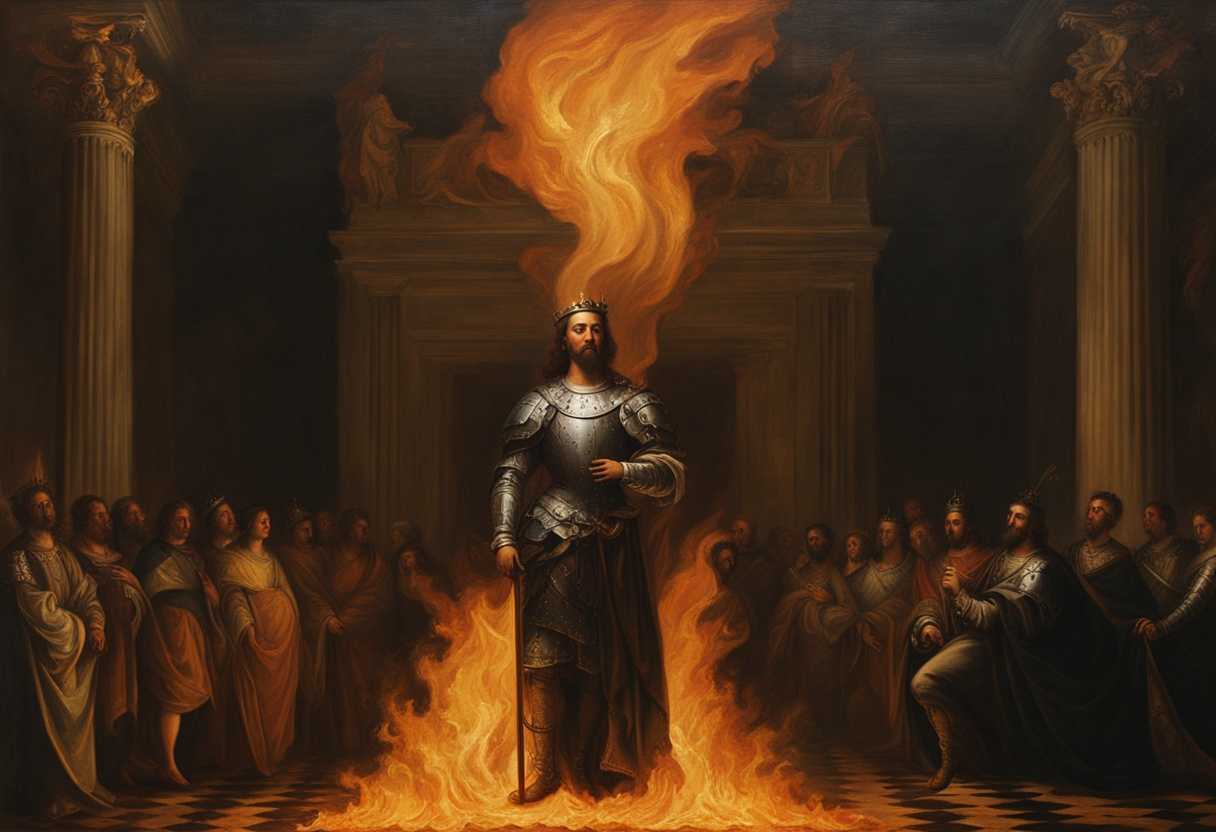
Setting the Scene for Isaiah 30:33
In Isaiah chapter 30, we find a scene set in the kingdom of Judah during a time of great turmoil and uncertainty. King Hezekiah, a devout ruler seeking guidance from the prophet Isaiah, has gathered his advisors and officials in the royal court to discuss the impending threat of invasion by the Assyrian army. The atmosphere is tense as the sound of war drums can be heard in the distance, signaling the approach of the enemy.
Among those present are Isaiah, the revered prophet known for his unwavering faith in God’s protection, and Shebna, the royal steward tasked with managing the affairs of the kingdom. The room is adorned with rich tapestries and ornate furnishings, a stark contrast to the grim news being delivered by Isaiah. As he speaks of the impending destruction and the need for repentance, a sense of urgency fills the chamber, prompting King Hezekiah to seek divine intervention through prayer and fasting.
Outside the palace walls, the city of Jerusalem bustles with activity as preparations for war are made. The people of Judah look to their leaders for guidance and reassurance in the face of adversity, hoping that their faith in God will see them through the trials ahead.
What is Isaiah 30:33 about?
This verse paints a vivid picture of the consequences of rejecting God’s authority and turning away from His teachings. The image of God’s judgment being likened to a burning fire serves as a powerful metaphor, symbolizing the intensity and severity of facing the consequences of one’s actions. It highlights that those who actively choose to go against God’s will and refuse to follow His path will face a fate that is described as fiery and relentless. The verse emphasizes the seriousness of our choices and the importance of staying true to our faith by comparing God’s judgment to a burning fire. It prompts us to reflect on our own actions and consider the potential consequences of turning away from God. Our decisions can have a profound impact on our spiritual journey and the ultimate repercussions of straying from God’s guidance are a reminder as we contemplate the implications of this verse. This verse ultimately serves as a solemn reminder of the importance of remaining steadfast in our faith and loyalty to God. It challenges us to consider the weight of our decisions and the eternal significance of following or rejecting God’s teachings. Meditating on the imagery of God’s judgment as a burning fire encourages us to reevaluate our priorities and choices, understanding that the consequences of rejecting God’s authority are profound and everlasting.
Understanding what Isaiah 30:33 really means
Isaiah 30:33, nestled within a larger passage of warning and prophecy by Isaiah to the people of Judah, serves as a poignant reminder of the consequences of straying from God’s path. The prophet’s words echo with a sense of urgency, cautioning against relying on worldly alliances over divine guidance. The imagery of a place of judgment being prepared evokes a sense of impending reckoning, a fate awaiting those who oppose God’s will.
In the broader context of the book of Isaiah, we find a consistent theme of God’s faithfulness and protection for those who trust in Him. Isaiah 30:33 stands as a stark contrast, illustrating the fate of those who choose to reject God’s salvation in favor of their own ways. The related passages in Isaiah and Revelation further emphasize the certainty of God’s judgment upon the rebellious and the assurance of His deliverance for the faithful.
Today, the message of Isaiah 30:33 remains relevant as ever. In a world filled with distractions and false promises of security, the verse serves as a beacon calling us back to a place of repentance and trust in God. Just as Judah sought solace in earthly alliances, we too may be tempted to place our faith in temporary solutions rather than in the eternal promises of God.
Consider the imagery painted in the verse – Topheth, the place of sacrifice and judgment, meticulously prepared for the king. This vivid picture conveys the thoroughness and inevitability of God’s judgment. The deep and wide fire pit, fueled abundantly, symbolizes the intensity of divine retribution for persistent rebellion. The breath of the Lord, likened to burning sulfur, ignites the flames, underscoring His sovereignty and the inescapable nature of His justice.
Reflecting on these profound phrases prompts us to examine our own lives. Are we, like Judah, seeking solutions outside of God’s will? Are we placing our trust in fleeting comforts rather than in the unwavering strength of our Creator? Let Isaiah 30:33 serve as a call to realign our priorities, to turn away from worldly enticements, and to anchor our faith firmly in the unchanging character of God.
What consumes us like a fire?
What consumes us like a fire is the punishment and judgment of God. His wrath will consume those who have rebelled against Him, just as the breath of the Lord kindles a mighty fire that burns up everything in its path. The verse serves as a powerful reminder that God’s justice is fierce and unrelenting, sparing none who have turned away from Him. The image of a constantly burning and deeply fueled fire in Isaiah 30:33 represents the intensity of God’s judgment upon the wicked. This fire signifies the consequence of disobedience and sin, as well as the harsh reality of facing divine retribution. The vivid imagery in the verse illustrates the all-encompassing nature of God’s punishment, emphasizing the inescapable and consuming nature of His wrath.
The verse in Isaiah serves as a stark warning against straying from righteousness and choosing a path of rebellion. It underscores the importance of obedience and faithfulness to God, highlighting the ultimate fate of those who defy His will. The judgment of God will consume those who reject Him, leaving no room for escape or reprieve, just as a fire devours everything in its path.
Application
Reflect on your journey and steer clear of deceit and disobedience, just like avoiding a treacherous path at work or home. Embrace righteousness; make a significant choice that resonates with your soul. Will you answer the call for righteousness on your journey today?

Reverend Michael Johnson is an experienced Church Minister with a profound expertise in spirituality and guidance. With a serene presence and a compassionate heart, he has faithfully served his congregation for over 20 years, leading them on a spiritual journey towards inner peace and enlightenment. Reverend Johnson’s extensive knowledge of religious philosophies and profound understanding of human nature have made him a trusted confidant and mentor to many, as he seamlessly weaves his profound wisdom into life teachings. Reverend Johnson’s calming demeanor and empathetic nature continue to uplift and heal souls, nurturing a sense of unity and tranquility within his community.