
Isaiah 37:8-13 is about King Hezekiah seeking counsel from the prophet Isaiah in a time of distress and turning to God for help and deliverance in the face of adversity.
8 The Rabshakeh returned, and found the king of Assyria fighting against Libnah, for he had heard that the king had left Lachish.
9 Now the king heard concerning Tirhakah king of Cush, “He has set out to fight against you.”
10 “Thus shall you speak to Hezekiah king of Judah: ‘Do not let your God in whom you trust deceive you by promising that Jerusalem will not be given into the hand of the king of Assyria.
11 Behold, you have heard what the kings of Assyria have done to all lands, devoting them to destruction. And shall you be delivered?
12 Have the gods of the nations delivered them, the nations that my fathers destroyed, Gozan, Haran, Rezeph, and the people of Eden who were in Telassar?
13 Where is the king of Hamath, the king of Arpad, the king of the city of Sepharvaim, the king of Hena, or the king of Ivvah?”
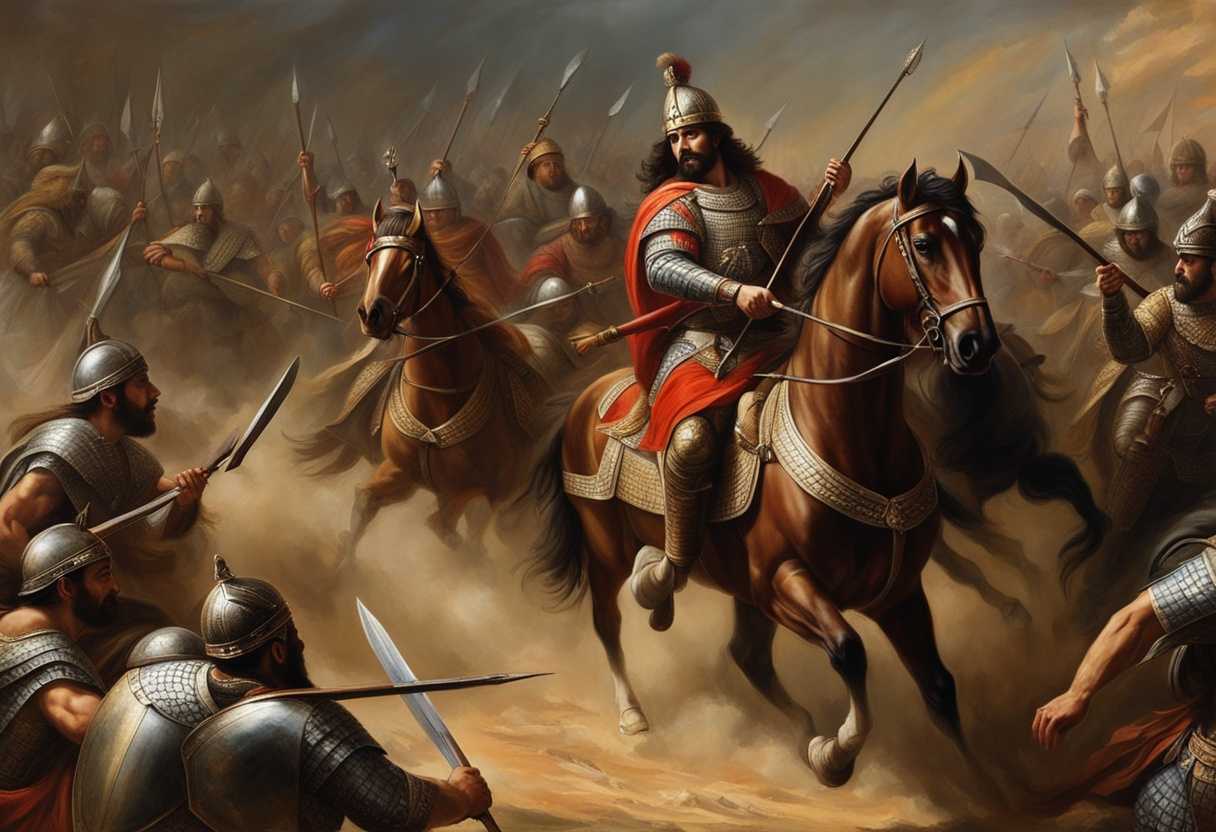
Setting the Scene for Isaiah 37:8-13
In Isaiah chapter 37, we find King Hezekiah of Judah in a time of great distress. The powerful Assyrian army, led by King Sennacherib, had invaded the land and besieged the fortified cities of Judah. Hezekiah, along with his officials and advisors, sought refuge in the royal palace in Jerusalem. The atmosphere is tense as they grapple with the imminent threat of destruction looming over them.
Inside the grand halls of the palace, King Hezekiah is surrounded by his trusted counselors and military leaders, including Isaiah the prophet. The flickering torches cast a dim light on the worried faces of those gathered, their voices hushed as they discuss their next course of action. Outside, the city is eerily quiet, the usual bustling streets now deserted as the people hide in fear of the approaching enemy.
As the night wears on, King Hezekiah and his advisors send a message to Isaiah, seeking guidance and comfort in this time of crisis. Isaiah’s presence brings a sense of hope and reassurance amidst the chaos, his words of prophecy offering a glimmer of light in the darkness that surrounds them. The scene is set for a pivotal moment in the history of Judah, as they look to the prophet for a message from the Lord in their hour of need.
What is Isaiah 37:8-13 about?
This verse from the Book of Isaiah illustrates a powerful example of seeking divine guidance and assistance in times of trouble. Hezekiah, the king of Judah, faced a formidable threat from the Assyrian empire. Instead of relying solely on his own strength or seeking help from worldly sources, Hezekiah turned to God for help by sending messengers to the prophet Isaiah. This action highlights the importance of faith and trust in God during moments of distress and danger. Reflecting on Hezekiah’s actions and considering how we respond to challenges in our own lives is essential for readers. Do we rely on our own abilities and resources, or do we have the faith to seek help from God? This verse encourages us to trust in the power and guidance of God, especially in times of uncertainty and danger. We can find strength, wisdom, and protection to overcome any threats or obstacles we may face by following Hezekiah’s example and turning to God for help. We can take inspiration from Hezekiah’s faith and remember that when we seek God’s help, we can find hope and deliverance in the midst of adversity.
Understanding what Isaiah 37:8-13 really means
In the narrative of King Hezekiah of Judah facing the menacing threat of the Assyrian king, Sennacherib, we witness a pivotal moment of faith and defiance against overwhelming odds. The Assyrian army’s conquests have instilled fear in many cities, with Jerusalem now in the crosshairs of destruction. Hezekiah receives a message from Sennacherib, dripping with arrogance and blasphemy towards the God of Israel, challenging the very foundation of Hezekiah’s faith.
Sennacherib’s taunts, such as “Do not let the god you depend on deceive you,” reveal his gross underestimation of the power and sovereignty of the God of Israel. By questioning, “Have the gods of the nations rescued them?” he attempts to diminish the credibility of God in the eyes of Hezekiah. The rhetorical question, “Where are the kings of Hamath and Arpad?” serves to remind Hezekiah of the Assyrian conquests, aiming to instill fear and doubt in his heart.
Parallel accounts in 2 Kings 19:10-13 and comforting verses like Psalm 46:1-3 and Isaiah 41:10 echo the themes of trust in God amidst adversity and divine protection. These passages reinforce the idea that God is a reliable refuge and strength in times of trouble, urging believers to place their faith in Him rather than succumb to fear and intimidation from external threats.
The relevance of this passage to people today is profound. Just as Hezekiah faced overwhelming odds, individuals in modern times encounter various forms of adversity that test their faith and resilience. The narrative serves as a timeless reminder to trust in God’s sovereignty and power, which surpass human understanding and earthly powers.
Consider a scenario where a small business owner is pitted against a giant corporation seeking to crush their business. Intimidating tactics and aggressive maneuvers are employed, leaving the owner feeling helpless. Yet, through prayer and community support, unexpected help and resources emerge, leading to victory against all odds. This anecdote mirrors Hezekiah’s situation, illustrating how trust in a higher power can pave the way for deliverance in the face of seemingly insurmountable challenges.
In conclusion, Isaiah 37:8-13 stands as a poignant testament to the enduring importance of faith and trust in God, especially in the midst of daunting trials. It calls believers to stand firm in their faith, knowing that God’s might transcends any earthly power or threat.
How do we respond when facing overwhelming challenges?
When we are faced with overwhelming challenges, we can turn to our faith and seek guidance from God. We can trust in His power and sovereignty to see us through difficult times. It is important to remember that even in the face of immense obstacles, God is in control and has a plan for our lives. We can find comfort and strength to overcome whatever challenges come our way by placing our trust in Him. Seeking support from others in times of trouble is important, whether it be through prayer, seeking counsel from wise individuals, or simply sharing our burdens with loved ones. We can find encouragement, perspective, and practical help in navigating through overwhelming situations by building a community of support around us. Together, we can find solutions, gather strength, and face challenges with a united front.
Finally, when overwhelmed by challenges, we can also focus on taking practical steps to address the situation at hand. We can make progress towards a solution by breaking down the problem into manageable parts and taking one step at a time. Through perseverance, resilience, and a reliance on God’s guidance, we can overcome even the toughest of challenges that come our way.
Application
In life’s labyrinth of challenges, let’s draw inspiration from King Hezekiah’s unyielding faith. Let us entrust our fears and trials to God, just as he sought divine guidance and protection. Like a beacon in the stormy sea, may our faith shine brightly amidst adversity. Will you bravely navigate your hardships with the same steadfast belief as King Hezekiah?

Reverend Michael Johnson is an experienced Church Minister with a profound expertise in spirituality and guidance. With a serene presence and a compassionate heart, he has faithfully served his congregation for over 20 years, leading them on a spiritual journey towards inner peace and enlightenment. Reverend Johnson’s extensive knowledge of religious philosophies and profound understanding of human nature have made him a trusted confidant and mentor to many, as he seamlessly weaves his profound wisdom into life teachings. Reverend Johnson’s calming demeanor and empathetic nature continue to uplift and heal souls, nurturing a sense of unity and tranquility within his community.