
Isaiah 38:1-5 is about King Hezekiah falling ill, praying to God for healing, and being granted fifteen more years of life as a sign of God’s mercy and power in response to his faith and humility.
1 In those days Hezekiah became sick and was at the point of death. And Isaiah the prophet the son of Amoz came to him, and said to him, “Thus says the Lord: Set your house in order, for you shall die, you shall not recover.”
2 Then Hezekiah turned his face to the wall and prayed to the Lord,
3 and said, “Please, O Lord, remember how I have walked before you in faithfulness and with a whole heart, and have done what is good in your sight.” And Hezekiah wept bitterly.
4 Then the word of the Lord came to Isaiah:
5 “Thus says the Lord, the God of David your father: I have heard your prayer; I have seen your tears. Behold, I will add fifteen years to your life.”
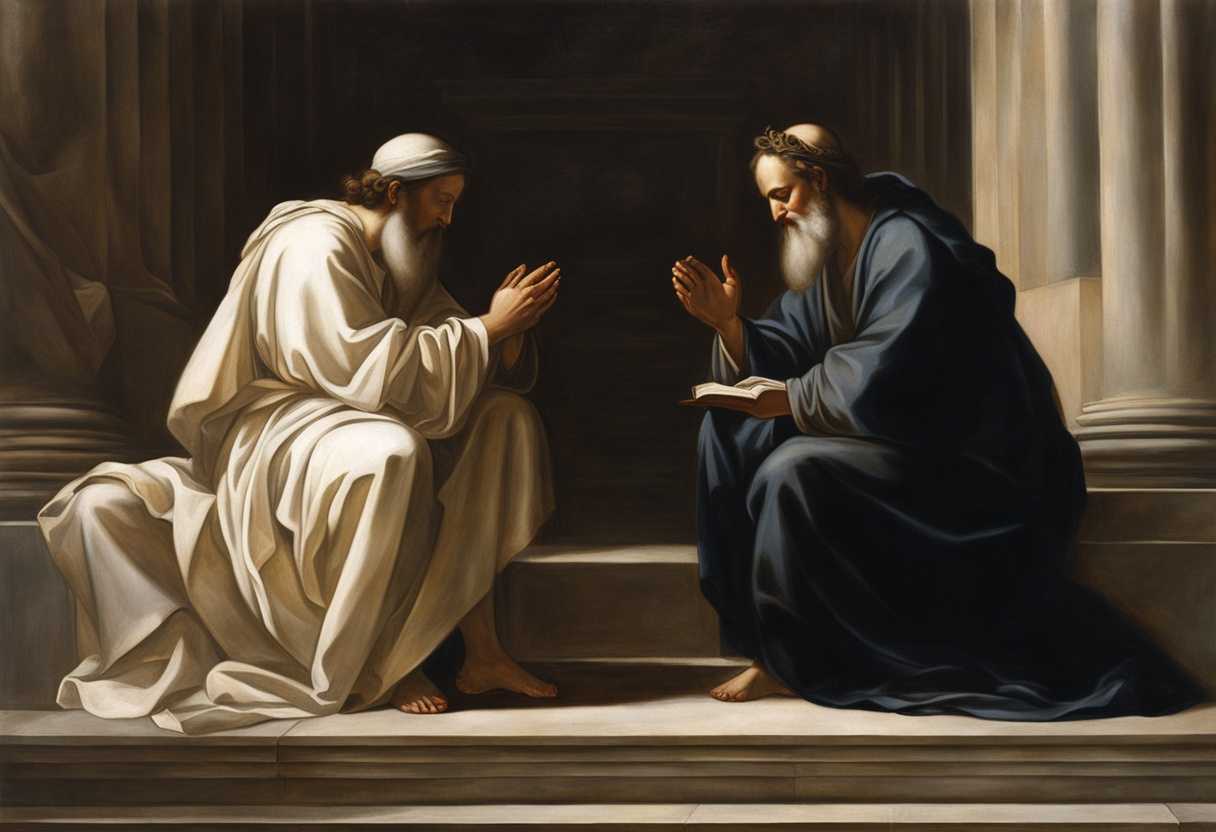
Setting the Scene for Isaiah 38:1-5
In Isaiah chapter 38, we find King Hezekiah of Judah in a dire situation. He has fallen ill, and the prophet Isaiah, known for his close relationship with God, comes to visit him in his palace. The scene is set in the grand chambers of the royal palace, with rich tapestries adorning the walls and flickering torches casting a warm glow over the room. King Hezekiah lies on a bed, his face pale and drawn with sickness, surrounded by worried courtiers and advisors.
Isaiah, a venerable figure with a flowing beard and a commanding presence, stands at the foot of the bed, his expression grave. He has come with a message from the Lord, informing Hezekiah that his illness is terminal and that he will not recover. The king, known for his faithfulness to God, is deeply troubled by this news and turns his face to the wall in prayer. The room is filled with a sense of heaviness and impending doom as the gravity of the situation weighs on everyone present.
As the scene unfolds, we witness a powerful moment of vulnerability and faith as King Hezekiah pours out his heart to God, pleading for mercy and healing. Isaiah’s presence serves as a reminder of God’s sovereignty and the importance of seeking Him in times of trouble. The atmosphere is charged with emotion and anticipation as the fate of the king hangs in the balance, setting the stage for a miraculous intervention from the Lord.
What is Isaiah 38:1-5 about?
This verse from the Bible, specifically 2 Kings 20:5, showcases the power of prayer and the mercy of God. It tells the story of King Hezekiah falling ill and praying earnestly for healing. Despite his grave condition, Hezekiah turned to God in faith, believing in His ability to heal and restore him. And indeed, God heard his prayer and granted him not only healing but an additional 15 years of life.
This verse teaches us about the importance of faith and prayer in times of trial and difficulty. It shows us that no matter how dire our circumstances may seem, we should never lose hope in God’s ability to intervene and bring about miraculous change. We can overcome any obstacle or illness that we face by seeking God’s help and trusting in His mercy. This story reminds us of the power of prayer and the boundless compassion of our Creator towards His faithful servants.
Reflecting on this verse prompts us to consider our own approach to challenges and setbacks. Do we turn to God in times of need, seeking His guidance and provision? Are we willing to place our trust in Him, knowing that He is capable of transforming even the most desperate situations? Let the story of King Hezekiah inspire us to deepen our faith, cultivate a spirit of perseverance in prayer, and believe in the miraculous power of God to bring healing and restoration into our lives.
Understanding what Isaiah 38:1-5 really means
Isaiah 38:1-5 presents a poignant account of King Hezekiah’s grave illness and miraculous recovery through the power of prayer. In the midst of political and personal turmoil, Hezekiah is confronted with his mortality when the prophet Isaiah delivers a sobering message of impending death. The phrase “set your house in order” resonates with a timeless truth, urging us to reflect on our lives and ensure that we are spiritually and practically prepared for whatever may come. It serves as a reminder to prioritize what truly matters and to align our lives with our values and beliefs.
Hezekiah’s response to the prophet’s message is a profound example of faith in action. By turning his face to the wall and pouring out his heart in prayer to the Lord, he demonstrates the power of sincere and heartfelt communication with God. This act of focused devotion underscores the importance of seeking God wholeheartedly, especially in times of crisis and uncertainty. The reassurance that God hears our prayers and sees our tears offers comfort and hope, affirming that we are not alone in our struggles.
The parallel account in 2 Kings 20:1-6 further emphasizes the themes of divine mercy and the efficacy of prayer in Hezekiah’s miraculous healing. This narrative serves as a testament to the enduring truth found in James 5:16, highlighting the potency of the prayers of the righteous. The interconnectedness of these passages underscores the universal principles of faith, prayer, and divine intervention that transcend time and culture, speaking to the human experience across generations.
In today’s fast-paced and often chaotic world, the story of Hezekiah serves as a beacon of light, guiding us to prioritize our spiritual well-being and relationships above material concerns. It challenges us to emulate Hezekiah’s unwavering faith and reliance on prayer as a source of strength and solace in the face of adversity. The relevance of this ancient narrative to contemporary life lies in its timeless message of hope, resilience, and the transformative power of faith in the midst of life’s challenges.
Imagine a scenario where a person receives a dire medical diagnosis, akin to Hezekiah’s predicament. In their moment of despair, they turn to prayer and seek divine intervention, mirroring Hezekiah’s plea for healing. Through the support of their community and the fervency of their prayers, they may experience unexpected healing or a reprieve from their dire prognosis. This modern-day parallel illustrates the enduring relevance of Hezekiah’s story and the enduring truth that God hears the cries of the righteous and responds with compassion and mercy.
In conclusion, Isaiah 38:1-5 imparts valuable lessons on spiritual preparedness, the potency of sincere prayer, and God’s unwavering compassion towards His people. It challenges us to deepen our faith, especially in times of crisis, and to trust in the unfailing love and responsiveness of our Heavenly Father. As we navigate the complexities of life, may we draw inspiration from Hezekiah’s story and find comfort in the knowledge that God is always near, ready to hear our prayers and extend His grace in our time of need.
What can we learn about seeking God’s mercy?
King Hezekiah seeks God’s mercy when he falls ill in this passage. Hezekiah’s immediate response to his sickness is to turn to God and cry out for help. He acknowledges his need for God’s mercy and intervention in his situation. This illustrates the importance of seeking God’s mercy in times of trouble and relying on Him for help.
We can learn from this passage that when faced with challenges or difficulties, we should not hesitate to seek God’s mercy. God is always ready to extend His mercy to those who cry out to Him in faith. Hezekiah’s example encourages us to turn to God first in times of need, trusting that He is able and willing to show us mercy and bring about a resolution to our problems. This passage ultimately highlights the power of prayer. Hezekiah’s prayer for mercy moves God to respond with compassion and grant him healing. This teaches us the importance of bringing our needs and concerns before God in prayer, knowing that He is able to provide the mercy and help we need. Seeking God’s mercy through prayer demonstrates our reliance on Him and our belief in His ability to intervene in our lives.
Application
In times of trouble, don’t hesitate to reach out to God, just like Hezekiah did. Let’s remember that our prayers hold immense power and can touch the very heart of God. Take a moment to reflect on the story of Hezekiah’s illness and realize the importance of seeking divine intervention. Dare to grasp the lesson here and approach God in prayer with sincerity and faith, knowing that He listens to every word. Will you take up the challenge to turn to God with all your heart, just like Hezekiah did, and witness the miracles unfold before you?

Reverend Michael Johnson is an experienced Church Minister with a profound expertise in spirituality and guidance. With a serene presence and a compassionate heart, he has faithfully served his congregation for over 20 years, leading them on a spiritual journey towards inner peace and enlightenment. Reverend Johnson’s extensive knowledge of religious philosophies and profound understanding of human nature have made him a trusted confidant and mentor to many, as he seamlessly weaves his profound wisdom into life teachings. Reverend Johnson’s calming demeanor and empathetic nature continue to uplift and heal souls, nurturing a sense of unity and tranquility within his community.