
Isaiah 42:16-17 is about God’s promise to guide and lead His people who are spiritually blind and lost, ensuring that they will find a path to righteousness, while contrasting this divine guidance with the futility of idol worship that ultimately leads to shame and disappointment for those who turn away from Him.
16 And I will lead the blind in a way that they do not know, in paths that they have not known I will guide them. I will turn the darkness before them into light, the rough places into level ground. These are the things I do, and I do not forsake them.
17 They are turned back and utterly put to shame,
who trust in carved idols,
who say to metal images,
“You are our gods.”
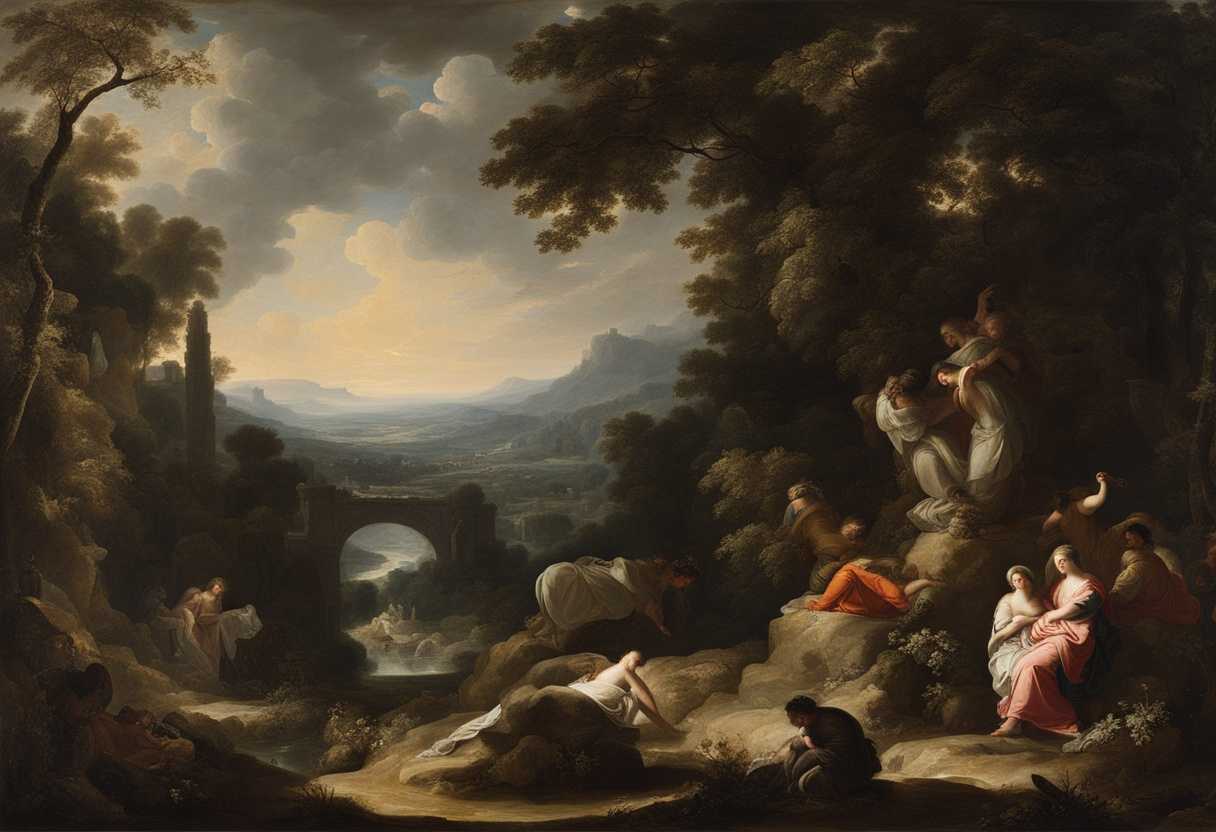
Setting the Scene for Isaiah 42:16-17
In a time of great turmoil and uncertainty, the scene unfolds in a dusty, sun-drenched marketplace of Jerusalem, where the air is thick with the mingling scents of spices, fresh bread, and the distant sound of merchants calling out to passersby. The city is alive with the hustle and bustle of daily life, yet there is an undercurrent of tension among the people. They are weary from oppression and longing for hope, their hearts heavy with the weight of their circumstances. Among the crowd, a man named Eliakim stands out, his brow furrowed in contemplation as he navigates through the throng. He is a humble carpenter, known for his integrity and kindness, yet he feels the burden of his people’s despair pressing down on him.
As Eliakim makes his way through the marketplace, he encounters a group of men gathered around a rabbi, who is passionately speaking about the promises of God. The rabbi, an elderly man named Zechariah, is revered for his wisdom and insight into the Scriptures. He speaks of a coming light that will guide the blind and lead the lost to safety, igniting a flicker of hope in the hearts of those who listen. Eliakim, drawn to the rabbi’s words, approaches the group, eager to hear more about the divine intervention that they so desperately seek. The crowd is a mix of the faithful and the doubtful, each person wrestling with their own fears and aspirations, yet united in their yearning for deliverance.
As the sun begins to set, casting a warm golden hue over the city, Eliakim feels a stirring within him. He recalls the ancient prophecies, particularly the words that speak of God’s promise to lead the blind by ways they have not known, to turn darkness into light, and to bring forth justice. The rabbi’s voice resonates in his mind, echoing the assurance that those who turn away from false idols will find their path illuminated. Eliakim looks around at the faces of his fellow townspeople, some filled with skepticism, others with a glimmer of hope, and he realizes that this moment is pivotal. It is a call to faith, a reminder that even in the darkest of times, there is a promise of redemption and a path forward, if only they are willing to follow the light.
What is Isaiah 42:16-17 about?
This verse presents a powerful juxtaposition between divine guidance and the futility of misplaced trust. When we talk about God promising to guide the blind and lead them to safety, what does that really imply about the nature of faith? It suggests that divine assistance is always at hand, especially for those who are vulnerable or lack sight—both in a literal and metaphorical sense. Imagine feeling lost or without direction in life; don’t we often yearn for guidance? God’s promise reflects an assurance that even in our darkest moments, we are not abandoned. Instead, we are offered a path forward, a way out of confusion and despair, filled with hope and safety.
On the flip side, we see a stark warning about relying on idols or superficial things that ultimately lead to shame. What does it say about our choices when we place our trust in things that cannot sustain us? This verse challenges us to reflect on what we currently place our faith in. Are those things truly worthy of our trust, or do they ultimately fail to live up to our expectations? This dichotomy encourages us to evaluate our belief systems and the foundations upon which we build our lives. We should ask ourselves as we navigate our own journeys: Are we choosing the path of divine leadership, or are transient idols swaying us into disappointment?
Understanding what Isaiah 42:16-17 really means
Isaiah 42:16-17 offers a powerful message of hope and guidance, emphasizing God’s promise to lead those who are lost or in darkness. This passage speaks directly to the human experience of feeling directionless, reminding us that even in our most challenging moments, God is committed to illuminating our paths. The imagery of leading the blind resonates deeply, as it symbolizes not just physical blindness but also spiritual and emotional disorientation.
To fully appreciate this passage, we must consider its context. Isaiah, a prophet during a time of exile, addressed a people grappling with despair and uncertainty. His words reflect God’s desire to restore and guide His people, showcasing His mercy and faithfulness. In this light, the promise of guidance becomes a lifeline for those who feel abandoned or lost, reinforcing the idea that God is intimately involved in our lives.
Key phrases in the passage warrant closer examination. When God declares, “I will lead the blind,” it signifies His role as a divine guide. This is not merely about physical sight; it speaks to a deeper understanding of life’s complexities. The phrase “in paths they do not know” suggests that God’s ways often transcend our understanding. How often do we find ourselves questioning the direction of our lives? This assurance that God has a plan, even when we cannot see it, invites us to trust in His wisdom.
The imagery of turning “darkness into light” is particularly striking. It signifies transformation and hope, suggesting that God can bring clarity and purpose into our confusion. This theme is echoed in other biblical passages, such as Psalm 119:105, which describes God’s word as a lamp to our feet. Similarly, John 8:12 presents Jesus as the light of the world, reinforcing the idea that following Him leads us out of darkness. These connections deepen our understanding of God’s promise and its fulfillment through Christ.
In today’s world, many individuals grapple with feelings of uncertainty and disorientation. Whether due to personal crises, job losses, or societal upheaval, the sense of being lost is all too common. Isaiah 42:16-17 serves as a poignant reminder that we are not alone in our struggles. Reflecting on personal experiences can illuminate this truth. Have you ever found unexpected guidance during a difficult time? Such moments often reveal God’s presence, affirming His promise to lead us when we feel blind.
In conclusion, Isaiah 42:16-17 encapsulates God’s unwavering commitment to guide us through life’s challenges. It encourages us to trust in His plan, even when the path ahead seems unclear. As we embrace this truth, we can find peace and assurance in knowing that we are never truly alone in our journey. Let us hold onto this promise, allowing it to inspire us to seek God’s guidance in our lives, confident that He will illuminate our paths.
How can I trust God to guide my life?
To trust God to guide your life, it’s important to recognize that His guidance is often revealed in unexpected ways, and He is committed to leading you through both clarity and ambiguity. When you find yourself in uncertain situations, remember that God has a purpose and a direction for you, even if the path seems unclear. You can begin to discern the way forward by paying attention to the subtle hints and the quiet promptings in your heart. This requires patience and a willingness to embrace the journey, understanding that spiritual growth often comes through trust in the process rather than immediate answers. Cultivating a relationship with God through prayer, reflection, and scripture can deepen your understanding of His character and promises. This ongoing dialogue allows you to express your fears, hopes, and desires while also becoming attuned to His voice. Trusting God involves surrendering control and acknowledging that your ways may not align with His plans. As you grow in faith, you will find that your ability to trust Him becomes stronger, and you may consider His guidance in forms you hadn’t previously thought of.
Finally, surrounding yourself with a supportive community can enhance your journey of trust. Conversations with others who share a faith perspective can provide perspective and encouragement, helping you to see how God is at work in your life and the lives of those around you. Witnessing others’ experiences of God’s guidance can serve as a reminder that you are not alone in your journey. Trusting God ultimately involves embracing the journey with faith, knowing that He attentively guides you toward a future filled with hope and purpose.
Application
Life is like a winding road, with twists and turns that can feel overwhelming. But remember, even in the chaos of work deadlines and family obligations, there’s a guiding light waiting for you. Imagine taking a leap of faith, choosing to trust in that light rather than your own instincts. What amazing changes could unfold in your life today if you let go of control and followed that direction? Are you ready to embrace the journey and take that first step?

Reverend Michael Johnson is an experienced Church Minister with a profound expertise in spirituality and guidance. With a serene presence and a compassionate heart, he has faithfully served his congregation for over 20 years, leading them on a spiritual journey towards inner peace and enlightenment. Reverend Johnson’s extensive knowledge of religious philosophies and profound understanding of human nature have made him a trusted confidant and mentor to many, as he seamlessly weaves his profound wisdom into life teachings. Reverend Johnson’s calming demeanor and empathetic nature continue to uplift and heal souls, nurturing a sense of unity and tranquility within his community.