
Isaiah 44:28-45:1 is about God choosing and empowering Cyrus, a non-Israelite king, to be His instrument in bringing about the restoration of His people and the rebuilding of Jerusalem, illustrating God’s sovereignty and ability to use even unlikely individuals to fulfill His purposes.
28 who says of Cyrus, ‘He is my shepherd,
and he shall fulfill all my purpose’;
saying of Jerusalem, ‘She shall be built,’
and of the temple, ‘Your foundation shall be laid.’
1 Thus says the Lord to his anointed, to Cyrus, whose right hand I have grasped, to subdue nations before him and to loose the belts of kings, to open doors before him that gates may not be closed:
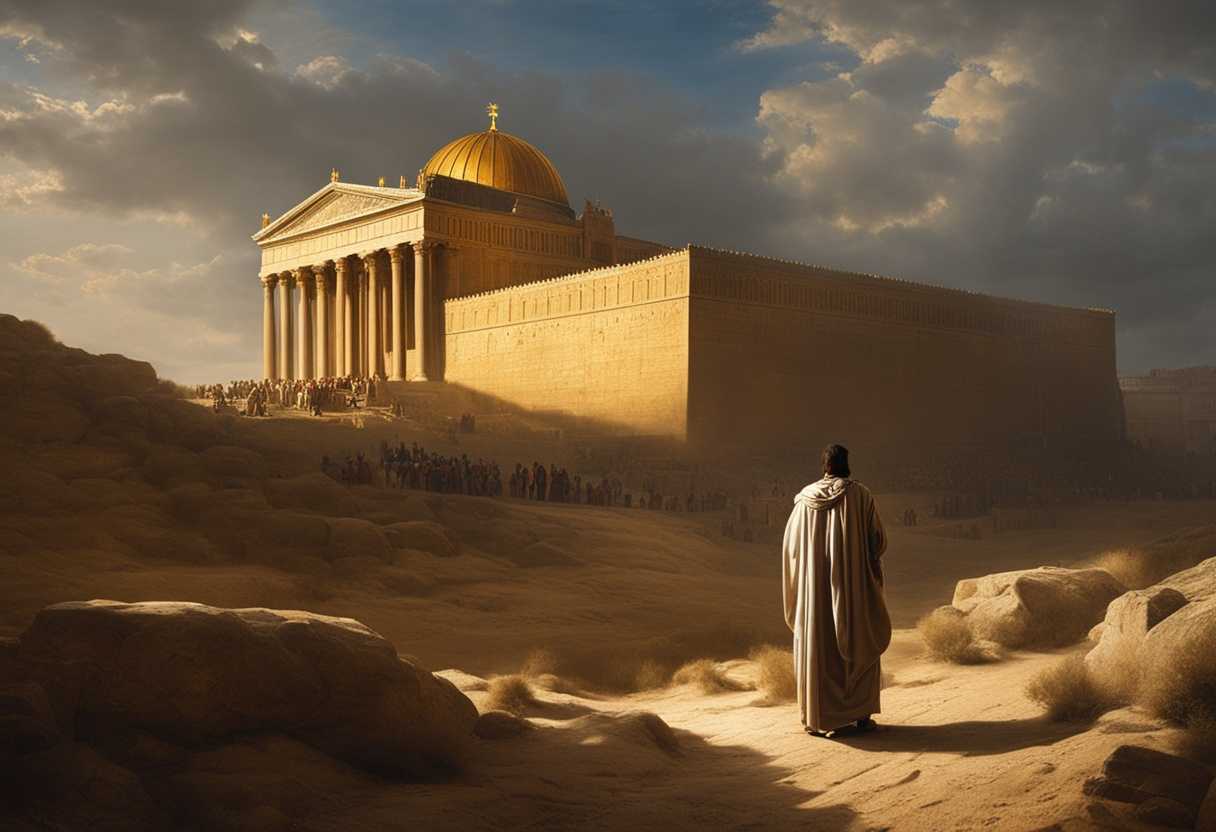
Setting the Scene for Isaiah 44:28-45:1
The scene in Isaiah 44:28-45:1 takes place in the royal court of King Cyrus of Persia. The prophet Isaiah is addressing the court, delivering a message from the Lord regarding Cyrus. The room is grand and opulently decorated, with rich tapestries adorning the walls and golden candelabras casting a warm glow over the assembly. King Cyrus sits on his throne, surrounded by his advisors and courtiers, listening intently to Isaiah’s words.
Isaiah, a revered prophet in the land, has been summoned to the court by Cyrus himself. The king is intrigued by Isaiah’s prophecies and seeks his counsel on matters of great importance. As Isaiah speaks, his words carry weight and authority, causing a hush to fall over the courtiers gathered in the room. The atmosphere is charged with anticipation as Isaiah reveals the Lord’s plans for Cyrus and the role he will play in fulfilling God’s purposes.
As Isaiah continues to speak, Cyrus’s expression shifts from curiosity to awe, as he realizes the magnitude of the task set before him. The courtiers exchange glances, sensing the significance of the moment unfolding before them. In this pivotal scene, the fate of nations hangs in the balance, as Isaiah delivers a message that will shape the course of history.
What is Isaiah 44:28-45:1 about?
Isn’t it fascinating how God can work through unexpected people to carry out His grand purposes? God reveals His intention to use Cyrus, a non-believer and a foreign ruler, to free His people and help rebuild the temple in Jerusalem in this verse. This shows that God’s sovereignty knows no bounds and He can use anyone to accomplish His will.
It’s a powerful reminder that God’s plans are beyond our understanding and He can work through even the most unlikely circumstances to bring about His purposes. This verse also teaches us that God is in control of all things, including world events and political leaders. It challenges us to trust in God’s wisdom and sovereignty, knowing that He is always working behind the scenes to bring about His good and perfect will. So, let’s take comfort in the fact that God can use anyone, even those who do not believe in Him, to accomplish His plans for our lives and the world.
Understanding what Isaiah 44:28-45:1 really means
The Book of Isaiah, a prophetic work in the Old Testament, provides insights into God’s messages to His people, particularly during times of turmoil and exile. In the context of the Israelites’ exile in Babylon, the mention of Cyrus holds significant importance. Cyrus, a Persian king, was instrumental in allowing the Israelites to return to their homeland and rebuild Jerusalem and the temple. This act of liberation by a foreign ruler was a clear demonstration of God’s sovereignty and His ability to work through unexpected individuals to fulfill His purposes.
“He is my shepherd” signifies the role of a shepherd in biblical terms, symbolizing guidance, protection, and provision. Just as a shepherd cares for and leads his flock, God watches over His people, guiding them through challenges and providing for their needs. The phrase “He shall fulfill all my purpose” highlights the concept of divine purpose, indicating that God uses individuals, like Cyrus, to accomplish His will and bring about His plans for His people.
The mention of Jerusalem and the temple in the passage underscores their significance in Jewish faith and identity. Jerusalem was not just a physical city but a symbol of God’s presence among His people, while the temple represented worship and connection with God. The reference to Cyrus as God’s anointed, despite not being an Israelite, showcases God’s sovereignty over all nations and His ability to work through diverse means to achieve His goals.
Connecting this passage to other biblical texts like Jeremiah 29:10-14 and Ezra 1:1-4 reinforces the theme of God’s plans for His people’s restoration and return from exile. Romans 8:28 further emphasizes the idea that God works all things for the good of those who love Him, highlighting the overarching theme of divine purpose and providence in the lives of believers.
In today’s context, the concept of God using unexpected people and circumstances to fulfill His purposes can be a source of comfort and encouragement. This passage reassures believers of God’s control over history and His faithfulness to His promises, even in the midst of uncertainty and challenges. Just as Cyrus was an unlikely instrument in God’s hands, modern-day “Cyrus” figures can also emerge—individuals who may not profess faith but are used by God to bring about positive change or fulfill divine purposes.
Reflecting on personal experiences or historical events where unexpected circumstances led to greater good can illustrate the principle of God’s sovereignty and His ability to bring about His plans through unconventional means. Ultimately, the faithfulness of God and His capacity to use anyone to accomplish His will stand as a testament to His power and wisdom. As believers, we are called to trust in God’s plans, remain hopeful in His promises, and embrace the truth that He is always at work, even in the most unexpected ways.
Who directs the hearts of kings and rulers?
The verse from Isaiah teaches that God is the one who directs the hearts of kings and rulers. It emphasizes that it is His will that ultimately determines the paths that leaders take. This understanding reveals that the authority and power of leaders are ultimately subject to the will of God. Individuals can find comfort in the idea that even those in positions of authority are guided by a higher power, which can bring a sense of stability and trust in uncertain times by recognizing this. God’s sovereignty ultimately extends over all, including those who hold positions of power and influence in the world.
Application
Embrace the power of God’s plans in your own life as shown through the story of Cyrus. Trust in His guidance, even when it seems unusual, for He works in mysterious ways. Are you ready to surrender to His will and have faith in His divine purpose for you?

Reverend Michael Johnson is an experienced Church Minister with a profound expertise in spirituality and guidance. With a serene presence and a compassionate heart, he has faithfully served his congregation for over 20 years, leading them on a spiritual journey towards inner peace and enlightenment. Reverend Johnson’s extensive knowledge of religious philosophies and profound understanding of human nature have made him a trusted confidant and mentor to many, as he seamlessly weaves his profound wisdom into life teachings. Reverend Johnson’s calming demeanor and empathetic nature continue to uplift and heal souls, nurturing a sense of unity and tranquility within his community.