
1 Thus says the Lord to his anointed, to Cyrus, whose right hand I have grasped, to subdue nations before him and to loose the belts of kings, to open doors before him that gates may not be closed:
2 I will go before you and level the exalted places, I will break in pieces the doors of bronze and cut through the bars of iron,
3 I will give you the treasures of darkness and the hoards in secret places, that you may know that it is I, the Lord, the God of Israel, who call you by your name.
4 For the sake of my servant Jacob, and Israel my chosen, I call you by your name, I name you, though you do not know me.
5 I am the Lord, and there is no other, besides me there is no God;
6 that people may know, from the rising of the sun and from the west, that there is none besides me; I am the Lord, and there is no other.
7 I form light and create darkness;
I make well-being and create calamity;
I am the Lord, who does all these things.
8 “Shower, O heavens, from above,
and let the clouds rain down righteousness;
let the earth open, that salvation and righteousness may bear fruit;
let the earth cause them both to sprout;
I the Lord have created it.
9 “Woe to him who strives with him who formed him,
a pot among earthen pots!
Does the clay say to him who forms it, ‘What are you making?’
or ‘Your work has no handles’?
10 Woe to him who says to a father, ‘What are you begetting?’ or to a woman, ‘With what are you in labor?’”
11 Thus says the Lord, the Holy One of Israel, and the one who formed him: “Ask me of things to come; will you command me concerning my children and the work of my hands?
12 I made the earth and created man on it; it was my hands that stretched out the heavens, and I commanded all their host.
13 I have stirred him up in righteousness, and I will make all his ways level; he shall build my city and set my exiles free, not for price or reward,” says the Lord of hosts.
14 Thus says the Lord: “The wealth of Egypt and the merchandise of Cush, and the Sabeans, men of stature, shall come over to you and be yours; they shall follow you; they shall come over in chains and bow down to you. They will plead with you, saying: ‘Surely God is in you, and there is no other, no god besides him.’”
15 Truly, you are a God who hides himself, O God of Israel, the Savior.
16 All of them are put to shame and confounded; the makers of idols go in confusion together.
17 But Israel is saved by the Lord with everlasting salvation;
you shall not be put to shame or confounded to all eternity.
18 For thus says the Lord,
who created the heavens
(he is God!),
who formed the earth and made it
(he established it;
he did not create it empty,
he formed it to be inhabited!):
“I am the Lord, and there is no other.
19 I did not speak in secret, in a land of darkness; I did not say to the offspring of Jacob, ‘Seek me in vain.’ I the Lord speak the truth; I declare what is right.
20 “Assemble yourselves and come;
draw near together,
you survivors of the nations!
They have no knowledge
who carry about their wooden idols,
and keep on praying to a god
that cannot save.
21 Declare and present your case;
let them take counsel together!
Who told this long ago?
Who declared it of old?
Was it not I, the Lord?
And there is no other god besides me,
a righteous God and a Savior;
there is none besides me.
22 “Turn to me and be saved,
all the ends of the earth!
For I am God, and there is no other.
23 By myself I have sworn; from my mouth has gone out in righteousness a word that shall not return: ‘To me every knee shall bow, every tongue shall swear allegiance.’
24 “Only in the Lord, it shall be said of me,
are righteousness and strength;
to him shall come and be ashamed,
all who were incensed against him.
25 In the Lord all the offspring of Israel shall be justified and shall glory.
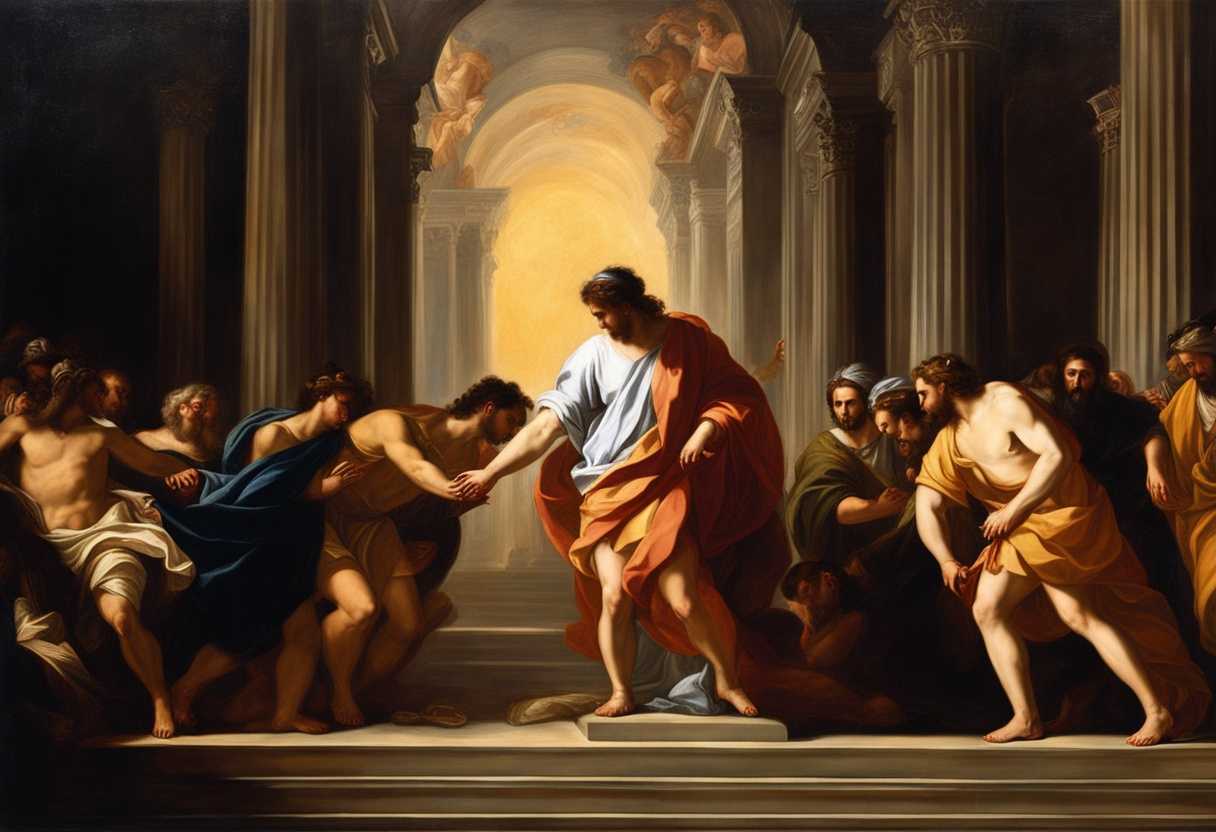
The True Meaning of Isaiah 45
The book of Isaiah was written by the prophet Isaiah, who lived during the reigns of several Judean kings in the 8th century BC. Isaiah was known for his powerful visions and messages from God, often warning the people of Judah and Israel about the consequences of their disobedience and idolatry. God’s sovereign plan unfolds in this chapter as He calls Cyrus, the king of Persia, to be His instrument of judgment and restoration for His people. The chapter highlights God’s absolute power and control over the nations, as well as His desire to redeem and save those who turn to Him. We will witness the humbling of human pride and the exaltation of God’s name, which is a recurring theme throughout the book of Isaiah. As we delve into this chapter, we will be reminded of the importance of acknowledging God’s supremacy and submitting to His will, even when it may not align with our own expectations or desires. The events described here foreshadow the ultimate redemption that will come through the Messiah, as prophesied in other parts of Isaiah’s writings (Isaiah 9:6-7, 53:1-12).
Isaiah 45:1-7
The passage in Isaiah 45:1-7 begins with the Lord speaking to Cyrus, a pagan king who would later conquer Babylon. The verse starts with a powerful statement declaring that God has anointed Cyrus, calling him by name and leading him in the path of victory. This is a remarkable prophecy because it occurs almost 200 years before Cyrus was even born and demonstrates God’s sovereignty over all nations and rulers.
This proclamation serves as a reminder that God is in control of the rise and fall of kingdoms and that He can use even pagan rulers to accomplish His purposes. It also showcases God’s ability to raise up individuals for specific tasks, regardless of their background or beliefs. This can be a comforting thought for believers, knowing that God works all things together for the good of those who love Him (Romans 8:28).
The verse goes on to describe how God will make the paths of Cyrus straight, breaking down barriers and opening doors before him. This imagery is a powerful reminder of God’s ability to clear the way for His chosen instruments, ensuring that His plans come to fruition. It also demonstrates God’s power to work through earthly leaders to bring about His divine will.
Furthermore, the verse speaks of Cyrus as a shepherd who will lead the people out of captivity, drawing parallels to the role of Christ as the Good Shepherd who guides His flock. This foreshadowing of Jesus’ redemptive work highlights the continuous thread of God’s plan for salvation throughout the Bible, culminating in the ultimate deliverance through Christ.
The passage concludes with a declaration of God’s uniqueness and supremacy over all other gods. It reaffirms that there is no one besides Him, emphasizing His status as the one true God. This serves as a foundational truth that echoes throughout the entirety of Scripture, reminding readers of the importance of placing their trust and faith in God alone. Isaiah 45:1-7 showcases God’s sovereignty, His ability to use even unlikely individuals for His purposes, and His unmatched power and authority. It reveals a glimpse of God’s grand plan for redemption and highlights His unchanging nature as the Alpha and the Omega, the Beginning and the End (Revelation 22:13).
Isaiah 45:8-13
Verse 8 of Isaiah 45 begins with the powerful declaration, “Drip down, O heavens, from above, And let the clouds pour down righteousness.” This imagery of righteousness flowing down from the heavens symbolizes God’s justice and mercy descending upon His people. The righteousness mentioned here represents God’s moral perfection and His faithfulness to His covenant with His chosen ones. This verse serves as a reminder of God’s sovereignty and how His righteousness is abundant and inexhaustible, cascading like rain upon His creation.
Moving on to verse 9, it reads, “Woe to the one who quarrels with his Maker—An earthenware vessel among the vessels of earth! Will the clay say to the potter, ‘What are you doing?’ Or the thing you are making say, ‘He has no hands’?” This verse conveys the idea that it is futile and foolish for humanity to question or challenge God’s divine will. God is the Creator, and we are His creations. Just as a potter molds and shapes clay to his liking, God has the ultimate authority over us, His creations. This passage highlights the importance of humility and submission to God’s plan, recognizing that His ways are higher than our ways (Isaiah 55:8-9). “We encounter a thought-provoking statement in verse 10, ‘Woe to him who says to a father, ‘What are you begetting?’”’ Or to a woman, ‘To what are you giving birth?’” This verse further emphasizes the absurdity of questioning God’s actions or purposes. Just as a child cannot fully comprehend the actions of their parents, we, as finite beings, cannot fully grasp the infinite wisdom and knowledge of God. This verse reinforces the concept of trusting in God’s plan and acknowledging His supremacy in all aspects of our lives. God speaks directly to Cyrus, a pagan ruler who will play a crucial role in the history of Israel in verses 11-13, signaling a shift in focus. God declares, “Thus says the Lord, the Holy One of Israel, and his Maker: ‘Ask Me about the things to come concerning My sons, And you shall commit to Me the work of My hands. It is I who made the earth, and created man upon it. I stretched out the heavens with My hands And I ordained all their host.’” Here, God is revealing His sovereignty over all creation and His ability to use even a pagan ruler like Cyrus to fulfill His plans for His people. This demonstrates that God is not limited by human conventions or expectations; He can work through anyone to accomplish His divine purposes. Isaiah 45:8-13 serves as a powerful reflection on God’s righteousness, sovereignty, and wisdom. It reminds us of the importance of trusting in God’s plan, submitting to His authority, and acknowledging His supremacy in all things. The mention of Cyrus highlights God’s ability to work through unexpected individuals to bring about His divine will, showing that nothing is beyond His control or foresight. We approach God with humility, faith, and reverence as we delve into these verses, knowing that He is the ultimate potter shaping our lives according to His perfect design.
Isaiah 45:14-19
God speaks through the prophet Isaiah in a portion of the prophecy presented in Isaiah 45:14-19. Let’s break down this verse into sections for a detailed interpretation.
-
**”This is what the Lord says: “The products of Egypt and the merchandise of Cush, and those tall Sabeans—they will come over to you and will be yours; they will trudge behind you, coming over to you in chains. They will bow down before you and plead with you, saying, ‘Surely God is with you, and there is no other; there is no other god. God proclaims in this section that even the nations known for their wealth and power (Egypt, Cush, and the Sabeans) will eventually acknowledge the supremacy of Yahweh. The mention of these nations holds significance in the Bible as Egypt represents a place of oppression (Exodus) while Cush and the Sabeans symbolize distant lands of abundance and influence (Psalm 68:31). This prophecy underscores the sovereignty of God over all nations and His ability to bring even the proudest to humility before Him.
-
“Truly you are a God who has been hiding himself, the God and Savior of Israel.”
Here, the idea of God hiding Himself signifies that even when it may seem like God is distant or not actively involved, He is still present and at work behind the scenes. This concept of God’s hiddenness is echoed in other parts of the Bible, such as in Job 23:8-9 and Deuteronomy 31:17-18. It serves as a reminder that God’s ways are not always easily discernible to us, but His plans are always unfolding according to His will.
- “All the makers of idols will be put to shame and disgraced; they will go off into disgrace together.”
This verse emphasizes the futility of idol worship and the eventual downfall of those who put their trust in man-made gods. The theme of idolatry and its consequences is a recurrent one in the Bible, illustrating that anything placed above God in our lives will ultimately lead to disappointment and shame. This message is seen throughout the Old Testament, particularly in the accounts of the Israelites turning to idols despite God’s warnings (Exodus 32, Judges 10:6-16).
- **“But Israel will be saved by the Lord with an everlasting salvation; you will never be put to shame or disgraced, to ages everlasting. God promises salvation and eternal honor to Israel, His chosen people in this final section. This pledge of everlasting salvation stands as a testament to God’s faithfulness to His covenant with Israel despite their shortcomings and unfaithfulness. It also foreshadows the ultimate salvation that would come through Jesus Christ for both the Jews and the Gentiles (Romans 1:16). Isaiah 45:14-19 underscores the themes of God’s sovereignty over all nations, His hidden yet active presence in the world, the futility of idol worship, and the assurance of salvation for His chosen people. These verses serve as a reminder of God’s faithfulness, His power to humble the proud, and His ultimate plan for redemption and restoration.
Isaiah 45:20-25
The passage in Isaiah 45:20-25 can be broken down into several significant sections that hold valuable insights and timeless messages within the context of the book of Isaiah. Beginning with verse 20, it states, “Gather together and come; assemble, you fugitives from the nations. Ignorant are those who carry about idols of wood, who pray to gods that cannot save.” This portion emphasizes a call to gather and assemble, contrasting those who rely on physical idols which are incapable of offering true salvation. Here, Isaiah is challenging the people to recognize the futility of worshiping created objects over the one true God.
Moving on to verse 21, we read, “Declare what is to be, present it— let them take counsel together. Who foretold this long ago, who declared it from the distant past? Was it not I, the Lord? And there is no God apart from me, a righteous God and a Savior; there is none but me.” This verse highlights the sovereignty of God and His unmatched ability to foretell future events. It asserts that there is no other God beside Him, reinforcing the monotheistic belief central to the Israelites’ faith. Isaiah declares in verse 22, “Turn to me and be saved, all you ends of the earth; for I am God, and there is no other.”” This verse serves as a universal call to salvation, inviting people from all corners of the earth to turn to God for deliverance. It echoes the inclusivity of God’s offer of redemption to everyone, regardless of nationality or background. “It states in verse 23, ‘By myself I have sworn, my mouth has uttered in all integrity a word that will not be revoked: Before me every knee will bow; by me every tongue will swear.’”” Here, God affirms His authority and ultimate judgment over all creation. This proclamation foreshadows the future fulfillment described in the New Testament, where every knee shall bow and every tongue confess that Jesus Christ is Lord (Philippians 2:10-11). Isaiah conveys God’s promise of righteousness and glory to His people in verses 24-25, stating, “They will say of me, ‘In the Lord alone are deliverance and strength.”‘” All who have raged against him will come to him and be put to shame. But all the descendants of Israel will find deliverance in the Lord and will make their boast in him.” These verses assure the faithful remnant of Israel that God will vindicate them and bring about their ultimate salvation, contrasting the fate of those who opposed Him. Isaiah 45:20-25 encapsulates the themes of God’s supremacy, universal salvation, and righteous judgment. It underscores the importance of turning to the one true God for deliverance, trusting in His promises, and acknowledging His ultimate authority over all creation. The passage echoes throughout the Bible, emphasizing the core tenets of monotheism, redemption through faith, and the sovereignty of God in fulfilling His purposes.
After Isaiah 45
The Lord had spoken to Cyrus, the Persian king, and called him His “anointed” to carry out His will. Cyrus would conquer nations and open the way for the Israelites to return to their homeland. The Lord declared that He alone is God, and there is no other. He created the light and the darkness, peace and calamity. The Lord would guide Cyrus and ensure the restoration of Jerusalem. The reverend knew that the next part of the story would reveal the Lord’s continued guidance and protection over His people as the chapter drew to a close. The Israelites had endured much hardship, but the Lord’s promise of redemption and restoration was unwavering. The reverend could feel the anticipation building, for the next chapter would surely show how the Lord’s plan would unfold, leading His people back to the Promised Land.

Reverend Michael Johnson is an experienced Church Minister with a profound expertise in spirituality and guidance. With a serene presence and a compassionate heart, he has faithfully served his congregation for over 20 years, leading them on a spiritual journey towards inner peace and enlightenment. Reverend Johnson’s extensive knowledge of religious philosophies and profound understanding of human nature have made him a trusted confidant and mentor to many, as he seamlessly weaves his profound wisdom into life teachings. Reverend Johnson’s calming demeanor and empathetic nature continue to uplift and heal souls, nurturing a sense of unity and tranquility within his community.