
Isaiah 51:17-20 is about God’s promise of restoration and protection to His people, assuring them that even though they have faced destruction and exile, He will comfort them, restore their land, and remove their oppressors.
17 Wake yourself, wake yourself,
stand up, O Jerusalem,
you who have drunk from the hand of the Lord
the cup of his wrath,
who have drunk to the dregs
the bowl, the cup of staggering.
18 There is none to guide her among all the sons she has borne; there is none to take her by the hand among all the sons she has brought up.
19 These two things have happened to you—
who will console you?—
devastation and destruction, famine and sword;
who will comfort you?
20 Your sons have fainted; they lie at the head of every street like an antelope in a net; they are full of the wrath of the Lord, the rebuke of your God.
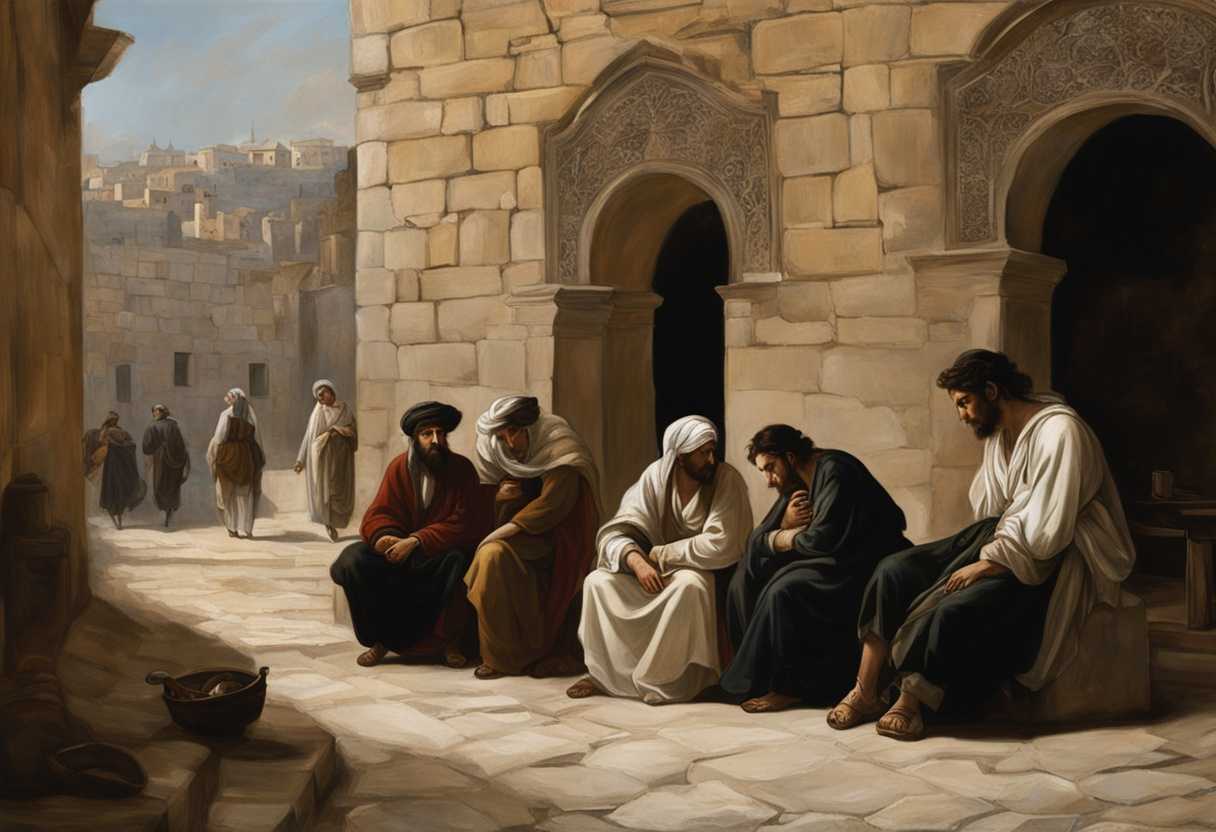
Setting the Scene for Isaiah 51:17-20
The scene in Isaiah 51:17-20 takes place in the ancient city of Jerusalem, within the walls of the city. The prophet Isaiah is addressing the people of Jerusalem, who are facing a time of great distress and destruction. The city is in ruins, with its inhabitants feeling abandoned and desolate. The once bustling streets are now empty, and the once vibrant community is now filled with sorrow and despair.
Isaiah, a trusted prophet of God, has gathered the people together to deliver a message of hope and restoration. He speaks with authority and compassion, urging the people to trust in the Lord and not be afraid. Despite the current devastation, Isaiah assures them that God will restore Jerusalem and bring comfort to its people. The scene is filled with a mix of emotions – fear, sadness, but also a glimmer of hope and faith in the promises of God.
The people in the scene include the residents of Jerusalem, who have gathered to listen to Isaiah’s words. They are a mix of young and old, rich and poor, all united in their suffering and longing for deliverance. As Isaiah speaks, his words resonate with the crowd, offering them a sense of peace and reassurance in the midst of chaos. The surroundings are a stark reminder of the destruction that has befallen the city, with crumbling buildings and debris scattered throughout the streets. But amidst the ruins, there is a sense of unity and solidarity as the people come together to seek solace and guidance from their prophet.
What is Isaiah 51:17-20 about?
God’s judgment upon Jerusalem for its sins is poignantly depicted in Isaiah 51:17-20. The vivid imagery of Jerusalem being drunk with the cup of God’s wrath serves as a powerful metaphor for the consequences of the city’s transgressions. However, amidst this judgment, there lies a glimmer of hope as God promises restoration and redemption for His people. The imagery of suffering and desolation is juxtaposed with the promise of future renewal and rebuilding. We reflect on these verses, reminding us of the enduring nature of God’s love and mercy. Despite the destruction and punishment brought upon Jerusalem, God’s promise of restoration demonstrates His unwavering commitment to His people. This passage serves as a potent reminder of the consequences of sin, but also as a beacon of hope for those who turn to God in repentance and faith. It prompts us to consider the consequences of our own actions and to seek God’s forgiveness and restoration in times of trial and tribulation.
So, as we ponder upon this passage from Isaiah, let us be mindful of the need for repentance and renewal in our lives. God’s promise of restoration and redemption always accompanies His judgment, bringing us comfort. May we find solace in the knowledge that even in our darkest moments, God’s light shines to lead us towards a path of healing and restoration.
Understanding what Isaiah 51:17-20 really means
Isaiah 51:17-20 is a poignant passage within the larger context of God’s message to the people of Jerusalem, imploring them to awaken from their spiritual slumber and acknowledge the gravity of their circumstances. The call to “Awake, awake! Rise up, Jerusalem” serves as a clarion call for action, urging individuals to become cognizant of both their spiritual and physical state. The imagery of drinking from the “cup of his wrath” vividly portrays the suffering and consequences that the people have endured as a result of their disobedience, emphasizing the need for repentance and divine intervention.
The metaphor of the “goblet that makes people stagger” underscores the profound impact of their suffering, likening it to a potent drink that induces disorientation and stumbling. The lamentation that “among all the children she bore there was none to guide her” paints a picture of abandonment and a lack of leadership or support during Jerusalem’s time of distress. These phrases convey a sense of desolation and the urgent need for guidance and redemption.
Drawing parallels with related biblical passages such as Jeremiah 25:15-16, Lamentations 1:12, and Revelation 14:10 reinforces the theme of divine judgment and the consequences of disobedience. The timeless relevance of the call to “awake” resonates with individuals and communities today, urging them to introspect and recognize the repercussions of their actions. The imagery of drinking from the “cup of wrath” serves as a stark reminder of the outcomes of turning away from God, applicable in various contexts of personal, societal, and global challenges.
Consider a scenario where a community disregards environmental warnings, leading to severe pollution and health crises. A leader’s exhortation to “Wake up! Look at what we’ve done to our home” mirrors the call in Isaiah, prompting people to acknowledge the impact of their actions and initiate change. Similarly, in personal life, ignoring signs of deteriorating health or relationships can lead to wake-up calls like serious health scares or relationship breakdowns, prompting individuals to confront reality, akin to Jerusalem’s call to “awake.”
In conclusion, Isaiah 51:17-20 serves as a compelling summons to awareness and repentance, urging individuals to confront their circumstances and seek divine assistance. The evocative imagery and forceful language in the passage aim to awaken readers to the severity of their actions and the imperative for transformation. By reflecting on these verses and related scriptures, individuals can find relevance and guidance for their lives, inspiring them to confront challenges with renewed purpose and faith.
How do we find peace and salvation in chaos?
Finding peace and salvation can be challenging in times of chaos and turmoil. However, the verse reminds us to trust in the Lord and not be afraid of earthly troubles. We can find inner peace amid the chaos that surrounds us by placing our faith in God and seeking solace in His promises. Through prayer, meditation, and seeking guidance from the scriptures, we can find the strength and hope needed to navigate through difficult times.
Salvation in chaos can come from turning to God’s word for guidance and taking refuge in His love and protection. Remembering that God is in control can bring comfort and reassurance, even in the midst of chaos. We can find salvation from fear, anxiety, and uncertainty by staying grounded in our faith and trusting in His plan. Through our faith, we can find a sense of peace that surpasses all understanding, knowing that God is with us always, guiding us through the storms of life. A deep-seated faith and trust in God’s power and love ultimately enable finding peace and salvation in chaos. We can find rest for our souls and strength to carry on by surrendering our fears and worries to Him. It is in this surrender and reliance on God that we can find true peace and salvation, even in the midst of chaos and uncertainty. Trusting in His promises and seeking His presence can lead us to a place of tranquility and security that transcends our earthly struggles.
Application
In the fast-paced world of today, just as we prioritize our work and family, let us make trusting in God a priority too. Even in the midst of chaos and challenges, let’s cling to our faith and find solace in His unwavering protection. As we navigate the ups and downs of life, let’s remember that God is our constant support and shield. Will you choose to anchor your hope in His promises and be embraced by His eternal love?

Reverend Michael Johnson is an experienced Church Minister with a profound expertise in spirituality and guidance. With a serene presence and a compassionate heart, he has faithfully served his congregation for over 20 years, leading them on a spiritual journey towards inner peace and enlightenment. Reverend Johnson’s extensive knowledge of religious philosophies and profound understanding of human nature have made him a trusted confidant and mentor to many, as he seamlessly weaves his profound wisdom into life teachings. Reverend Johnson’s calming demeanor and empathetic nature continue to uplift and heal souls, nurturing a sense of unity and tranquility within his community.