
Isaiah 5:14 is about how the sinful actions of people lead them to darkness and destruction, symbolized by Sheol, the realm of the dead, expanding its appetite and opening its mouth without limit.
14 Therefore Sheol has enlarged its appetite and opened its mouth beyond measure, and the nobility of Jerusalem and her multitude will go down, her revelers and he who exults in her.
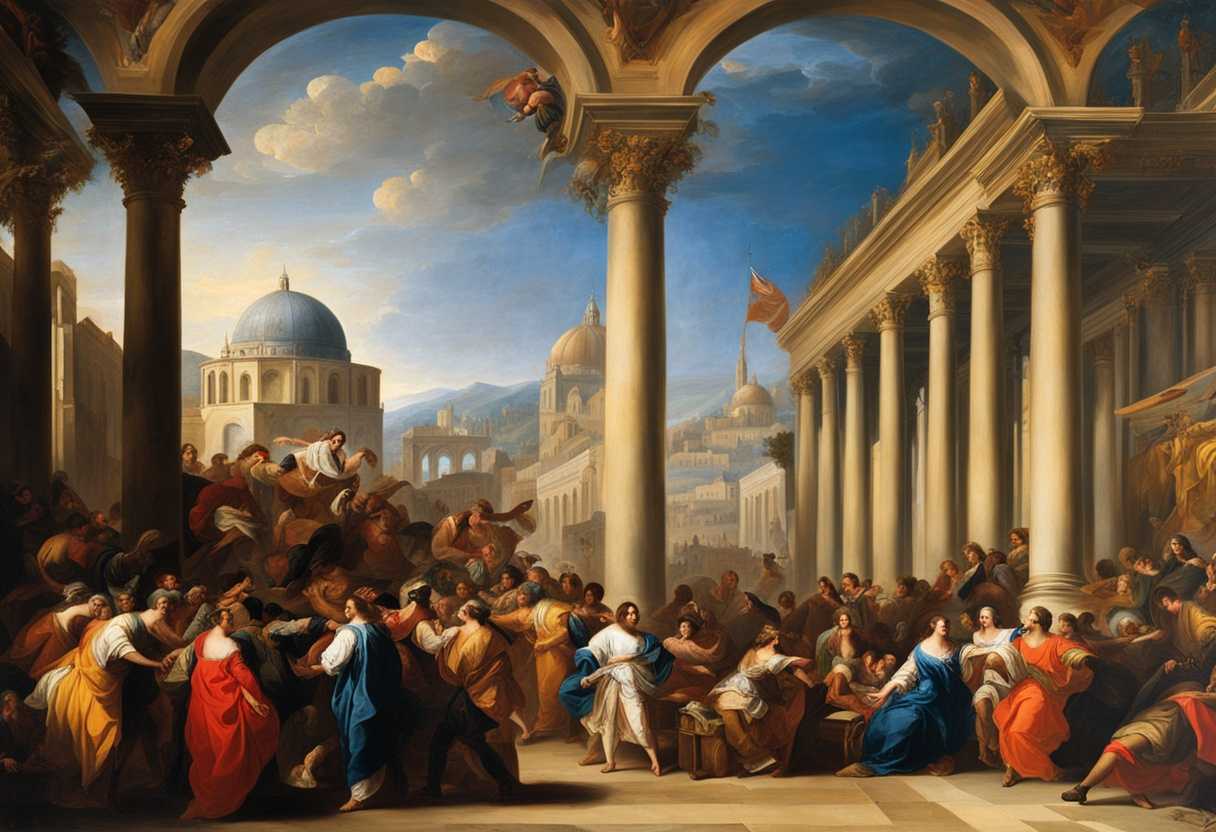
Setting the Scene for Isaiah 5:14
In Isaiah chapter 5, we find a vivid scene set in ancient Israel. The prophet Isaiah, known for his powerful messages from God, is standing in the midst of a bustling marketplace in Jerusalem. The air is filled with the sounds of merchants haggling, animals braying, and the chatter of the crowd. The sun beats down on the colorful stalls displaying fruits, fabrics, and pottery.
As Isaiah looks around, he sees the people of Israel consumed by their own desires and pleasures, neglecting their spiritual well-being. The scene is a stark contrast between the material abundance of the marketplace and the spiritual emptiness of the people. The prophet’s heart is heavy as he witnesses the moral decay and spiritual blindness of his fellow countrymen.
In the midst of this chaotic marketplace, Isaiah raises his voice to deliver a message from God, warning the people of the consequences of their actions. He speaks of the judgment that will come upon them if they continue to turn away from God and indulge in sin. The scene is a powerful reminder of the importance of staying faithful to God amidst the temptations of the world.
What is Isaiah 5:14 about?
Isaiah is using vivid imagery in this verse to convey a powerful message about the consequences of pride and arrogance. The idea that “Hell has enlarged itself” is a striking metaphor to illustrate how those who are consumed by pride and arrogance will ultimately face the consequences of their actions. It suggests that their sins are so great that even Hell itself must expand to accommodate them. We, as readers, are challenged to reflect on our own attitudes and behaviors. How often do we let pride and arrogance control our actions? Are we mindful of the impact our words and deeds have on others? This verse serves as a warning against the dangers of hubris and the importance of humility and self-awareness. It reminds us that no one is above accountability, and that unchecked pride can lead to a downfall of monumental proportions.
So, let us take heed of this verse and strive to cultivate humility and empathy in our interactions with others. Let us identify our own weaknesses and shortcomings, and strive towards living in a more compassionate and understanding way. We can seek to avoid the pitfalls that come with pride and arrogance by recognizing their destructive nature and choosing a path of righteousness and grace.
Understanding what Isaiah 5:14 really means
Isaiah 5:14, nestled within a larger passage of prophetic warning, paints a vivid picture of the repercussions of sin and the impending judgment awaiting the people of Judah and Jerusalem. The imagery of Sheol, the realm of the dead in Hebrew belief, expanding its appetite conveys the magnitude of those who will face consequences for their unrepentant transgressions. This expansion symbolizes the vast number of individuals who will be held accountable for their actions, emphasizing the seriousness of divine judgment.
Furthermore, the mention of both the common people and the nobility of Jerusalem descending into Sheol underscores the impartiality of God’s judgment. This inclusivity serves as a stark reminder that no one is exempt from the consequences of sin, regardless of their societal status or influence. The verse highlights the universal nature of accountability before God, challenging individuals at all levels of society to reflect on their actions and seek repentance.
Drawing parallels with other biblical passages, such as Proverbs 27:20 and Matthew 7:13-14, reinforces the timeless message of Isaiah 5:14. These verses collectively emphasize the insatiable nature of Sheol and the importance of choosing the path of righteousness to avoid destruction. The consistent theme across these passages warns against complacency and urges individuals to prioritize a life aligned with God’s will to avert dire consequences.
In a contemporary context, Isaiah 5:14 serves as a poignant reminder of the repercussions of straying from God’s path and succumbing to sinful behaviors. It prompts introspection and calls for a reevaluation of one’s choices, advocating for a return to God and a pursuit of righteousness. The verse challenges individuals to confront their own actions and seek reconciliation with God, emphasizing the transformative power of repentance and divine mercy.
Illustratively, envision a community once flourishing with shared values and integrity, only to spiral into moral decay and corruption due to unchecked sin and pride. Leaders succumb to corruption, and individuals indulge in excess without considering the consequences, leading to the community’s eventual downfall. This narrative mirrors the cautionary tale of Isaiah 5:14, illustrating how unchecked sin and arrogance can pave the way for inevitable judgment and downfall, irrespective of external influences.
In conclusion, Isaiah 5:14 stands as a poignant call to heed the consequences of sin and prioritize a life rooted in righteousness and obedience to God. It beckons individuals to humility, repentance, and a renewed commitment to living in alignment with God’s purposes. By contemplating the message of this verse alongside related passages, we are encouraged to engage in self-reflection, make intentional choices that foster spiritual growth, and strive for a life that honors God’s will.
How can we seek the path of righteousness?
Seeking the path of righteousness involves striving to align our actions, intentions, and beliefs with what is morally right and just. It entails embodying virtues such as honesty, compassion, humility, and integrity in our thoughts, words, and deeds. We can stay on the right path by constantly reflecting on our own conduct and seeking to improve ourselves.
It is important to regularly examine our hearts and minds to ensure that our motivations are pure and in line with ethical principles. Being mindful of our choices and their potential consequences can help guide us towards making decisions that are ethical and in accordance with the teachings of righteousness. Through self-reflection, seeking guidance, and staying committed to moral values, we can navigate the complexities of life and uphold righteousness in all aspects of our existence.
Application
Reflect on the fleeting nature of our lives and the significance of living with intent and goodness. Let your actions align with your values, leading you to seek forgiveness and grace. Time is precious – don’t hesitate to abandon wrongdoing and adopt a path guided by faith. Embrace the path that reflects your beliefs wholeheartedly. Will you take this step and follow the path illuminated by faith and righteousness?

Reverend Michael Johnson is an experienced Church Minister with a profound expertise in spirituality and guidance. With a serene presence and a compassionate heart, he has faithfully served his congregation for over 20 years, leading them on a spiritual journey towards inner peace and enlightenment. Reverend Johnson’s extensive knowledge of religious philosophies and profound understanding of human nature have made him a trusted confidant and mentor to many, as he seamlessly weaves his profound wisdom into life teachings. Reverend Johnson’s calming demeanor and empathetic nature continue to uplift and heal souls, nurturing a sense of unity and tranquility within his community.