
Isaiah 7:10-15 is about the prophet Isaiah reassuring King Ahaz of Judah that God will protect his kingdom by giving a sign of a virgin conceiving a child, ultimately foretelling the birth of Jesus Christ as a sign of God’s faithfulness and salvation.
10 Again the Lord spoke to Ahaz,
11 “Ask a sign of the Lord your God; let it be deep as Sheol or high as heaven.”
12 But Ahaz said, “I will not ask, and I will not put the Lord to the test.”
13 And he said, “Hear then, O house of David! Is it too little for you to weary men, that you weary my God also?
14 Therefore the Lord himself will give you a sign. Behold, the virgin shall conceive and bear a son, and shall call his name Immanuel.
15 He shall eat curds and honey when he knows how to refuse the evil and choose the good.
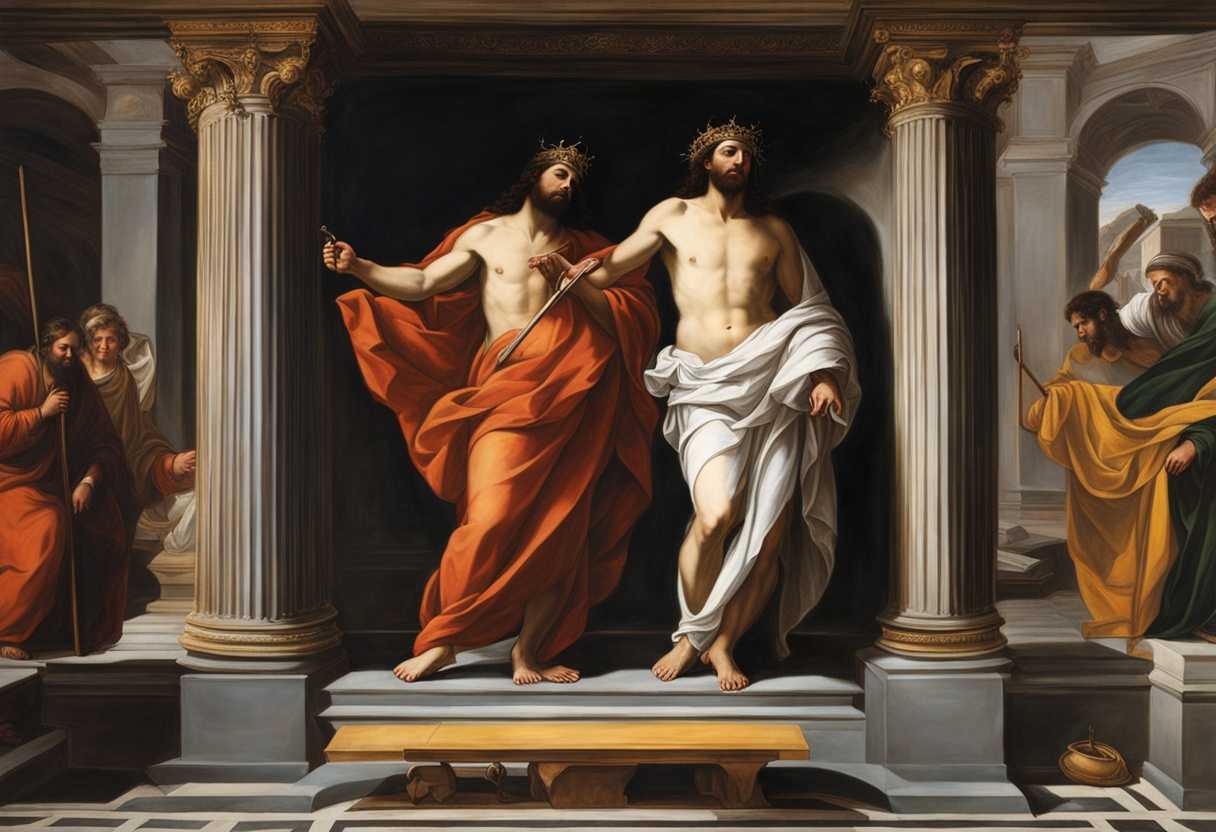
Setting the Scene for Isaiah 7:10-15
In Isaiah chapter 7, we find the prophet Isaiah standing in the courtyard of King Ahaz’s palace in Jerusalem. The king is troubled by the threat of invasion from the northern kingdom of Israel and Syria. Isaiah, guided by the Lord, goes to meet King Ahaz to deliver a message of reassurance and a sign from God.
As Isaiah stands in the grand courtyard, surrounded by the opulence of the palace, King Ahaz, visibly distressed, paces back and forth. The atmosphere is tense as the king grapples with the weight of the impending invasion. Isaiah, a figure of authority and wisdom, approaches the king with a message of hope and faith in the Lord’s protection. The scene is filled with anticipation as Isaiah delivers the prophecy of a virgin conceiving a child who will be a sign of God’s presence and deliverance.
In this pivotal moment, the fate of the kingdom hangs in the balance as Isaiah implores King Ahaz to trust in the Lord’s promise of salvation. The courtyard, usually bustling with courtiers and advisors, is now hushed as all eyes are on the prophet and the king. The tension is palpable as Isaiah’s words echo through the courtyard, offering a glimmer of hope in the midst of uncertainty.
What is Isaiah 7:10-15 about?
This verse speaks about the prophecy of a virgin birth, predicting the arrival of Jesus Christ. It foreshadows a miraculous event where a child will be born to a virgin, signifying a divinely ordained birth that will have a profound impact on humanity. The concept of a virgin birth highlights the supernatural nature of Jesus’ arrival, emphasizing his unique and divine identity.
Have you ever thought about the significance of this prophecy in relation to Jesus’ role as the savior of humanity? This verse serves as a powerful testament to the foreknowledge and sovereignty of God, who orchestrated the events leading to the birth of Jesus. It underscores the miraculous nature of Jesus’ incarnation, setting him apart as the chosen one to fulfill a crucial role in the redemption of mankind. Reflecting on this prophecy can deepen our understanding of the divine plan and the extraordinary way in which God works to bring about salvation.
Understanding what Isaiah 7:10-15 really means
Isaiah 7:10-15 presents a compelling narrative within the larger context of political unrest and divine intervention. The prophet Isaiah delivers a message to King Ahaz of Judah during a time of turmoil, offering a sign from God that promises deliverance and the birth of a child named Immanuel, meaning “God with us.” This key phrase encapsulates the essence of divine presence and support in the face of adversity, resonating with believers throughout history.
“The Lord spoke to Ahaz,” highlighting the significance of divine communication and intervention in the lives of His people. This phrase underscores the active involvement of God in human affairs, emphasizing His sovereignty and care for His creation. The instruction to “Ask the Lord your God for a sign” demonstrates God’s willingness to provide tangible reassurance and evidence of His promises, inviting Ahaz to trust in His faithfulness.
The prophecy that “the virgin will conceive and give birth to a son” is a pivotal moment in the passage, often interpreted as a foreshadowing of the birth of Jesus Christ. This profound revelation symbolizes hope, redemption, and the ultimate fulfillment of God’s plan for salvation. The name “Immanuel,” meaning “God with us,” encapsulates the essence of God’s presence and support in the midst of trials and uncertainties, offering a beacon of light in the darkness.
Drawing connections to related biblical passages such as Matthew 1:22-23, Psalm 46:1, and John 1:14 reinforces the enduring significance of the concept of Immanuel throughout Scripture. These verses echo the theme of God’s constant presence and support, reminding believers of His unfailing love and care. In our modern lives, the promise of Immanuel serves as a powerful reminder that God is with us, offering comfort, guidance, and assurance in our daily struggles.
Consider a scenario where an individual is grappling with a major life decision, feeling overwhelmed by uncertainty about the future. Through prayer and seeking a sign from God, they navigate through challenges and uncertainties, eventually finding clarity and direction. This anecdote mirrors the experience of Ahaz, illustrating how God’s presence and guidance are ever-present in our lives, guiding us through the complexities of decision-making and life’s uncertainties.
In conclusion, Isaiah 7:10-15 encapsulates the profound promise of God’s presence and deliverance, resonating with believers across generations. Just as God offered a sign to Ahaz and fulfilled the prophecy through the birth of Jesus Christ, we can take solace in the assurance that God is with us in our fears and uncertainties. The concept of Immanuel serves as a beacon of hope, reminding us that we are never alone, for God is with us, guiding us through life’s challenges and uncertainties.
How can we trust in divine promises faithfully?
The Lord offers a sign to King Ahaz in the passage from Isaiah 7:10-15 as a testament to His faithfulness and power. Through this passage, we can learn that trusting in divine promises requires faith and patience. We too are called to have faith in God’s promises even when things seem uncertain, just as Ahaz was called to trust in the promise of God despite the circumstances around him.
Trusting in divine promises faithfully means leaning on the unwavering character of God. God’s promises are rooted in His unchanging nature, and His faithfulness extends beyond any situation we may face. We can confidently place our trust in God by remembering that His promises are sure and true, knowing that He will fulfill what He has spoken. Trusting in divine promises ultimately requires a heart aligned with God’s will and a spirit surrendered to His plans. We can rest assured that His promises will come to pass in His perfect timing as we seek to be obedient and faithful in our walk with God. Our role is to remain steadfast in our trust and belief in God’s faithfulness, knowing that He is always faithful to His Word.
Application
Friends, let’s take a moment to ponder on the story of Ahaz and God’s reassurance in uncertain times. Just as Ahaz had the courage to seek a sign of guidance, let’s also trust in God’s promises and be open to the signals He sends our way. Like navigating through the challenges of work and family life, let’s rely on God’s direction to lead us towards our purpose. Will you join me in embracing the signs God is unveiling in our lives right now?

Reverend Michael Johnson is an experienced Church Minister with a profound expertise in spirituality and guidance. With a serene presence and a compassionate heart, he has faithfully served his congregation for over 20 years, leading them on a spiritual journey towards inner peace and enlightenment. Reverend Johnson’s extensive knowledge of religious philosophies and profound understanding of human nature have made him a trusted confidant and mentor to many, as he seamlessly weaves his profound wisdom into life teachings. Reverend Johnson’s calming demeanor and empathetic nature continue to uplift and heal souls, nurturing a sense of unity and tranquility within his community.