
Isaiah 7:10-16 is about the prophecy given to King Ahaz reassuring him of God’s presence and protection, using the sign of a virgin birth as a symbol of hope and deliverance for the future.
10 Again the Lord spoke to Ahaz,
11 “Ask a sign of the Lord your God; let it be deep as Sheol or high as heaven.”
12 But Ahaz said, “I will not ask, and I will not put the Lord to the test.”
13 And he said, “Hear then, O house of David! Is it too little for you to weary men, that you weary my God also?
14 Therefore the Lord himself will give you a sign. Behold, the virgin shall conceive and bear a son, and shall call his name Immanuel.
15 He shall eat curds and honey when he knows how to refuse the evil and choose the good.
16 For before the boy knows how to refuse the evil and choose the good, the land whose two kings you dread will be deserted.
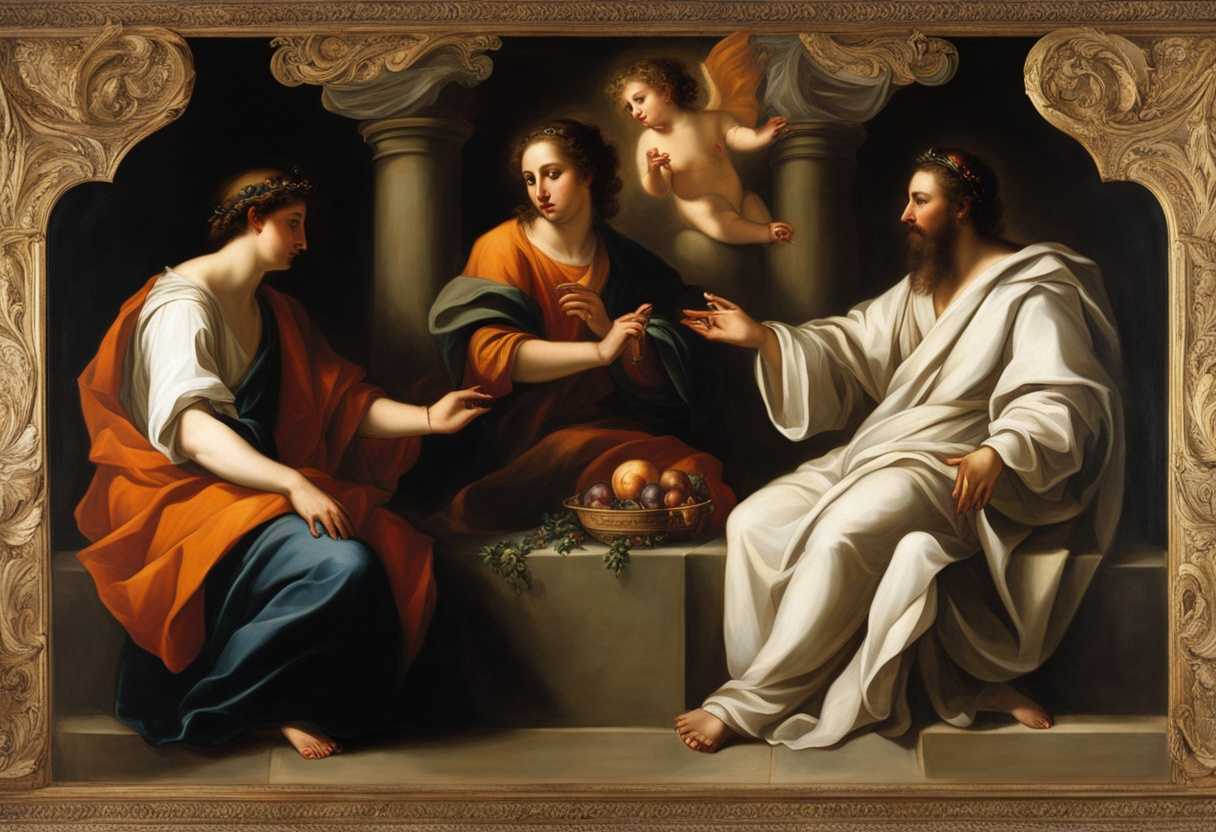
Setting the Scene for Isaiah 7:10-16
In Isaiah chapter 7, we find the prophet Isaiah standing in the courtyard of King Ahaz’s palace in Jerusalem. The scene is tense as the kingdom of Judah is under threat from the northern kingdom of Israel and Syria. Ahaz is feeling overwhelmed by the situation and is struggling to make a decision on how to proceed. Isaiah, a trusted advisor to the king, has been sent by God to deliver a message of reassurance and warning.
As Isaiah stands in the courtyard, surrounded by the bustling activity of the palace, he sees King Ahaz pacing back and forth, deep in thought. The king’s advisors are gathered around him, discussing strategies and alliances. Despite their efforts, fear and uncertainty hang heavy in the air. Isaiah approaches the king, his presence commanding attention, and delivers the message from God, urging Ahaz to trust in the Lord’s protection rather than seeking help from foreign powers.
The courtyard is adorned with intricate carvings and lush gardens, a stark contrast to the weighty atmosphere of the conversation taking place. The sun is beginning to set, casting a warm glow over the scene as Isaiah’s words echo through the courtyard, challenging the king to have faith in God’s promises. The tension is palpable as all eyes turn to Ahaz, waiting to see how he will respond to the prophet’s message.
What is Isaiah 7:10-16 about?
This verse refers to a prophecy found in the book of Isaiah in the Old Testament of the Bible. It talks about a virgin who will conceive and give birth to a son, and they will call him Immanuel, which means “God is with us.” This prophecy is seen as a foreshadowing of the birth of Jesus Christ in the New Testament. The verse serves as a powerful reminder of the miraculous nature of Jesus’ birth, highlighting his divine origins and the fulfillment of God’s promises to his people.
Have you ever stopped to think about the significance of this prophecy being fulfilled in Jesus Christ? It shows the meticulous planning and divine orchestration of God throughout history. Through the birth of Jesus, God demonstrates his power to accomplish the impossible and his desire to be present among his people. This verse invites us to reflect on the wonder and awe of Christ’s birth, reinforcing the belief in his divine nature and the salvation he brings to humanity.
Understanding what Isaiah 7:10-16 really means
The Book of Isaiah, a prophetic text, unfolds a significant passage during the reign of King Ahaz of Judah, amidst the looming threat from the kingdoms of Aram and Israel. In this historical backdrop, God, through the prophet Isaiah, extends a sign to King Ahaz to affirm divine protection. The phrase “The Lord spoke to Ahaz” underscores direct divine communication, highlighting the urgency and significance of the message. By inviting Ahaz to request a sign from God, the passage showcases God’s willingness to offer reassurance in times of uncertainty.
The mention of “The virgin will conceive and give birth to a son” serves as a prophetic sign, often interpreted as a foreshadowing of the birth of Jesus Christ, symbolizing hope and divine intervention. The name “Immanuel,” meaning “God with us,” encapsulates the essence of God’s presence and support for His people. The imagery of “eating curds and honey” symbolizes a future of peace and prosperity, contrasting the current atmosphere of threat and turmoil. Furthermore, the timeframe indicated by “Before the boy knows enough to reject the wrong and choose the right” suggests a swift resolution to the impending crisis.
Drawing connections to related biblical passages such as Matthew 1:22-23, Psalm 46:1, and Luke 1:31-33 reinforces the continuity of God’s promises and interventions across different contexts. The relevance of Isaiah 7:10-16 resonates with believers today by assuring them of God’s presence and intervention during challenging times. It underscores the importance of faith and trust in God’s promises, especially when circumstances appear bleak. The prophecy of Immanuel serves as a poignant reminder of God’s overarching plan for salvation through Jesus Christ.
Consider a family grappling with a severe financial crisis, uncertain about their future. Through prayer and supplication, they receive unexpected assistance from a compassionate community member, mirroring the reassurance and divine intervention promised in Isaiah 7:10-16. This anecdote vividly illustrates that God is ever-present, even in the darkest moments, offering guidance and support to those who seek Him. In conclusion, Isaiah 7:10-16 stands as a testament to God’s faithfulness and the imperative of placing our trust in His enduring promises. The prophecy of Immanuel not only provided immediate solace to King Ahaz but also pointed towards the ultimate hope embodied in Jesus Christ. In our daily lives, we find solace and strength in the unwavering truth that God is with us, leading and safeguarding us through every trial and tribulation.
What does it mean to trust in God’s promises?
Trusting in God’s promises means having faith and confidence in the assurances He provides in His word. God gives a specific promise to King Ahaz in the passage from Isaiah 7:10-16, reassuring him of His protection and provision. Trusting in God’s promises involves believing that His word is true and that He is faithful to fulfill what He has promised. It requires surrendering our fears and doubts, and instead anchoring our hope in the certainty of God’s faithfulness and goodness.
When we trust in God’s promises, we are choosing to rely on His wisdom and sovereignty rather than our own understanding or circumstances. It involves aligning our hearts with His will and timing, knowing that He always has our best interests in mind. Trusting in God’s promises also means being patient and steadfast in our faith, even when things may not seem to be going according to our plans or expectations. We ultimately decide to place our confidence in the unchanging character of God, knowing that He is trustworthy and true to His word.
Application
Are you ready to embrace God’s unwavering presence in your life, even when faced with uncertainties? Just as Ahaz found solace in the Lord’s promise, let us too trust in His guidance through every challenge we face. Stand strong in your faith, knowing that God is always by your side, steering you through life’s storms. Will you take the leap of faith and allow His unwavering love to guide you through the complexities of modern-day life?

Reverend Michael Johnson is an experienced Church Minister with a profound expertise in spirituality and guidance. With a serene presence and a compassionate heart, he has faithfully served his congregation for over 20 years, leading them on a spiritual journey towards inner peace and enlightenment. Reverend Johnson’s extensive knowledge of religious philosophies and profound understanding of human nature have made him a trusted confidant and mentor to many, as he seamlessly weaves his profound wisdom into life teachings. Reverend Johnson’s calming demeanor and empathetic nature continue to uplift and heal souls, nurturing a sense of unity and tranquility within his community.