
Isaiah 7:2 is about King Ahaz of Judah receiving news of a coalition formed against him by Aram and Israel, prompting fear and uncertainty, which serves as a backdrop for the prophecy of Emmanuel’s birth as a sign of God’s protection and presence.
2 When the house of David was told, “Syria is in league with Ephraim,” the heart of Ahaz and the heart of his people shook as the trees of the forest shake before the wind.
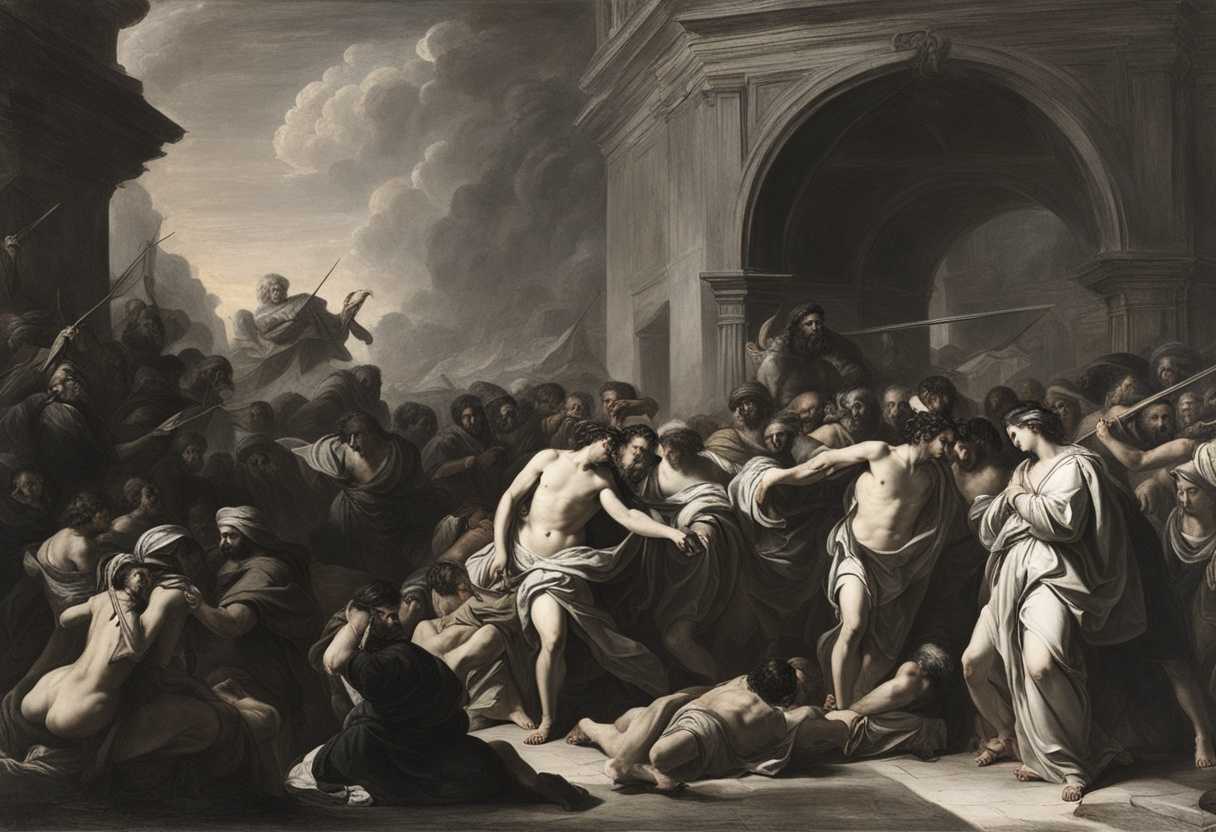
Setting the Scene for Isaiah 7:2
In Isaiah chapter 7, we find King Ahaz of Judah facing a crisis as he receives news that the kingdoms of Aram and Israel are planning to attack Jerusalem. The scene is set in the royal palace of Judah, where King Ahaz is surrounded by his advisors and officials, discussing the impending threat. The atmosphere is tense, with whispers of war and uncertainty hanging in the air.
Among those present in the scene are the prophet Isaiah, who has been sent by God to deliver a message of reassurance to King Ahaz, and possibly Ahaz’s son and heir, Hezekiah. The advisors and officials are also gathered, offering their counsel and opinions on how to handle the situation. The room is adorned with rich tapestries and ornate furniture, reflecting the wealth and power of the kingdom of Judah.
As King Ahaz listens to Isaiah’s words, he is urged to trust in the Lord and not to fear the plans of his enemies. The scene captures a pivotal moment in the history of Judah, where faith and trust in God are tested in the face of imminent danger. It is a moment of decision for King Ahaz, as he must choose whether to rely on his own strength or to place his trust in the promises of God.
What is Isaiah 7:2 about?
The people of Judah face challenging times in Isaiah 7:2 as the kings of Syria and Israel come against them. This verse captures the fear and distress that can accompany external threats and attacks on a community. It illustrates the vulnerability and uncertainty that can arise when faced with conflicts and challenges beyond our control.
Have you ever experienced a situation where you felt overwhelmed by external pressures or threats? How did you navigate through those difficult times? Just like the people of Judah in this verse, we can find strength in coming together as a community, seeking guidance and support from each other. It’s a reminder that during times of adversity, it is important to lean on our faith and trust in something greater than ourselves to guide us through the storms. We can also consider the importance of resilience and determination in the face of adversity by reflecting on this verse. Despite the fear and distress depicted in Isaiah 7:2, the people of Judah were called to trust in their faith and remain steadfast in their beliefs. It serves as a reminder that even in our darkest moments, we can find hope and strength by holding onto our values and beliefs.
Understanding what Isaiah 7:2 really means
In the historical context of Isaiah 7:2, we find King Ahaz of Judah grappling with threats from the northern kingdom of Israel and Aram. The mention of the “house of David” underscores the lineage of King David, symbolizing the covenant promises God made to David, which were foundational to the identity and hope of Judah. This setting is crucial for understanding the fear and anxiety that permeated the hearts of Ahaz and his people, akin to trees quivering in a storm.
The phrase “Aram has allied itself with Ephraim” points to a significant political and military alliance that posed a formidable challenge to Judah. This alliance heightened the sense of vulnerability and insecurity felt by the people. Drawing parallels to modern times, individuals face diverse forms of fear and anxiety, be it personal struggles, societal issues, or global crises. Just as the people of Judah navigated external threats, we too encounter our own battles against fear and uncertainty.
The imagery of trembling trees in Isaiah 7:2 vividly captures the emotional turmoil experienced by Ahaz and his people. This visual depiction of instability resonates with anyone who has felt overwhelmed by fear. Despite the tumultuous circumstances, the verse calls for trust in God’s promises and His unwavering presence. It echoes the timeless message of Isaiah 41:10, reassuring us not to fear, for God is with us.
Reflecting on related passages like 2 Samuel 7:12-16 and Philippians 4:6-7 reinforces the theme of trusting in God amidst adversity. The covenant God made with David, promising an eternal throne, serves as a beacon of hope for the “house of David” and for us today. Similarly, the New Testament’s exhortation to present our anxieties to God through prayer resonates with the call to rely on His faithfulness.
Consider a scenario where a small business owner faces the looming threat of bankruptcy amid economic challenges. The fear and uncertainty gripping the owner mirror the trembling trees in Isaiah 7:2. Yet, by leaning on God’s provision and seeking His guidance, peace and direction can be found, akin to the trust the “house of David” was called to place in God’s promises.
Isaiah 7:2 stands as a poignant reminder of humanity’s inclination to fear in the face of adversity and the divine invitation to trust in God’s enduring promises. By internalizing the lessons from this verse and related scriptures, we can draw strength and hope from God’s unchanging faithfulness, relevant to our lives in the present day.
How can we trust in God’s promises completely?
To trust in God’s promises completely, we must remember that God’s promises are rooted in His character, which is unchanging and trustworthy. When we understand that God’s promises are based on His faithfulness and love for us, we can have confidence in them. We can be sure that God will always keep His word, just as the verse you referenced in Isaiah speaks of God fulfilling His promise to His people.
Trusting in God’s promises also requires us to have faith and belief in His ability to do what He says He will do. It is a surrendering of our own understanding and placing our confidence in God’s power and sovereignty. We can rest assured that His promises will come to pass in His perfect timing and according to His perfect plan as we shift our focus from our circumstances to God’s faithfulness.
Lastly, to trust in God’s promises completely, we can look to the examples of faith in the Bible where individuals believed in God’s promises even when circumstances seemed impossible. We can strengthen our trust in God’s promises and rely on His unfailing word in all areas of our lives by meditating on these stories and building our own faith through prayer and studying God’s Word.
Application
Let’s harness the power of faith in the digital chaos of our lives. Find strength in seeking divine guidance amid the uncertainty. Trust in God’s blueprint to steer us through rough patches at work and in our families’ maze. Will you take the leap to embrace His guidance and walk the path He lights for you?

Reverend Michael Johnson is an experienced Church Minister with a profound expertise in spirituality and guidance. With a serene presence and a compassionate heart, he has faithfully served his congregation for over 20 years, leading them on a spiritual journey towards inner peace and enlightenment. Reverend Johnson’s extensive knowledge of religious philosophies and profound understanding of human nature have made him a trusted confidant and mentor to many, as he seamlessly weaves his profound wisdom into life teachings. Reverend Johnson’s calming demeanor and empathetic nature continue to uplift and heal souls, nurturing a sense of unity and tranquility within his community.