
James 2:1-9 is about showing impartiality and treating all people with equality, emphasizing that favoritism goes against the love and commandments of God.
1 My brothers, show no partiality as you hold the faith in our Lord Jesus Christ, the Lord of glory.
2 For if a man wearing a gold ring and fine clothing comes into your assembly, and a poor man in shabby clothing also comes in,
3 and if you pay attention to the one who wears the fine clothing and say, “You sit here in a good place,” while you say to the poor man, “You stand over there,” or, “Sit down at my feet,”
4 have you not then made distinctions among yourselves and become judges with evil thoughts?
5 Listen, my beloved brothers, has not God chosen those who are poor in the world to be rich in faith and heirs of the kingdom, which he has promised to those who love him?
6 But you have dishonored the poor man. Are not the rich the ones who oppress you, and the ones who drag you into court?
7 Are they not the ones who blaspheme the honorable name by which you were called?
8 If you really fulfill the royal law according to the Scripture, “You shall love your neighbor as yourself,” you are doing well.
9 But if you show partiality, you are committing sin and are convicted by the law as transgressors.
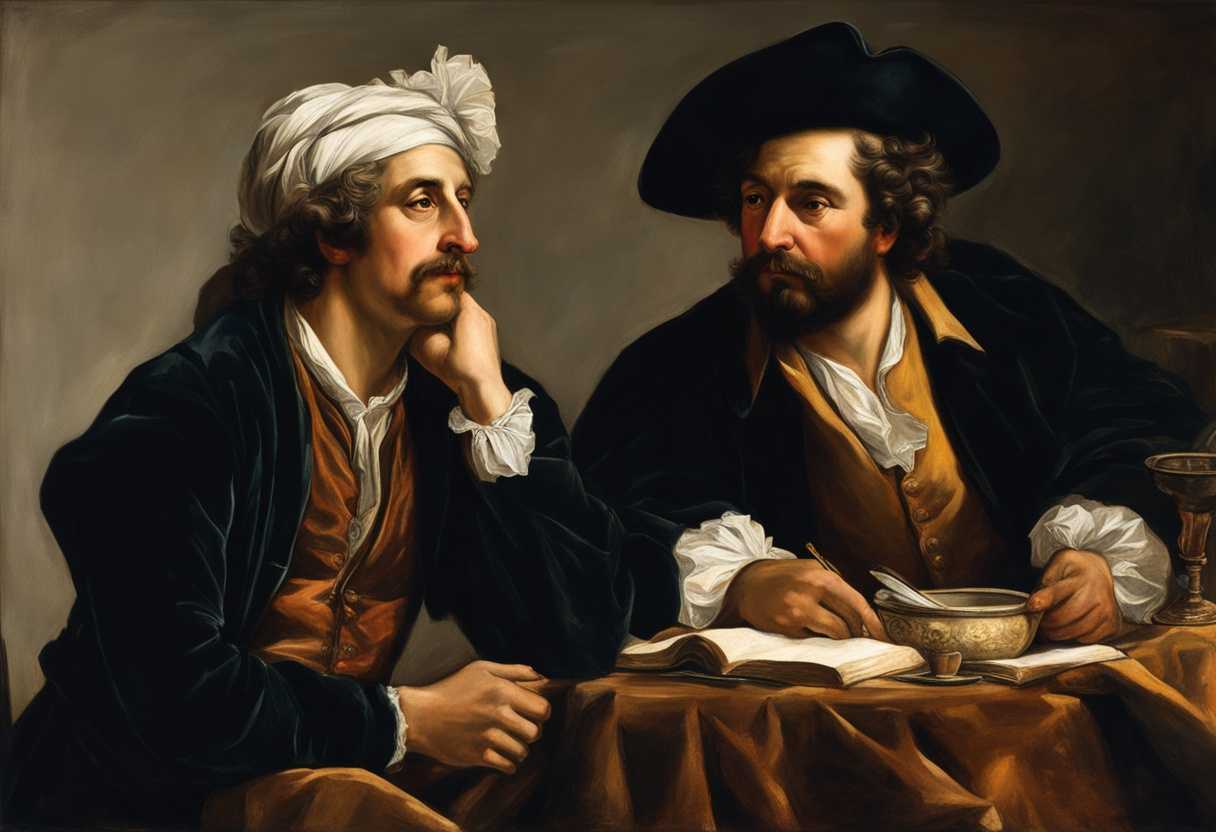
Setting the Scene for James 2:1-9
In James chapter 2, we find a scene set in a local gathering of early Christians. The room is filled with a diverse group of believers from different backgrounds and social statuses. Among them are wealthy individuals adorned in fine clothing, sitting comfortably on plush cushions, and there are also poorer members dressed in simple garments, standing at the back of the room.
The gathering came together for a time of fellowship, worship, and learning from the teachings of the apostles. As the meeting progresses, the speaker, likely one of the leaders of the early church, begins to address the issue of showing favoritism based on outward appearances. The speaker emphasizes the importance of treating everyone with equality and respect, regardless of their social status or wealth.
In this setting, the message of James 2:1-9 is particularly relevant as it challenges the believers to examine their hearts and actions towards others. The scene is filled with tension as the listeners are confronted with the truth that God shows no partiality and expects His followers to do the same. The room is silent as the words sink in, prompting self-reflection and a call to live out their faith in a way that honors God and demonstrates genuine love for one another.
What is James 2:1-9 about?
Think about this verse like a mirror reflecting your actions. When we show favoritism, we are essentially putting ourselves above others, which goes against the very foundation of Christianity that is built on love, equality, and compassion. Jesus teaches us to love our neighbors as ourselves, treating them with the same kindness and respect that we desire for ourselves. So by showing favoritism, we are not truly following Jesus’s teachings and our faith becomes hypocritical.
Imagine if everyone embraced this principle of loving their neighbor as themselves. How much more peaceful and harmonious our world would be! It’s a powerful reminder that our faith is not just about what we believe or say, but it is also about how we treat others. Let’s strive to embody this love in our actions towards all people, regardless of their status, appearance, or background. Let’s challenge ourselves to break down any walls of favoritism and truly see each person as a valuable and deserving child of God.
Understanding what James 2:1-9 really means
James 2:1-9 delves into the issue of favoritism and partiality within the Christian community, emphasizing the fundamental principle of treating all individuals with equal respect and love, irrespective of their social or economic standing. The passage opens with a stark declaration that believers in Jesus Christ must not exhibit favoritism, setting the tone for the subsequent discussion on the dangers of judging others based on external appearances. The vivid scenario presented, where a wealthy man and a poor man are contrasted in their reception, serves as a poignant reminder of the human tendency to discriminate and make unfair judgments.
Drawing parallels with other biblical passages, such as Leviticus 19:15, Matthew 22:39, and Galatians 3:28, reinforces the overarching message of impartiality and love for all individuals. These verses underscore the timeless truth that God calls His followers to treat others with fairness and equality, transcending societal divisions and prejudices. In a contemporary context, the relevance of James 2:1-9 is striking, as issues of discrimination based on race, class, or status continue to plague society. The passage serves as a moral compass, guiding believers to introspect and rectify any biases that may hinder genuine Christian fellowship.
An illustrative anecdote vividly captures the essence of James’ teaching, depicting a scenario where favoritism plays out within a church setting. The contrast between the warm reception given to a wealthy individual and the neglect shown to a homeless person mirrors the stark realities of partiality that James condemns. Such narratives serve as powerful reminders of the importance of inclusivity and compassion in Christian communities. Personal reflections, like the shared experience of a congregant feeling undervalued due to financial constraints, further highlight the subtle ways in which favoritism can creep into our interactions and challenge us to strive for greater equity and empathy.
In conclusion, James 2:1-9 stands as a poignant call to action for believers to embody their faith through equitable treatment and genuine love for all. By confronting our biases, practicing inclusivity, and extending Christ-like compassion to those around us, we can foster a community that reflects the values of the Kingdom of God. As we navigate a world rife with divisions and inequalities, the timeless wisdom of James serves as a guiding light, urging us to live out our faith in tangible ways that honor the inherent worth of every individual.
How can we show impartiality and avoid favoritism?
To demonstrate impartiality and avoid favoritism, we must treat everyone equally regardless of their social status, wealth, or any other external factors. We should not show favoritism towards someone who is rich or influential while ignoring those who may be poor or less fortunate. Instead, we should treat each individual with fairness, kindness, and respect, recognizing the inherent value and dignity of every person. We uphold the principle of justice and ensure that our actions are guided by integrity and righteousness by practicing impartiality. We should not allow external appearances or superficial attributes to influence our interactions with others, but rather strive to emulate the impartiality and fairness that is reflective of God’s character. We exhibit love and compassion towards all individuals, fulfilling the command to love our neighbors as ourselves.
Application
Let’s erase favoritism from our interactions, treating everyone with the love they deserve. In our modern world, where diversity is key in both work and family, let’s embody equality, just as God taught us. Our actions speak louder than words – are we ready to show our faith through unbiased love?

Reverend Michael Johnson is an experienced Church Minister with a profound expertise in spirituality and guidance. With a serene presence and a compassionate heart, he has faithfully served his congregation for over 20 years, leading them on a spiritual journey towards inner peace and enlightenment. Reverend Johnson’s extensive knowledge of religious philosophies and profound understanding of human nature have made him a trusted confidant and mentor to many, as he seamlessly weaves his profound wisdom into life teachings. Reverend Johnson’s calming demeanor and empathetic nature continue to uplift and heal souls, nurturing a sense of unity and tranquility within his community.