
James 5:14-17 is about the importance of seeking prayer and support from the community when facing illness or struggles, emphasizing the power of prayer and the righteous example of Elijah as a model of effective and fervent prayer.
14 Is anyone among you sick? Let him call for the elders of the church, and let them pray over him, anointing him with oil in the name of the Lord.
15 And the prayer of faith will save the one who is sick, and the Lord will raise him up. And if he has committed sins, he will be forgiven.
16 Therefore, confess your sins to one another and pray for one another, that you may be healed. The prayer of a righteous person has great power as it is working.
17 Elijah was a man with a nature like ours, and he prayed fervently that it might not rain, and for three years and six months it did not rain on the earth.
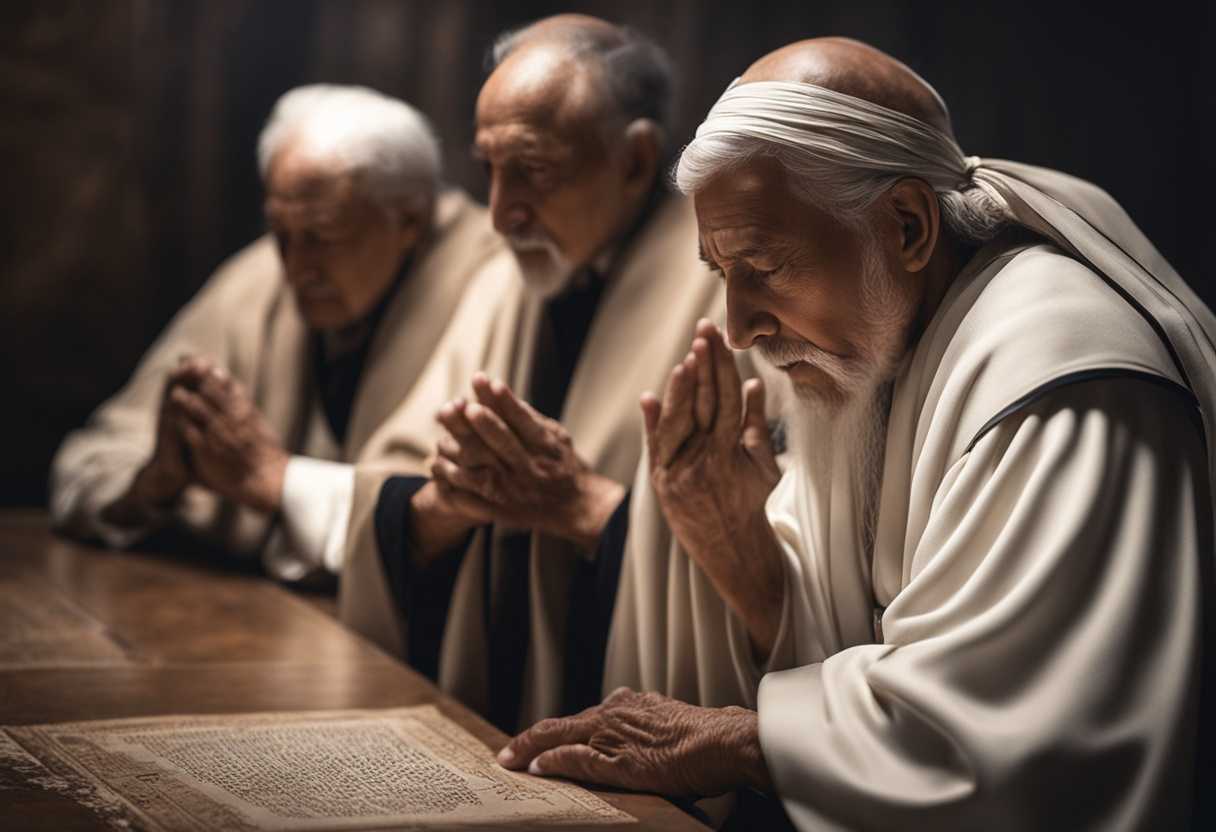
Setting the Scene for James 5:14-17
In James chapter 5, we find a scene set in a small, humble home in a first-century Christian community. The room is filled with a group of believers who have gathered together for a time of prayer and fellowship. Among them are James, the author of the epistle, and several other prominent members of the early church.
The group has come together to pray for a member of their community who is sick and in need of healing. They have followed the instructions given in James 5:14-17, which encourages them to call the elders of the church to pray over the sick person, anointing them with oil in the name of the Lord. The atmosphere in the room is one of faith, hope, and unity as they lift up their prayers to God, believing in His power to heal and restore.
As the elders lay their hands on the sick individual and offer up fervent prayers, the presence of the Holy Spirit is palpable in the room. The faith of the believers is strengthened as they witness the power of God at work in their midst, bringing comfort, peace, and healing to their friend in need. This scene serves as a powerful reminder of the importance of community, prayer, and faith in the Christian walk.
What is James 5:14-17 about?
Have you ever felt the immense power that prayer can bring into our lives? James 5:14-17 reminds us of the strength and significance of turning to prayer when seeking healing. This passage highlights the belief in the ability of prayer to bring about physical and spiritual restoration. It serves as a beacon of hope for those who are facing challenges and uncertainties, showing us that through faith and prayer, we can experience healing and renewal. Approach prayer with faith and trust in the divine intervention of God as we reflect on these verses. By seeking healing through prayer, we seek not only physical well-being but also spiritual comfort and strength. This passage calls us to believe in the power of prayer to bring about transformation and to place our struggles and concerns in the hands of a loving and compassionate higher power. Prayer can provide solace, guidance, and healing in times of need.
Understanding what James 5:14-17 really means
Introduction
The Book of James, attributed to James, the brother of Jesus, is a practical guide for Christian living, emphasizing the importance of faith in action. In James 5:14-17, the focus is on prayer, healing, and the support of the community in times of sickness or distress.
Verse Breakdown and Commentary
“Is anyone among you sick? Let them call the elders of the church to pray over them and anoint them with oil in the name of the Lord.” This verse highlights the role of the community and church leaders in providing spiritual and physical support to the sick. Anointing with oil symbolizes God’s presence and healing power, echoing the disciples’ actions in Mark 6:13.
“And the prayer offered in faith will make the sick person well; the Lord will raise them up. If they have sinned, they will be forgiven.” Here, the power of faith-filled prayer is underscored, drawing a connection between physical healing and spiritual forgiveness. Matthew 21:22 reinforces the idea that prayer in faith can move mountains.
“Therefore confess your sins to each other and pray for each other so that you may be healed. The prayer of a righteous person is powerful and effective.” This verse stresses the importance of confession, mutual prayer, and righteousness within the community. 1 John 1:9 supports the concept of confessing sins for cleansing and forgiveness, highlighting the effectiveness of prayer by the righteous.
“Elijah was a human being, even as we are. He prayed earnestly that it would not rain, and it did not rain on the land for three and a half years.” Elijah’s example showcases the potency of earnest prayer, demonstrating that ordinary individuals can wield extraordinary power through prayer, as seen in 1 Kings 17-18.
Relevance to People Today
These principles of prayer, community support, and faith remain relevant today. Seeking help from others and the church during times of illness or hardship is crucial. The role of faith and righteousness in making prayers effective is a timeless truth.
Anecdote
In a modern-day scenario, a community coming together to pray for a sick individual witnessed remarkable healing or improvement. This act of communal prayer not only brought physical healing but also strengthened the bonds within the community and deepened their faith.
Meaningful Phrases and Detailed Explanation
“Anoint them with oil in the name of the Lord” signifies the spiritual and historical significance of this act, representing God’s healing and sanctifying presence. “The prayer offered in faith” delves into the essence of trusting in God’s will and power, influencing the outcome of prayers significantly.
“Confess your sins to each other and pray for each other” stresses the importance of vulnerability and honesty within the community, leading to spiritual and emotional healing. “The prayer of a righteous person is powerful and effective” explains the impact of living a life aligned with God’s will on the potency of one’s prayers.
Conclusion
In conclusion, James 5:14-17 emphasizes the power of prayer, community support, and righteousness in healing and forgiveness. Readers are encouraged to actively engage in prayer, seek support from their community, and strive to live in alignment with God’s will. Let us remember the words of James and embody them in our daily lives, seeking healing, forgiveness, and strength through prayer and community support. Amen.
What does it mean to pray with faith?
Praying with faith means approaching God with confidence and assurance that He is able and willing to answer our prayers according to His will. It involves trusting in God’s power and His promises, even when circumstances seem impossible or uncertain. When we pray with faith, we believe that God hears our prayers and is actively working on our behalf, even if we do not see immediate results.
James 5:14-17 emphasizes the importance of prayer and faith in the context of seeking healing and restoration. It encourages believers to come together in faith, praying for one another and believing that God will respond. Praying with faith involves aligning our hearts and minds with God’s will, trusting in His wisdom and timing. We demonstrate our reliance on God’s power and acknowledge that He is the ultimate source of healing and provision in our lives by praying with faith.
Application
Dear friends, just as we rely on our colleagues for support at work and our family for love at home, let us also turn to our community of believers for prayers and healing. Let’s not forget the immense power in coming together and lifting each other up in times of sickness and need. Are we willing to set aside pride and reach out for the power of collective prayers when we face challenges?

Reverend Michael Johnson is an experienced Church Minister with a profound expertise in spirituality and guidance. With a serene presence and a compassionate heart, he has faithfully served his congregation for over 20 years, leading them on a spiritual journey towards inner peace and enlightenment. Reverend Johnson’s extensive knowledge of religious philosophies and profound understanding of human nature have made him a trusted confidant and mentor to many, as he seamlessly weaves his profound wisdom into life teachings. Reverend Johnson’s calming demeanor and empathetic nature continue to uplift and heal souls, nurturing a sense of unity and tranquility within his community.