
Jeremiah 20:1 is about the prophet Jeremiah facing persecution and ridicule for his prophetic message, highlighting the tension between divine calling and societal rejection, as well as the emotional turmoil that often accompanies faithfully speaking God’s truth.
1 Now Pashhur the priest, the son of Immer, who was chief officer in the house of the Lord, heard Jeremiah prophesying these things.
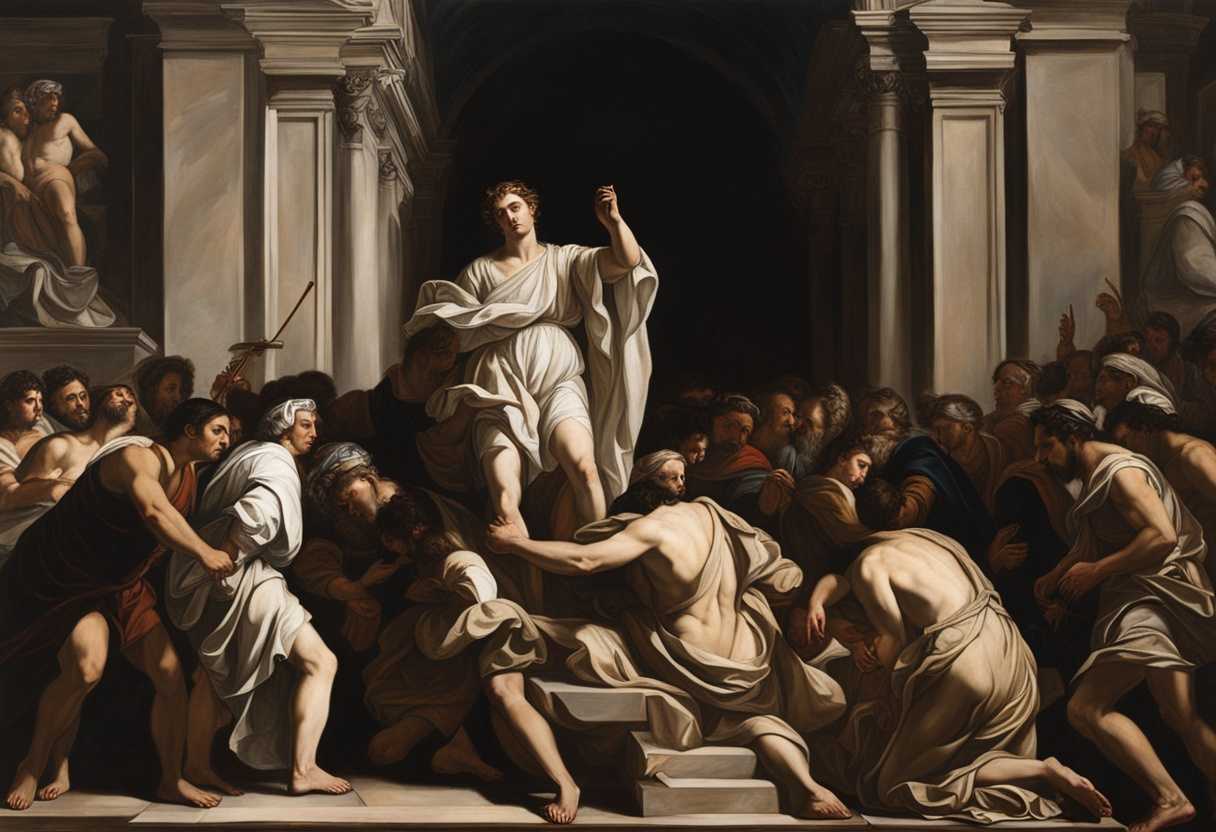
Setting the Scene for Jeremiah 20:1
In the heart of Jerusalem, the air is thick with tension and uncertainty. The city, a bustling hub of activity, is filled with the sounds of merchants calling out their wares, children playing in the dusty streets, and the distant echo of prayers rising from the Temple. Yet, amidst this vibrant life, a shadow looms over the prophet Jeremiah. He stands in the courtyard of the Temple, a place that should be sacred and welcoming, but has become a stage for his anguish. The sun hangs low in the sky, casting long shadows that seem to mirror the weight of his prophetic burden.
In this moment, Jeremiah is confronted by Pashhur, the chief officer in the Temple, a man of authority and influence. Pashhur, a priest, is known for his rigid adherence to tradition and his disdain for the messages of doom that Jeremiah has been proclaiming. The two men are at odds; Jeremiah’s words of impending judgment clash violently with Pashhur’s desire for peace and stability. Pashhur, feeling threatened by Jeremiah’s prophecies, has come to confront him, his face a mask of anger and indignation. The tension between them is palpable, as Pashhur’s authority is challenged by the truth that Jeremiah speaks, a truth that he believes could unravel the very fabric of society.
Surrounding them are the curious onlookers, a mix of faithful followers and skeptical citizens, drawn to the spectacle of confrontation. Some whisper among themselves, debating the validity of Jeremiah’s dire warnings, while others cast wary glances at Pashhur, unsure of where their loyalties should lie. The Temple, a symbol of hope and divine connection, now feels like a battleground for conflicting ideologies. Jeremiah, with his heart heavy and his spirit resolute, stands firm in his calling, knowing that his message is not just for the moment but for the future of his people. The scene is charged with emotion, a clash of faith and fear, as the prophet prepares to face the consequences of his unwavering commitment to God’s word.
What is Jeremiah 20:1 about?
Pashhur, a priest who represents the institutional religion of the time, confronts the prophet Jeremiah in his ministry, portraying the difficulties faced by him, as seen in Jeremiah 20:1. This verse sheds light on the potent mix of authority, faith, and resistance that often defines the life of a prophet. Have you ever felt the weight of criticism simply for standing up for what you believe is right? Jeremiah’s experience resonates with anyone who has faced opposition while trying to uphold a conviction, doesn’t it?
Jeremiah’s persecution at the hands of a religious leader illustrates how challenging it can be to convey God’s messages, especially when those messages confront existing power structures or social norms. This kind of conflict might naturally raise a question within us: what drives someone to oppose a voice that seeks to guide and enlighten? Pashhur’s reaction in this case defends the status quo by attempting to silence uncomfortable truths that challenge complacency. This engagement between the divine message and human authority invites us to reflect on our own lives: are there aspects of our beliefs or practices we cling to even when they may need reevaluation? Isn’t it often the uncomfortable messages that lead to genuine growth? Jeremiah’s struggle serves as a powerful reminder that prophetic voices are not always celebrated; they can often face hostility from those who confuse spiritual authority with human power. This prompts us to consider the role of the prophetic within our own communities. How do we respond to those who dare to challenge us or call us to deeper integrity? Are we listening to the Jeremiah’s among us, or are we, like Pashhur, quick to dismiss them? Engaging with these questions not only enriches our understanding of Jeremiah’s experience but also deepens our collective spiritual journey. After all, what if those prophetic voices are the catalysts for transformation in our lives?
Understanding what Jeremiah 20:1 really means
In Jeremiah 20:1, we encounter a pivotal moment in the life of the prophet Jeremiah, often known as the “weeping prophet.” This verse captures the intense conflict between Jeremiah and Pashhur, the chief officer in the temple. Jeremiah’s prophetic ministry was fraught with opposition, and this encounter highlights the challenges he faced while delivering God’s messages. It sets the stage for understanding the broader implications of standing firm in one’s faith amidst adversity.
The underlying meaning of this verse speaks volumes about the tension between divine calling and human opposition. Jeremiah’s experience serves as a poignant reminder that those who stand for truth often encounter ridicule and hostility. This theme of suffering for righteousness is not unique to Jeremiah; it resonates throughout scripture. It prompts us to reflect: How do we respond when our beliefs are challenged? Are we prepared to face opposition for the sake of truth?
Related biblical passages further illuminate this theme. In Matthew 5:10-12, Jesus blesses those who are persecuted for righteousness’ sake, reinforcing the idea that suffering can be an integral part of the faithful journey. Similarly, 2 Timothy 3:12 reminds us that all who desire to live a godly life in Christ Jesus will face persecution. These verses collectively emphasize the inevitability of opposition in the life of a believer, urging us to remain steadfast in our convictions.
In today’s world, where truth is often contested, Jeremiah 20:1 resonates deeply with many who feel marginalized for their beliefs. Whether in the workplace, social settings, or even within families, standing firm in one’s faith can lead to conflict. This verse encourages believers to find strength in their convictions, reminding us that we are not alone in our struggles. How can we cultivate resilience in the face of adversity?
Consider the story of Sarah, a young woman who felt called to advocate against injustice in her community. As she began to speak out, she faced backlash from those who preferred the status quo. Despite the hurtful comments and feelings of isolation, Sarah drew strength from her faith, reminding herself that her calling was greater than the temporary discomfort of opposition. Her journey mirrors Jeremiah’s, illustrating that standing for truth often comes at a significant cost.
Examining meaningful phrases within the verse reveals deeper significance. The phrase “the priest who was also chief officer” highlights the intersection of religious authority and political power, suggesting that those in influential positions may resist prophetic voices that challenge the status quo. Additionally, the act of Pashhur striking Jeremiah symbolizes the physical and emotional toll of speaking truth. It serves as a stark reminder that the path of a prophet is fraught with danger and sacrifice. Finally, the phrase “prophesied in the name of the Lord” underscores the importance of divine authority in Jeremiah’s message, emphasizing that true prophecy is rooted in God’s will rather than personal ambition.
In conclusion, Jeremiah 20:1 serves as a powerful reminder of the cost of discipleship. It encourages believers to remain faithful in the face of adversity, drawing strength from the knowledge that they are not alone in their struggles. Just as Jeremiah persevered, we too can find the courage to stand firm in our convictions, trusting in God’s ultimate plan. How can we support one another in this journey, ensuring that we remain steadfast in our faith despite the challenges we may face?
How do we handle opposition to our beliefs?
When faced with opposition to our beliefs, it’s essential to remain steadfast and grounded in our convictions, regardless of external pressures or criticisms. This verse illustrates the reality of encountering backlash when standing firm in one’s faith or beliefs. The opposition may come from those in positions of authority or from societal norms, but it serves as a reminder that such challenges are often part of a deeper purpose or mission. Seeking understanding rather than engaging in conflict for conflict’s sake is crucial in handling opposition. Recognizing that opposition can stem from misunderstanding or fear can help us approach those who disagree with empathy and patience. This perspective allows us to communicate our beliefs more effectively and may open the door for constructive dialogue rather than hostility. Drawing strength from one’s convictions can provide resilience against the negativity that often accompanies opposition. It’s beneficial to lean on the support of a community that shares similar values, as collective encouragement can reinforce one’s sense of purpose. Maintaining integrity in the face of opposition can not only strengthen personal resolve but also serve as a powerful testament to the beliefs we hold dear.
Application
Think of life like a challenging workplace, where pressures and doubts can cloud our purpose. When society pushes back against what you stand for or when your inner doubts arise, remember that you have the power to hold firm to your beliefs, just like a dedicated team member marching forward despite obstacles. Don’t hide your faith; let it shine brightly like a lighthouse guiding others through a storm. This is your chance to embody courage every day and show that, even when the world feels hostile, your conviction is unshakeable. So, how will you take a stand for what you believe in today?

Reverend Michael Johnson is an experienced Church Minister with a profound expertise in spirituality and guidance. With a serene presence and a compassionate heart, he has faithfully served his congregation for over 20 years, leading them on a spiritual journey towards inner peace and enlightenment. Reverend Johnson’s extensive knowledge of religious philosophies and profound understanding of human nature have made him a trusted confidant and mentor to many, as he seamlessly weaves his profound wisdom into life teachings. Reverend Johnson’s calming demeanor and empathetic nature continue to uplift and heal souls, nurturing a sense of unity and tranquility within his community.