
Jeremiah 23:16-18 is about the warning against false prophets who claim to speak on behalf of God but are actually leading people astray with their own words and dreams, causing the people to forget the true message of God.
16 Thus says the Lord of hosts: “Do not listen to the words of the prophets who prophesy to you, filling you with vain hopes. They speak visions of their own minds, not from the mouth of the Lord.
17 They say continually to those who despise the word of the Lord, ‘It shall be well with you’; and to everyone who stubbornly follows his own heart, they say, ‘No disaster shall come upon you.’
18 For who among them has stood in the council of the Lord to see and to hear his word,
or who has paid attention to his word and listened?
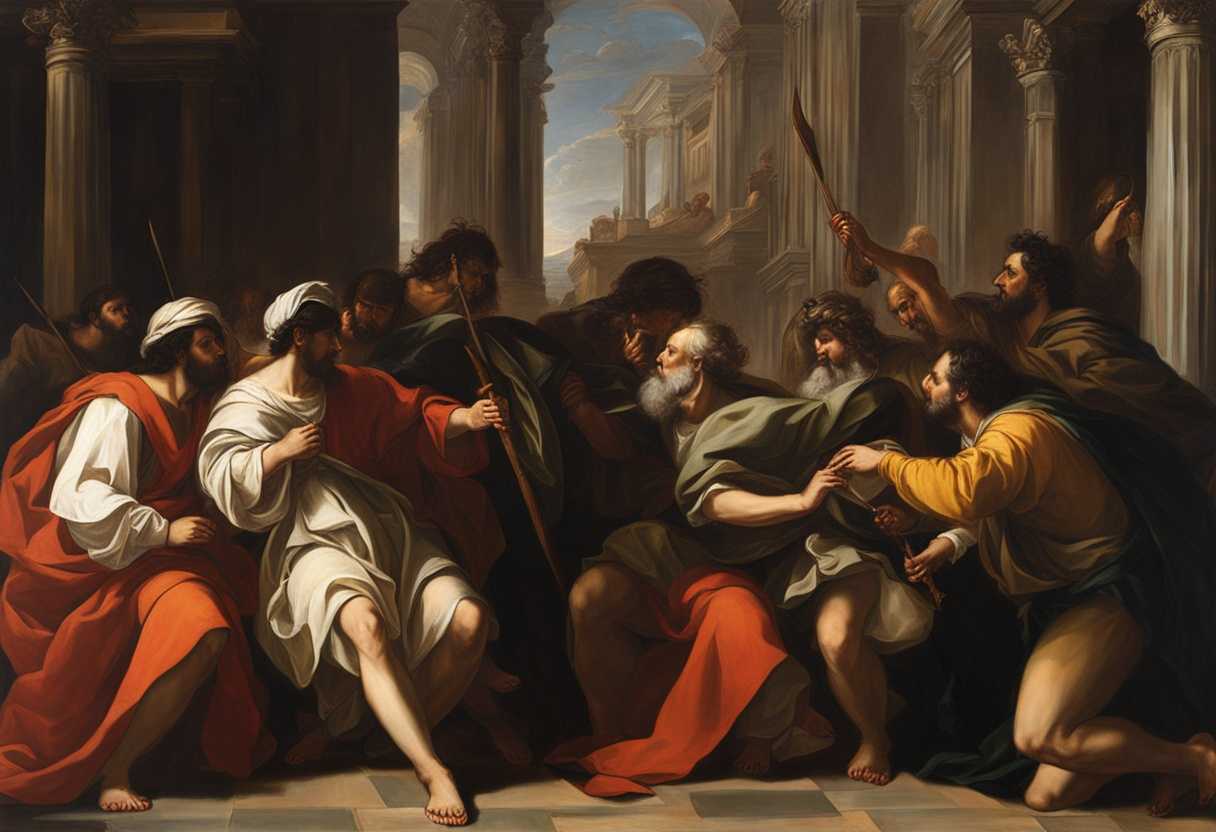
Setting the Scene for Jeremiah 23:16-18
The scene in Jeremiah 23:16-18 takes place in a bustling marketplace in the ancient city of Jerusalem. The prophet Jeremiah stands in the midst of the crowd, his voice rising above the clamor of merchants and traders. Surrounding him are a mix of people – some curious onlookers, others skeptical passersby, and a few devout followers who have come to hear his words.
Jeremiah’s presence in the marketplace was not by chance. He had been called by God to deliver a message to the people of Judah, warning them against false prophets who were spreading lies and leading them astray. As he spoke, his words carried a weight of authority and truth that resonated with those who were willing to listen.
The sun beat down on the dusty streets, casting long shadows as Jeremiah continued to proclaim the word of the Lord. Despite the distractions and disbelief of some in the crowd, there were those who felt a stirring in their hearts, a recognition that perhaps this man was indeed speaking on behalf of the Almighty. And so, in the midst of the chaos of the marketplace, the voice of the prophet rang out, calling the people to turn back to God and away from the deceitful words of the false prophets.
What is Jeremiah 23:16-18 about?
Jeremiah is warning against false prophets who deceive people with lies and false messages, causing confusion and leading people away from the true word of God in this verse. These false prophets claim to speak on behalf of God but do not actually convey His true message. On the other hand, true prophets are faithful messengers who accurately share God’s word with honesty and integrity, guiding people towards the right path and truth.
Have you ever encountered individuals who pretend to have divine insight but are actually misleading others for their own gain? How important is it to discern between false prophets and genuine messengers of God’s word? Jeremiah reminds us to be vigilant and discerning, seeking those who faithfully share God’s teachings rather than those who manipulate and deceive. Let us remember to align ourselves with those who speak the truth and lead us closer to God, avoiding the traps of false teachings and deceitful messages.
Understanding what Jeremiah 23:16-18 really means
In Jeremiah 23:16-18, we find a poignant warning from God through the prophet Jeremiah to the people of Israel. The context of this passage is crucial, as it is part of a larger discourse where God is cautioning His people about false prophets who deceive and lead them astray. The main message here is clear: it underscores the critical importance of distinguishing between true messages from God and the deceptive words of false prophets.
The key phrases in this passage carry significant meanings that resonate even in today’s context. “Do not listen to what the prophets are prophesying to you” is a direct admonition against heeding false prophets who claim divine authority but speak falsehoods. These deceivers “fill you with false hopes,” offering comforting yet misleading messages that divert people from God’s truth. The distinction between authentic divine revelation and human invention is starkly highlighted in the phrase, “They speak visions from their own minds, not from the mouth of the Lord.”
A rhetorical question posed in the passage, “Who has stood in the council of the Lord to see or to hear his word?” underscores the rarity and authenticity of true prophetic insight, emphasizing the necessity of being in God’s presence to receive genuine divine messages. This echoes the criteria outlined in Deuteronomy 18:20-22 for discerning true prophets, where alignment with God’s word and fulfillment of prophecies are key indicators.
The relevance of this passage to contemporary society is striking. In a world inundated with competing voices claiming truth in various spheres, be it religious, political, or social, the call to discernment and seeking God’s guidance in distinguishing truth from deception is more critical than ever. The prevalence of misinformation and deceptive narratives, akin to false prophecies, underscores the need for vigilance in discerning what we accept as truth.
To illustrate the importance of heeding true wisdom amidst conflicting voices, consider a community facing a crisis where leaders offer conflicting advice. Just as in this scenario, in our spiritual journey, we must discern and trust those who authentically convey God’s truth, rather than being swayed by false assurances. Jeremiah 23:16-18 stands as a timeless reminder for us to anchor ourselves in God’s Word, seek the Holy Spirit’s guidance, and discern true messages from God amidst the clamor of deceptive voices.
In conclusion, Jeremiah 23:16-18 urges us to seek God’s truth diligently and be cautious of those who peddle false hope. By immersing ourselves in Scripture, seeking God’s guidance, and testing the spirits as advised in 1 John 4:1, we can navigate through the noise of falsehoods and stay rooted in the unchanging truth of God’s Word.
How can we discern false prophets from true ones?
Jeremiah warns against false prophets who speak their own imaginations rather than the word of God in the verses you’ve mentioned. He points out that these prophets give false hope and speak a message of their own hearts rather than the truth from God. True prophets, on the other hand, speak the word of God faithfully and lead people towards righteousness and truth.
To discern false prophets from true ones, we must examine the message they are delivering. False prophets often speak in a way that promotes their own agendas, desires, or beliefs rather than God’s teachings. They may also offer false promises or predictions that do not align with God’s will. True prophets, on the other hand, will consistently speak in accordance with the word of God, leading people towards repentance, righteousness, and a deeper relationship with God. Comparing their words and actions with the teachings of God is ultimately the key to discerning false prophets from true ones. We can recognize and avoid false prophets who may lead us astray by staying grounded in the truth of scripture and seeking guidance from the Holy Spirit.
Application
Avoid being led astray by false prophets in the modern world. Stay alert to misleading messages and seek the truth by praying and studying Scripture. Are you prepared to protect your spirit and mind from falsehoods, relying on God’s Word for direction and safety?

Reverend Michael Johnson is an experienced Church Minister with a profound expertise in spirituality and guidance. With a serene presence and a compassionate heart, he has faithfully served his congregation for over 20 years, leading them on a spiritual journey towards inner peace and enlightenment. Reverend Johnson’s extensive knowledge of religious philosophies and profound understanding of human nature have made him a trusted confidant and mentor to many, as he seamlessly weaves his profound wisdom into life teachings. Reverend Johnson’s calming demeanor and empathetic nature continue to uplift and heal souls, nurturing a sense of unity and tranquility within his community.