
Jeremiah 26:20-24 is about how the prophet Uriah was executed by King Jehoiakim for delivering a message from God, demonstrating the consequences of speaking the truth and proclaiming God’s word in the face of opposition and danger.
20 There was another man who prophesied in the name of the Lord, Uriah the son of Shemaiah from Kiriath-jearim. He prophesied against this city and against this land in words like those of Jeremiah.
21 And when Jehoiakim the king, with all his warriors and all the officials, heard his words, the king sought to put him to death. But when Uriah heard of it, he was afraid and fled and escaped to Egypt.
22 But King Jehoiakim sent men to Egypt, Elnathan the son of Achbor and others with him,
23 And when Jehoiakim the king, with all his warriors and all the officials, heard his words, the king sought to put him to death. But when Uriah heard of it, he was afraid and fled and escaped to Egypt.
24 But the hand of Ahikam the son of Shaphan was with Jeremiah so that he was not given over to the people to be put to death.
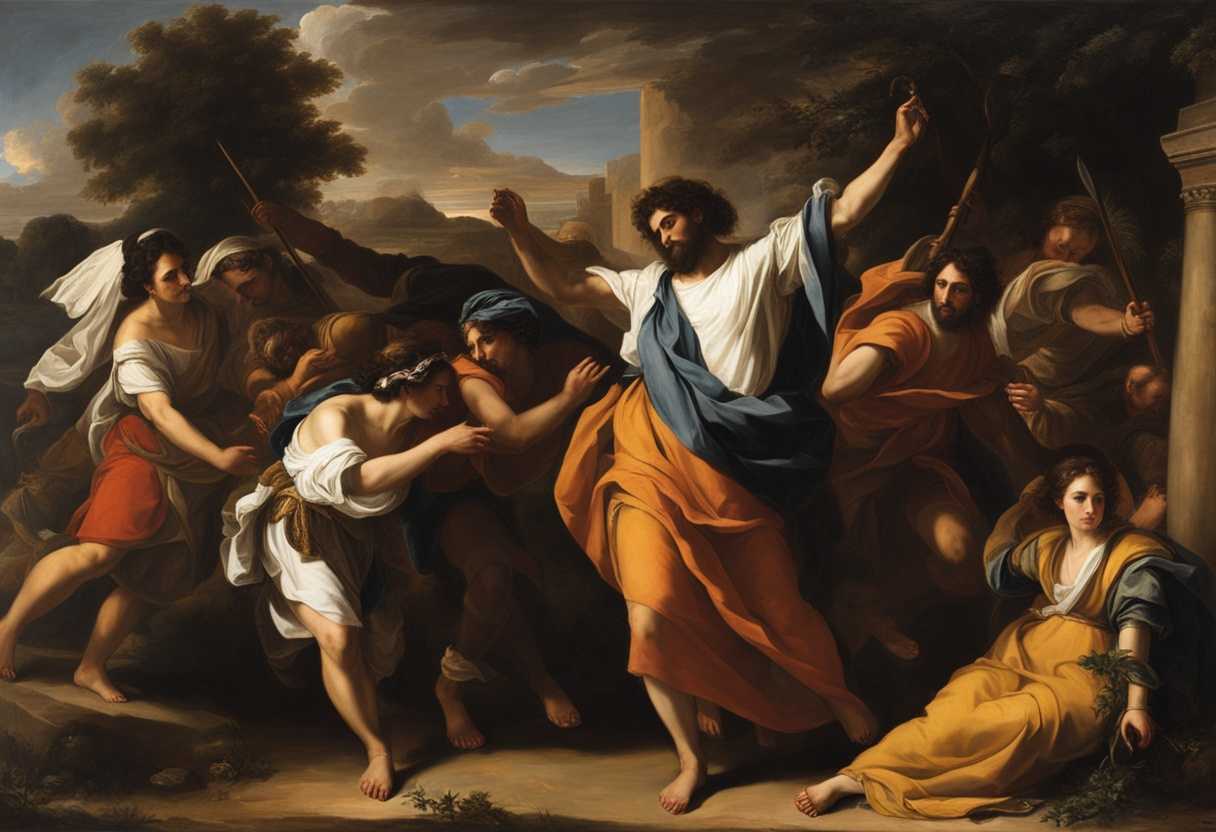
Setting the Scene for Jeremiah 26:20-24
In Jeremiah chapter 26, we find ourselves in the court of King Jehoiakim in the city of Jerusalem. The prophet Jeremiah stands before the king, delivering a message from the Lord. The scene is tense as Jeremiah boldly proclaims the word of God, warning the people of Judah and Jerusalem of the impending destruction if they do not repent and turn back to the Lord.
Among those present in the court are the officials of the king, including Uriah son of Shemaiah from Kiriath Jearim, who hears Jeremiah’s words and is moved to take action. Despite the danger he faces, Uriah bravely speaks out in defense of Jeremiah, reminding the court of the prophet Micah’s similar message years before. However, instead of heeding the warning, King Jehoiakim and his officials reject the message and seek to put Jeremiah to death.
The surroundings are grand yet foreboding, with the opulence of the royal court contrasting sharply with the gravity of the message being delivered. The tension in the air is palpable as the fate of Jeremiah hangs in the balance, and the spiritual state of the nation of Judah is laid bare for all to see.
What is Jeremiah 26:20-24 about?
What a powerful reminder of the divine protection and providence that surrounds us in our daily lives! The story in Jeremiah 26:20-24 illustrates the unwavering faith and trust that Ahikam had in God to protect Jeremiah, even in the face of adversity. Just imagine the courage and conviction it took for Ahikam to stand up for what was right and intervene to save Jeremiah’s life. This passage serves as a testament to the importance of standing up for our beliefs, even when faced with potential danger or opposition.
Just like Ahikam’s actions in this passage, we are called to be bold in our faith and trust in God’s plan for us. It serves as a reminder that, even in the midst of trials and challenges, God is always watching over us and will provide a way out. What an incredible display of God’s faithfulness and protection! Let this story encourage and inspire you to stand firm in your beliefs and trust that God will always be there to guide and protect you.
Understanding what Jeremiah 26:20-24 really means
Jeremiah 26:20-24 transports us to a tumultuous time in Judah’s history, where the prophet Jeremiah fearlessly proclaimed God’s warnings to a people in desperate need of repentance. Amidst this backdrop, we encounter the lesser-known figure of Uriah, son of Shemaiah, a fellow prophet who shared Jeremiah’s burden of delivering divine messages. Uriah’s story serves as a poignant reminder that God’s messengers can arise from unexpected places, emphasizing the universal call to heed His word.
Uriah’s bold proclamation “in the name of the Lord” underscores his unwavering faith and commitment to delivering God’s truth, mirroring Jeremiah’s own resolute stance. The parallel messages of both prophets against Jerusalem and Judah highlight the consistency of God’s warnings, reinforcing the gravity of the impending judgment. The fact that King Jehoiakim and his officials heard Uriah’s words demonstrates the far-reaching impact of prophetic messages, transcending societal boundaries to confront those in positions of power.
The chilling response of King Jehoiakim, seeking Uriah’s death for speaking uncomfortable truths, sheds light on the perilous path that prophets often tread. In a stark contrast, the intervention of Ahikam, who supported Jeremiah and prevented his execution, underscores the crucial role of allies in times of persecution. This narrative serves as a sobering reminder of the risks involved in speaking truth to power and the vital importance of solidarity in the face of adversity.
Drawing parallels to contemporary contexts, the account of Uriah and Jeremiah challenges believers to embody courage in standing for truth, even when faced with opposition or danger. It underscores the significance of supporting those who face persecution for their convictions, echoing Jesus’ teachings on the blessings bestowed upon the persecuted for righteousness’ sake. Moreover, it underscores the unwavering commitment required to faithfully convey God’s message, regardless of the challenges encountered along the way.
In a modern-day context, envision a whistleblower exposing corruption within a powerful institution, akin to Uriah’s prophetic stance against Jerusalem. Despite the risks involved, their courage can catalyze positive change and uphold justice. Similarly, believers are called to emulate the steadfastness of Jeremiah and Uriah, trusting in God’s presence amidst adversity and remaining resolute in their commitment to truth and righteousness.
In conclusion, the narrative of Uriah and Jeremiah serves as a poignant testament to the sacrifices demanded by discipleship and the imperative of remaining faithful to God’s call. It beckons us to embrace courage in our convictions, extend support to those facing persecution, and uphold the unwavering commitment to God’s truth, even in the face of formidable opposition.
How can we discern false prophets from true?
To discern false prophets from true, one must examine their actions and the fruit of their labor. False prophets may speak words that contradict the teachings of God or lead people astray. Their motivations may be self-serving, seeking personal gain or popularity. On the other hand, true prophets will align their words and actions with the will of God. They will lead people towards righteousness, love, and compassion, and their prophecies will bear fruit in the form of positive outcomes and blessings.
Additionally, false prophets may exhibit signs of deception or manipulation. They may use tactics such as fear-mongering, twisting scriptures, or making grandiose claims about themselves. True prophets, in contrast, will humbly serve God and seek to point others towards Him. They will display qualities of humility, integrity, and genuine concern for the well-being of others. We can discern between false prophets and true messengers of God by observing these characteristics and comparing them to the teachings of Scripture.
Application
Just as Uriah stood firm in his faith, so too must we in today’s turbulent world. Let his story ignite a fire in your heart to stay true to your beliefs, amidst any challenges that come your way. Will you rise up like Uriah did, unwavering and unyielding in your commitment to what you hold dear?

Reverend Michael Johnson is an experienced Church Minister with a profound expertise in spirituality and guidance. With a serene presence and a compassionate heart, he has faithfully served his congregation for over 20 years, leading them on a spiritual journey towards inner peace and enlightenment. Reverend Johnson’s extensive knowledge of religious philosophies and profound understanding of human nature have made him a trusted confidant and mentor to many, as he seamlessly weaves his profound wisdom into life teachings. Reverend Johnson’s calming demeanor and empathetic nature continue to uplift and heal souls, nurturing a sense of unity and tranquility within his community.