
Jeremiah 29:4-14 is about God’s assurance to the Israelites in exile that despite their current circumstances, He has a plan for their future prosperity, to bring them hope and a bright outcome through their seeking of Him with all their hearts.
4 “Thus says the Lord of hosts, the God of Israel, to all the exiles whom I have sent into exile from Jerusalem to Babylon:”
5 Build houses and live in them; plant gardens and eat their produce.
6 Take wives and have sons and daughters; take wives for your sons, and give your daughters in marriage, that they may bear sons and daughters; multiply there, and do not decrease.
7 But seek the welfare of the city where I have sent you into exile, and pray to the Lord on its behalf, for in its welfare you will find your welfare.
8 For thus says the Lord of hosts, the God of Israel: Do not let your prophets and your diviners who are among you deceive you, and do not listen to the dreams that they dream,
9 For they are prophesying falsely to you in my name; I have not sent them, declares the Lord.
10 “For thus says the Lord: When seventy years are completed for Babylon, I will visit you, and I will fulfill to you my promise and bring you back to this place.”
11 For I know the plans I have for you, declares the Lord, plans for welfare and not for evil, to give you a future and a hope.
12 Then you will call upon me and come and pray to me, and I will hear you.
13 You will seek me and find me, when you seek me with all your heart.
14 I will be found by you, declares the Lord, and I will restore your fortunes and gather you from all the nations and all the places where I have driven you, declares the Lord, and I will bring you back to the place from which I sent you into exile.
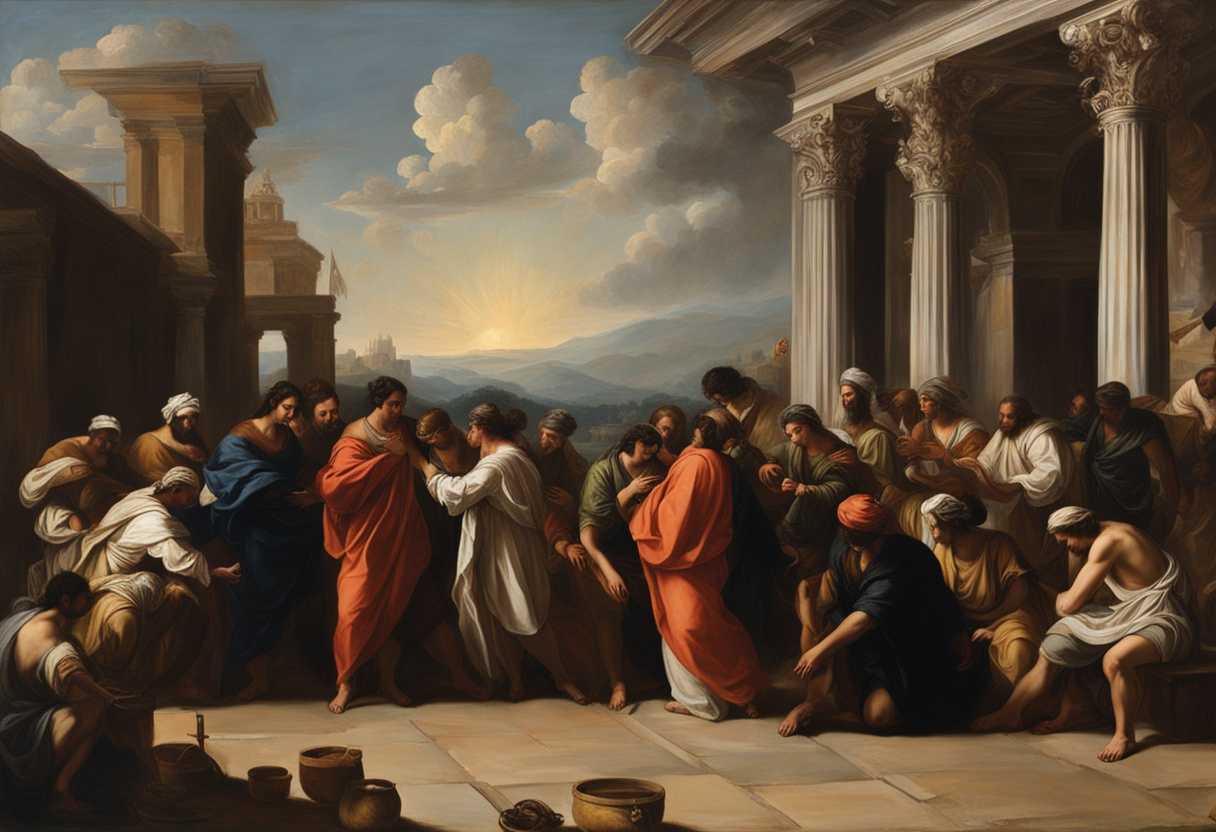
Setting the Scene for Jeremiah 29:4-14
In Jeremiah chapter 29, we find the prophet Jeremiah writing a letter to the exiles from Judah who have been taken captive and are now living in Babylon. The scene is set in a foreign land, where the Israelites find themselves in a state of displacement and longing for their homeland. The group of exiles includes men, women, and children who were taken from their homes and brought to Babylon as prisoners.
As Jeremiah addresses the exiles in his letter, he encourages them to settle down in Babylon, build houses, plant gardens, and seek the welfare of the city where they have been placed. He instructs them to marry and have children, to increase in number and not decrease. Despite their circumstances, Jeremiah urges the exiles to trust in God’s plan for them, assuring them that after seventy years in exile, they will be brought back to their homeland.
The surroundings are likely bleak and unfamiliar to the exiles, with the bustling city of Babylon contrasting sharply with the quiet villages and fields of Judah. The exiles would have been feeling a mix of emotions – homesickness, fear, uncertainty about the future – as they try to make sense of their new reality. Jeremiah’s words serve as a source of hope and comfort, reminding the exiles that God has not forgotten them and has a plan to prosper them and give them a hope and a future.
What is Jeremiah 29:4-14 about?
God offers a message of hope and reassurance to His people who are facing struggles and challenges in this verse. It serves as a reminder that no matter what difficulties we may be experiencing, God has a plan for us that is filled with hope and promise. It shows His unwavering love and care for His people, even in the midst of challenging circumstances like exile.
It is a powerful message of encouragement, reminding us that no matter what uncertainty or turmoil we may face, God is always with us, watching over us, and guiding us towards a better future. It prompts us to trust in His plans for us, knowing that they are plans for our welfare and not for harm, plans to give us a hope and a future. It challenges us to have faith in God’s goodness and sovereignty, even when our current situation may seem bleak. How does this message of hope and promise inspire you to trust in God’s plan for your life, especially in times of difficulty and uncertainty? What steps can you take to hold onto this promise and live in hope and faith, despite the challenges you may be facing?
Understanding what Jeremiah 29:4-14 really means
Jeremiah 29:4-14 offers a poignant message of hope and encouragement to the Jewish exiles in Babylon through the prophet Jeremiah. In a foreign land, far from their beloved Jerusalem, the Israelites received divine instructions to “build houses and settle down; plant gardens and eat what they produce.” This directive signifies God’s call for them to embrace their current reality and establish roots in Babylon rather than yearn for a swift return. It serves as a reminder that sometimes, God’s plan involves thriving in the midst of adversity rather than escaping it.
Moreover, the exiles are urged to “seek the peace and prosperity of the city to which I have carried you into exile.” This command underscores the interconnectedness of their well-being with that of the community they now inhabit. By actively contributing to the welfare of their surroundings, they are aligning themselves with God’s intentions for their lives. It emphasizes the importance of positively impacting the environments we find ourselves in, even when they are not of our choosing.
The pivotal verse, “For I know the plans I have for you, declares the Lord, plans to prosper you and not to harm you, plans to give you hope and a future,” resonates with a timeless truth—that God’s purposes for His people are rooted in goodness and promise, even amidst trials. This assurance extends beyond the immediate circumstances of the exiles to reassure all believers that God’s intentions are ultimately for their welfare and a hopeful future.
Furthermore, the promise that “You will seek me and find me when you seek me with all your heart” underscores the accessibility of God to those who earnestly pursue Him. It serves as a reminder that genuine seeking leads to a profound encounter with the divine, reinforcing the idea that God is present and responsive to those who diligently seek His presence.
In contemporary times, where many individuals grapple with their own forms of exile—be it through job transitions, relocations, or personal crises—Jeremiah’s message remains relevant. It serves as a beacon of hope, reminding us that God is intimately involved in our struggles and has a purpose for our future. By embracing our current circumstances, seeking God’s guidance, and actively participating in the betterment of our surroundings, we can find solace in the knowledge that God’s plan for us transcends our immediate challenges.
Consider a family faced with relocation due to a job transfer. Initially disheartened, they chose to embody the principles outlined in Jeremiah 29:4-14. By immersing themselves in their new community, seeking God’s direction, and trusting in His plan, they discovered unexpected blessings—a newfound sense of belonging, meaningful relationships, and a renewed sense of purpose. Their story mirrors the transformative power of aligning with God’s plan, even in the midst of upheaval.
In conclusion, Jeremiah 29:4-14 serves as a poignant reminder that God’s plans for us are rooted in hope and prosperity, even when we find ourselves in unfamiliar or challenging circumstances. By embracing His guidance, contributing positively to our surroundings, and trusting in His overarching purpose, we can navigate through adversity with the assurance that God’s intentions for us are ultimately for our welfare and flourishing.
How can we seek God’s guidance in uncertain times?
We can seek God’s guidance in times of uncertainty by turning to Him in prayer and seeking His will for our lives. We should seek God with all our hearts as the verse reminds us, and He promises that we will find Him. This means approaching Him with sincerity, humility, and a willingness to listen to His direction. Through prayer, meditation on scriptures, and seeking counsel from wise and faithful individuals, we can open ourselves up to God’s guidance.
Another way to seek God’s guidance is to remain patient and trust in His timing. God has plans to prosper us and not to harm us, plans to give us hope and a future, as the verse states. Trusting in God’s plans and surrendering our own desires to His will can bring peace and assurance in uncertain times. We can navigate through the unknown with confidence and hope by looking to Him for guidance and placing our faith in His wisdom.
Furthermore, staying connected to a community of fellow believers can also help us seek God’s guidance. Through fellowship, sharing experiences, and seeking wise counsel from trusted sources, we can gain perspectives and insights that align with God’s purpose for our lives. We can find encouragement, guidance, and strength in times of uncertainty by surrounding ourselves with a supportive and faith-filled community.
Application
Let the words of Jeremiah 29:4-14 ignite a fire within you, reminding you of the promise of hope and a bright future. Just like the Israelites, you are called to not merely exist, but to thrive and bring positivity to your surroundings. Consider the influence you can have, spreading kindness and understanding like a beacon in a world often shrouded in darkness. Will you step up and make a difference, embodying God’s love and grace in all you do?

Reverend Michael Johnson is an experienced Church Minister with a profound expertise in spirituality and guidance. With a serene presence and a compassionate heart, he has faithfully served his congregation for over 20 years, leading them on a spiritual journey towards inner peace and enlightenment. Reverend Johnson’s extensive knowledge of religious philosophies and profound understanding of human nature have made him a trusted confidant and mentor to many, as he seamlessly weaves his profound wisdom into life teachings. Reverend Johnson’s calming demeanor and empathetic nature continue to uplift and heal souls, nurturing a sense of unity and tranquility within his community.