
Jeremiah 32:4-5 is about God instructing the prophet Jeremiah to purchase a field as a symbol of hope and restoration for the Israelites despite the imminent invasion and exile by the Babylonians.
4 Zedekiah king of Judah shall not escape out of the hand of the Chaldeans, but shall surely be given into the hand of the king of Babylon, and shall speak with him face to face and see him eye to eye.
5 And he shall take Zedekiah to Babylon, and there he shall remain until I visit him, declares the Lord.
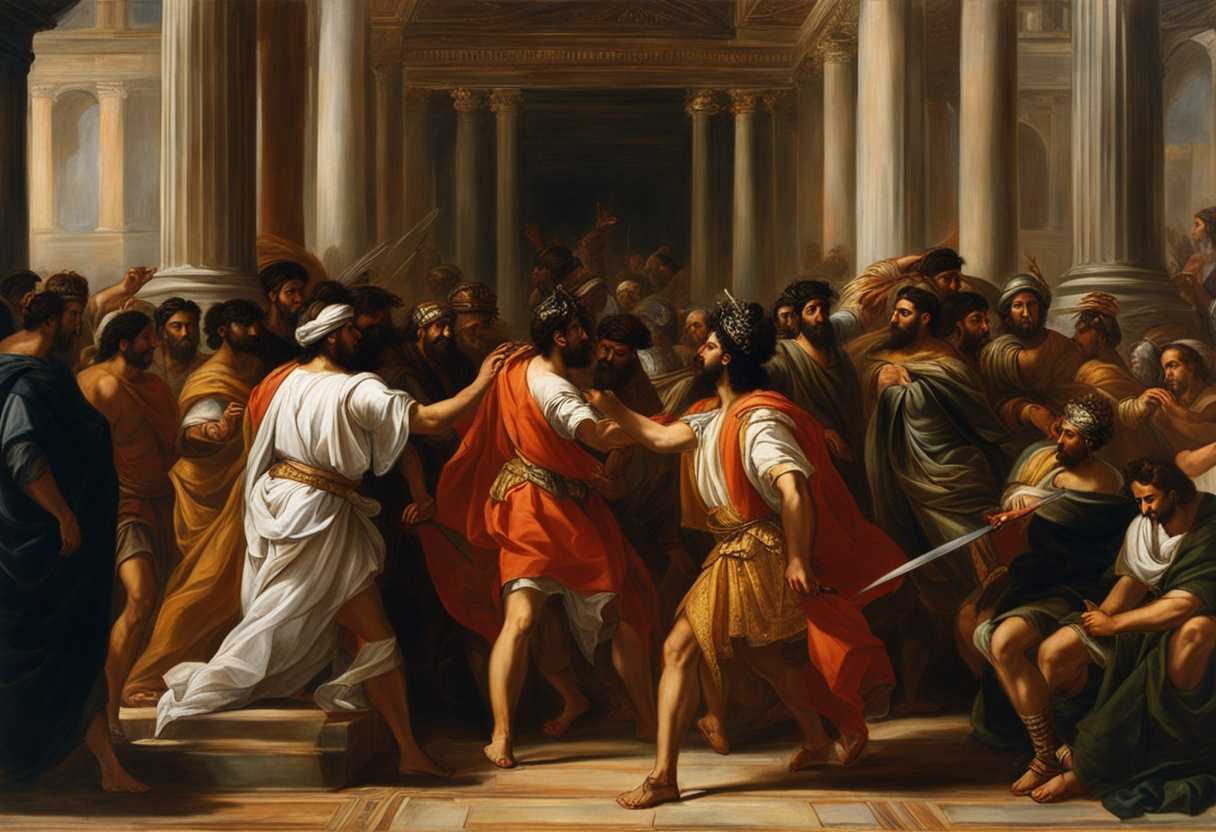
Setting the Scene for Jeremiah 32:4-5
In Jeremiah chapter 32, we find the prophet Jeremiah in a particularly challenging situation. The scene is set in the city of Jerusalem, which is under siege by the Babylonian army. The city is in a state of turmoil, with the people facing starvation and destruction. Jeremiah, known for his unwavering faith and obedience to God, finds himself in the midst of this chaos.
In this specific passage, Jeremiah is confined in the courtyard of the guard in the royal palace of Judah. The names of those present in this scene include Jeremiah himself, King Zedekiah of Judah, and the officials of the king. Jeremiah has been imprisoned for prophesying the fall of Jerusalem to the Babylonians, a message that the king and his officials do not want to hear.
Despite his dire circumstances, Jeremiah remains steadfast in his faith, continuing to speak the word of the Lord even from his confinement. This scene serves as a powerful reminder of Jeremiah’s courage and commitment to God’s message, even in the face of great adversity.
What is Jeremiah 32:4-5 about?
Jeremiah’s act of buying a field amidst a time of turmoil and destruction symbolizes his unwavering faith in God’s promises and his hope for the future in this verse. Jeremiah shows his belief that God will fulfill His promise of restoration and that there will be a time of renewal despite the current circumstances by investing in a piece of land during a time of chaos, uncertainty, and impending exile. This act can be seen as a powerful declaration of trust in God’s faithfulness and a way of affirming his belief in a brighter future.
Imagine being in Jeremiah’s shoes, surrounded by chaos and despair, and yet choosing to actively invest in a piece of land as a symbol of hope and trust in God’s promises. It challenges us to reflect on our own faith and the tangible ways we can demonstrate our trust in God’s plans for us, even when everything around us seems bleak. This verse serves as a reminder that amidst trials and tribulations, holding onto hope and faith can not only sustain us but also empower us to actively participate in God’s redemptive work in the world.
Understanding what Jeremiah 32:4-5 really means
Jeremiah 32:4-5 unfolds within the turbulent backdrop of Judah’s history, amidst the Babylonian siege of Jerusalem. Here, King Zedekiah is confronted by the prophet Jeremiah, forewarning him of the impending capture by the Babylonians. The narrative encapsulates a broader context where Jeremiah faces imprisonment for prophesying the downfall of Jerusalem and the exile of its inhabitants.
In these verses, the phrases employed carry profound implications. The declaration that “Zedekiah king of Judah shall not escape out of the hand of the Chaldeans” underscores the inescapable nature of God’s judgment and the futility of resisting His divine will. The assurance that “He shall surely be delivered into the hand of the king of Babylon” signifies the certainty of Zedekiah’s capture, emphasizing the fulfillment of God’s prophetic word. Moreover, the imagery of “He shall speak with him mouth to mouth, and his eyes shall behold his eyes” portrays a direct and personal confrontation in Zedekiah’s downfall. The subsequent statement about Zedekiah being led to Babylon and remaining there until divine visitation accentuates the prolonged duration of his punishment and the eventual intervention of the Lord.
Related biblical passages such as 2 Kings 25:1-7, Ezekiel 12:13, and Lamentations 1:5 corroborate and elaborate on the themes presented in Jeremiah 32:4-5. These passages provide historical context, additional prophecies, and reflections on the consequences of disobedience, reinforcing the overarching themes of judgment, exile, and divine justice.
The enduring relevance of this passage resonates with contemporary audiences, serving as a poignant reminder of the repercussions of disregarding divine warnings and the imperative of accountability. It underscores the timeless principles of heeding wise counsel, aligning actions with moral integrity, and acknowledging the certainty of God’s justice. In a modern context, it prompts introspection on personal conduct and the alignment of one’s choices with ethical and spiritual principles.
Consider a scenario where a community leader ignores repeated warnings about corrupt practices, only to face eventual exposure and legal consequences. This narrative parallels Zedekiah’s story, illustrating the inevitability of accountability and the pivotal role of integrity in one’s actions and consequences.
On a personal note, Jeremiah 32:4-5 serves as a poignant reminder of the significance of heeding divine guidance and the consequences of disregarding wise counsel. It prompts introspection, fostering a commitment to living in accordance with God’s will, grounded in the assurance that His justice is both certain and equitable. Reflecting on these insights deepens our understanding of Jeremiah 32:4-5 and its enduring relevance in shaping our lives.
How can we trust God’s timing and plans?
We can trust in God’s timing and plans by recognizing His sovereignty and wisdom. Even when circumstances may seem confusing or uncertain to us, we can take comfort in knowing that God has a perfect plan that He is working out in His perfect timing. The events in our lives are not a result of mere happenstance but are orchestrated by a loving and all-knowing God who has a purpose for everything that occurs. Therefore, we can rest assured that His timing is always perfect, even when we may not understand it at the moment.
Trusting in God’s timing also requires us to have faith in His goodness and faithfulness. We must believe that God’s plans for us are for our ultimate good, even if they may involve challenges or difficulties along the way. We can have confidence in God’s plans for us by acknowledging that His ways are higher than our ways and His thoughts are higher than our thoughts, knowing that they are designed with our best interests in mind. We can experience peace and assurance as we submit to His timing and trust in His plans, knowing that God is in control and working all things together for our good.
Application
Like Jeremiah, let’s embrace faith and obedience in the midst of challenges in our own lives. Believe in God’s plan and have courage to follow His path with unwavering faith. Will you choose to take a bold step in obedience today, knowing that God is in control and has a purpose for you?

Reverend Michael Johnson is an experienced Church Minister with a profound expertise in spirituality and guidance. With a serene presence and a compassionate heart, he has faithfully served his congregation for over 20 years, leading them on a spiritual journey towards inner peace and enlightenment. Reverend Johnson’s extensive knowledge of religious philosophies and profound understanding of human nature have made him a trusted confidant and mentor to many, as he seamlessly weaves his profound wisdom into life teachings. Reverend Johnson’s calming demeanor and empathetic nature continue to uplift and heal souls, nurturing a sense of unity and tranquility within his community.