
Jeremiah 40:7-16 is about how even in times of great chaos and destruction, God provides protection and guidance for His people through appointed leaders, showing His faithfulness and sovereignty.
7 When all the captains of the forces in the open country and their men heard that the king of Babylon had appointed Gedaliah the son of Ahikam governor in the land and had committed to him men, women, and children, those of the poorest of the land who had not been taken into exile to Babylon,
8 So they came to Gedaliah at Mizpah.
9 Gedaliah the son of Ahikam, son of Shaphan, swore to them and their men, saying, “Do not be afraid to serve the Chaldeans. Dwell in the land and serve the king of Babylon, and it shall be well with you.”
10 As for me, I will dwell at Mizpah, to represent you before the Chaldeans who will come to us. But as for you, gather wine and summer fruits and oil, and store them in your vessels, and dwell in your cities that you have taken.”
11 Likewise, when all the Judeans who were in Moab and among the Ammonites and in Edom and in other lands heard that the king of Babylon had left a remnant in Judah and had appointed Gedaliah the son of Ahikam, son of Shaphan, as governor over them,
12 Then all the Judeans returned from all the places to which they had been driven and came to the land of Judah, to Gedaliah at Mizpah. And they gathered wine and summer fruits in great abundance.
13 Now Johanan the son of Kareah and all the leaders of the forces in the open country came to Gedaliah at Mizpah
14 and said to him, “Do you know that Baalis the king of the Ammonites has sent Ishmael the son of Nethaniah to take your life?” But Gedaliah the son of Ahikam would not believe them.
15 Then Johanan the son of Kareah spoke secretly to Gedaliah at Mizpah, “Please let me go and strike down Ishmael the son of Nethaniah, and no one will know it. Why should he take your life, so that all the Judeans who are gathered about you would be scattered, and the remnant of Judah would perish?”
16 But Gedaliah the son of Ahikam said to Johanan the son of Kareah, “You shall not do this thing, for you are speaking falsely of Ishmael.”
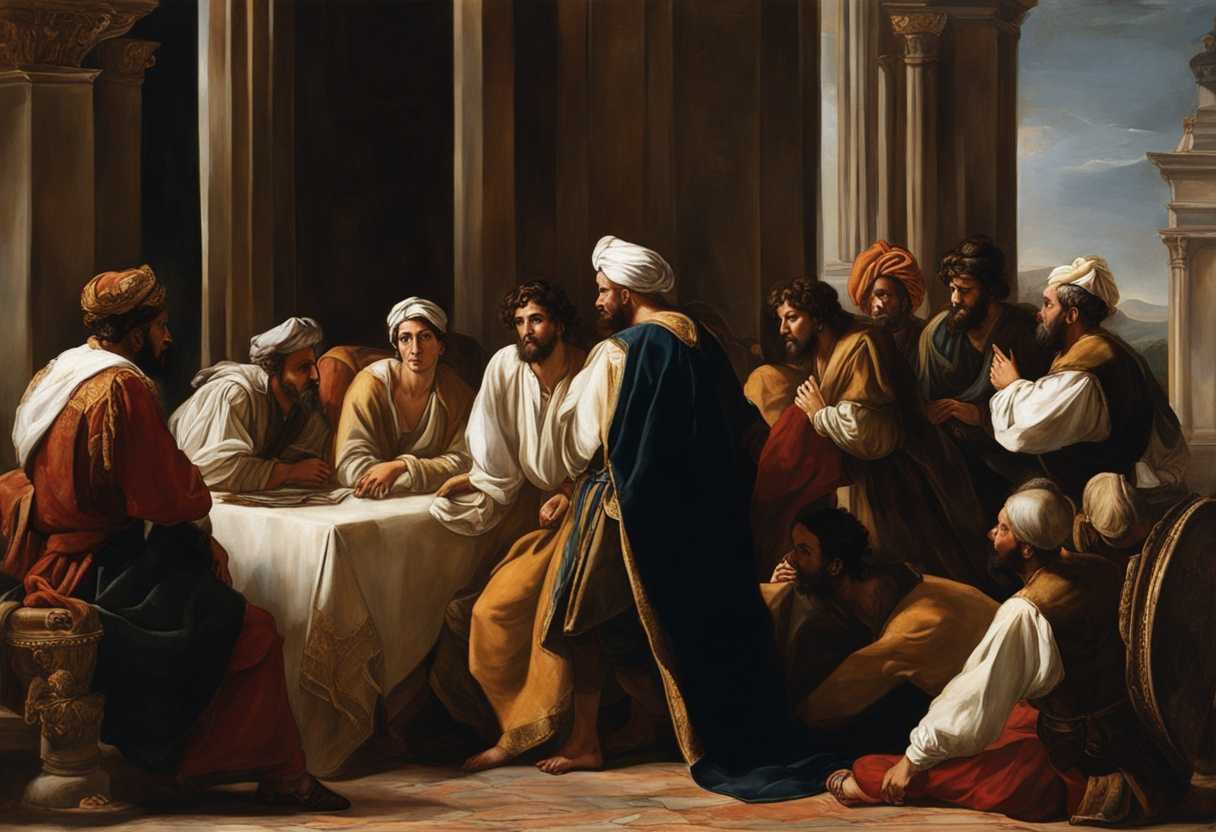
Setting the Scene for Jeremiah 40:7-16
In Jeremiah chapter 40, we find ourselves in the aftermath of the fall of Jerusalem to the Babylonians. The scene is set in the region of Mizpah, a town in Judah where the Babylonians had established their headquarters. Among those present are Gedaliah, the newly appointed governor of Judah by the Babylonians, and the remnant of the people who were left in the land after the destruction of Jerusalem. These survivors include men, women, and children who had been allowed to remain in Judah by the Babylonians.
Gedaliah, a righteous and just leader, is tasked with overseeing the land and ensuring that the people can live in peace and rebuild their lives. However, amidst the chaos and uncertainty following the destruction of Jerusalem, there are also political intrigues and dangers lurking. Some of the people in the region are plotting against Gedaliah, and despite warnings from loyal supporters like Johanan, Gedaliah chooses to trust the wrong people, leading to tragic consequences.
The surroundings in Mizpah are likely somber and tense, with the remnants of war visible in the destroyed buildings and fields. The people are grappling with grief over the loss of their city and loved ones, while also trying to navigate the new reality of living under Babylonian rule. In this volatile environment, the choices made by Gedaliah and the people around him will have far-reaching consequences for the future of Judah.
What is Jeremiah 40:7-16 about?
The restoration of order and leadership after the devastation and exile of the people of Judah is witnessed in Jeremiah 40:7-16. Gedaliah’s appointment as governor signifies a glimmer of hope in a time of despair and chaos. His task is not just to govern but to rebuild and restore a sense of community among the remnant of Judah. We reflect on this passage and are reminded of the importance of leadership during times of crisis. Gedaliah’s appointment serves as a reminder of the resilience of the human spirit and the need for individuals to step up and guide others in times of uncertainty. How often in our own lives do we see the importance of strong and compassionate leaders to help us navigate through challenges? Let us be willing to take inspiration from Gedaliah’s example and step up to lead with integrity and compassion when our communities are in need. Our own leadership can bring light and guidance to those around us, just as Gedaliah’s leadership brought hope to the remnant of Judah. There is always a possibility for renewal and restoration even in the midst of destruction.
Understanding what Jeremiah 40:7-16 really means
Jeremiah 40:7-16 unfolds against the backdrop of Jerusalem’s fall to the Babylonians, a time of great upheaval and uncertainty for the people of Judah. Gedaliah, the son of Ahikam, emerges as a beacon of hope amidst the chaos, appointed by the Babylonian king to govern the remnants of Judah. His leadership symbolizes stability and a path towards rebuilding in the aftermath of destruction.
In the midst of fear and uncertainty, Gedaliah’s words resonate with a call for acceptance and cooperation. He urges the people not to be afraid to serve the Babylonians, emphasizing the importance of adapting to the new reality and living in peace under foreign rule. This message of acceptance and obedience, though challenging, carries the promise of well-being and prosperity for the community.
However, amidst Gedaliah’s efforts to foster unity and peace, a shadow looms in the form of Ishmael, the son of Nethaniah. Ishmael represents opposition and rebellion, a reminder of the internal conflicts and betrayals that threaten the fragile stability of the community. His actions serve as a cautionary tale, highlighting the destructive consequences of discord and disunity in times of crisis.
Drawing parallels to contemporary society, Jeremiah 40:7-16 offers timeless lessons on the importance of unity, trust in leadership, and the pursuit of peace in the face of adversity. In a world marked by political and social turmoil, the passage serves as a poignant reminder of the value of cooperation, resilience, and faith in God’s plan. It challenges us to seek common ground, work towards shared goals, and uphold principles of peace and stability even in the midst of chaos.
Consider a scenario where a community grapples with a natural disaster, much like the turmoil faced by the people of Judah. As a leader is appointed to coordinate relief efforts, differing attitudes emerge among the populace. Those who choose to cooperate and trust in the appointed leadership witness the effective fulfillment of their needs, leading to the community’s gradual recovery and flourishing. This narrative mirrors the themes of Jeremiah 40:7-16, underscoring the transformative power of unity, cooperation, and trust in times of crisis.
In conclusion, Jeremiah 40:7-16 offers a profound reflection on the enduring principles of unity, trust, and peace in the midst of turmoil. By heeding the lessons embedded in this passage and related scriptures, we are equipped with guidance and encouragement to navigate our own challenges with faith, cooperation, and a steadfast commitment to seeking peace and stability in all circumstances.
How can we discern God’s guidance in difficult circumstances?
Discerning God’s guidance in times of difficulty can require patience, discernment, and wisdom. Seeking counsel from wise and faithful individuals can help us see God’s direction more clearly, just as Gedaliah listened to the advice of Johanan and the other leaders in the verse. God often works through others to guide us in the right path, so it is essential to surround ourselves with people who are grounded in faith and wisdom.
Additionally, Gedaliah’s willingness to trust God’s plan despite the challenging circumstances demonstrates the importance of having faith and seeking God’s will above our own desires. We allow God to guide us in ways that lead to our ultimate good and His glory by surrendering our own plans and desires to Him. Through prayer, reflection on Scripture, and seeking wise counsel, we can align our hearts and minds with God’s will, even in the midst of difficult circumstances.
Application
In a world full of uncertainty and chaos, find solace in Jeremiah 40:7-16. Trust in God’s guidance like Governor Gedaliah. Show integrity, wisdom, and faithfulness at work and with family. Let this passage resonate in your life, guiding you through tough times. How will you choose to stand strong in your faith and follow God’s path?

Reverend Michael Johnson is an experienced Church Minister with a profound expertise in spirituality and guidance. With a serene presence and a compassionate heart, he has faithfully served his congregation for over 20 years, leading them on a spiritual journey towards inner peace and enlightenment. Reverend Johnson’s extensive knowledge of religious philosophies and profound understanding of human nature have made him a trusted confidant and mentor to many, as he seamlessly weaves his profound wisdom into life teachings. Reverend Johnson’s calming demeanor and empathetic nature continue to uplift and heal souls, nurturing a sense of unity and tranquility within his community.