
Jeremiah 48:11-17 is about Moab’s pride and arrogance leading to their impending judgment and destruction by the Lord for their lack of reverence and dependence on Him.
11 “Moab has been at ease from his youth
and has settled on his dregs;
he has not been emptied from vessel to vessel,
nor has he gone into exile;
so his taste remains in him,
and his scent is not changed.”
12 Therefore, behold, the days are coming, declares the Lord, when I will send to him pourers who will pour him, and empty his vessels and break his jars in pieces.
13 Then Moab shall be ashamed of Chemosh, as the house of Israel was ashamed of Bethel, their confidence.
14 “How do you say, ‘We are heroes and mighty men of war’?”
15 “In the shadow of Heshbon
fugitives stop without strength,
for fire came out from Heshbon,
flame from the house of Sihon;
it has destroyed the forehead of Moab,
the crown of the sons of tumult.
16 The calamity of Moab is near at hand, and his affliction hastens swiftly.
17 “How the mighty scepter is broken, the glorious staff.”
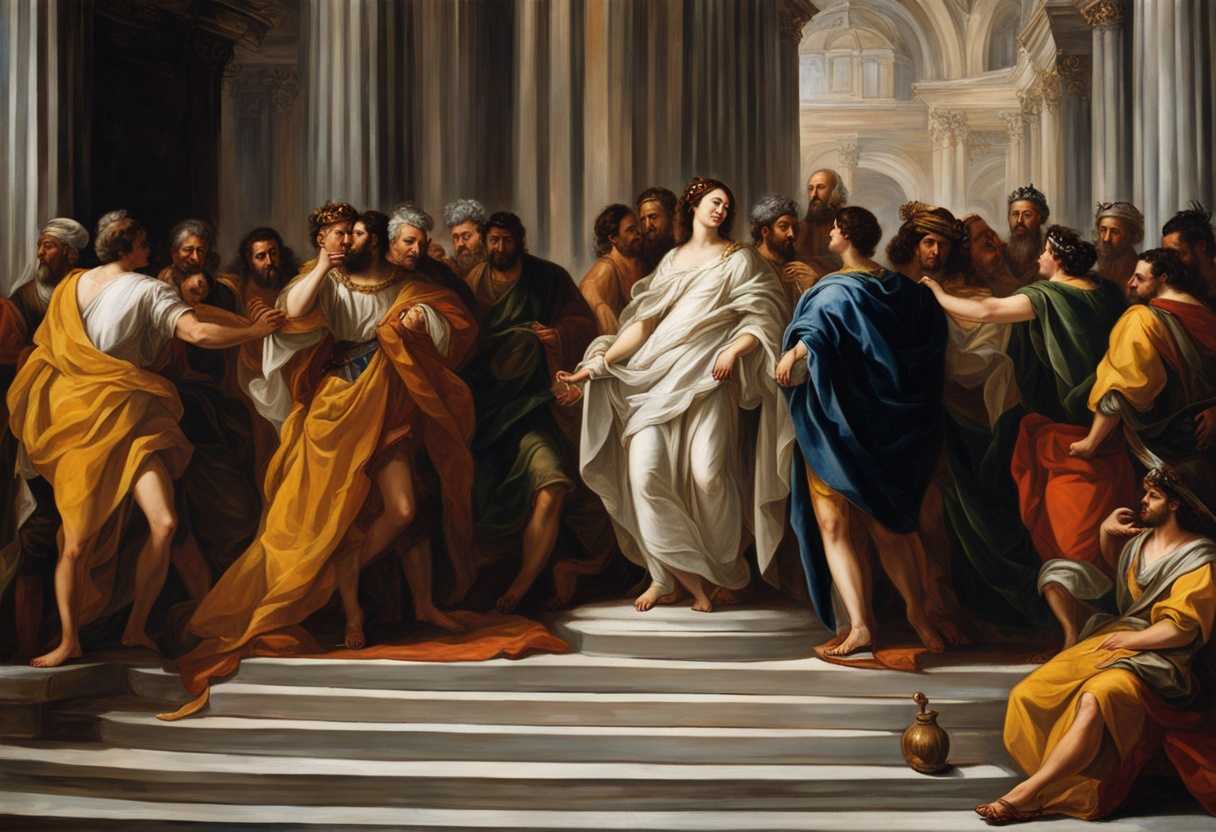
Setting the Scene for Jeremiah 48:11-17
In Jeremiah chapter 48, we find the prophet Jeremiah delivering a message of judgment against the Moabites. The scene is set in a gathering of Moabite leaders and citizens, who have come together to hear Jeremiah’s prophecy. The atmosphere is tense as Jeremiah proclaims the impending destruction and devastation that will come upon the land of Moab due to their pride and rebellion against God.
Among the crowd are prominent figures such as King Mesha of Moab and his advisors, who are listening intently to Jeremiah’s words. The setting is likely a courtyard or public square in one of the Moabite cities, with the people gathered around Jeremiah as he speaks with authority and conviction. The surroundings are filled with a sense of fear and uncertainty as the prophet foretells the coming calamity that will befall the Moabites if they do not repent and turn back to God.
As Jeremiah continues to deliver his message, the people of Moab are faced with a choice – to heed the warning and seek forgiveness, or to continue in their sinful ways and face the consequences of their actions. The scene is charged with emotion as Jeremiah pleads with the Moabites to change their ways and avoid the impending judgment that looms over them.
What is Jeremiah 48:11-17 about?
When we look at this verse, we see a powerful message about the consequences of pride and arrogance. Moab, a nation often associated with pride, is being judged by God for their haughty attitude. This verse serves as a warning against letting arrogance consume us. It reminds us that when we elevate ourselves above others, we are not only moving away from humility but also risking facing the judgment of a higher power.
Think about the implications of pride in your own life. How often do we let our ego dictate our actions and interactions with others? This verse is a reminder to stay grounded and humble, to remember that true strength comes from within and not from a place of superiority over others. Let’s reflect on how we can embody humility in our daily lives and avoid the downfall that prideful arrogance can bring.
Understanding what Jeremiah 48:11-17 really means
In Jeremiah 48:11-17, we find a prophecy against Moab, a nation neighboring Israel. The context of this passage reveals God’s judgment upon Moab for their sins and transgressions. Moab, historically known for its pride and idolatry, is being called out by the prophet Jeremiah to face the consequences of their actions.
Moab’s historical and cultural background sheds light on why God is pronouncing judgment on them. The nation had a reputation for arrogance, self-reliance, and worshiping false gods like Chemosh. Their complacency and refusal to acknowledge God’s sovereignty led to their downfall.
Key phrases in this passage highlight Moab’s sinful nature. Phrases like “Moab has been at ease from his youth” depict their comfort and avoidance of discipline. The metaphor of settling on dregs symbolizes stagnation and lack of refinement, while the mention of tilters disrupting Moab’s peace signifies impending upheaval and change.
Related biblical passages such as Isaiah 16:6-7 and Zephaniah 2:8-11 echo the themes of pride, arrogance, and impending judgment against Moab. Proverbs 16:18’s warning about pride leading to destruction reinforces the timeless truth that arrogance precedes downfall.
The relevance of this prophecy to people today lies in its cautionary tale against complacency, pride, and reliance on false securities. Just as Moab faced consequences for their actions, individuals and nations today must heed the warning to avoid spiritual complacency and instead rely on God for guidance and strength.
Consider a story of someone who lived a life of comfort and complacency, only to face a significant challenge that led to personal growth and reliance on God. This narrative mirrors the message of Jeremiah 48:11-17, showing how God can use adversity to refine and transform us for His purpose.
In conclusion, the prophecy against Moab serves as a timeless reminder of the dangers of pride and self-reliance. Let us reflect on our lives, identify areas of complacency or false security, and turn to God for guidance and strength in times of challenge and change. May we learn from Moab’s mistakes and seek humility and obedience in our walk with the Lord.
How can we approach life’s challenges with compassion?
Approaching life’s challenges with compassion involves acknowledging the struggles and hardships that others face. When we encounter difficulties ourselves, it’s important to remember that everyone has their own battles to fight. Rather than becoming consumed by our own problems, we can choose to respond with understanding and empathy towards others who may be going through similar or even more challenging situations. We can cultivate a greater sense of unity and support within our communities by fostering a sense of compassion in our approach to life’s challenges. This mindset encourages us to reach out and offer a helping hand to those in need, recognizing that we are all interconnected in our human experiences. Instead of letting challenges divide us, we can use them as opportunities to come together, uplift each other, and find strength in our shared humanity.
Application
Embrace the teachings of Jeremiah 48:11-17, urging you to stand unyielding in your faith journey. Do not waver in times of difficulty, but instead, lean on your unwavering belief in God. Let these words ignite the spark within you, propelling you to face challenges head-on with courage and trust. Will you take on this challenge with steadfast faith, knowing that divine guidance will always light your path?

Reverend Michael Johnson is an experienced Church Minister with a profound expertise in spirituality and guidance. With a serene presence and a compassionate heart, he has faithfully served his congregation for over 20 years, leading them on a spiritual journey towards inner peace and enlightenment. Reverend Johnson’s extensive knowledge of religious philosophies and profound understanding of human nature have made him a trusted confidant and mentor to many, as he seamlessly weaves his profound wisdom into life teachings. Reverend Johnson’s calming demeanor and empathetic nature continue to uplift and heal souls, nurturing a sense of unity and tranquility within his community.