
Jeremiah 52:7-11 is about the fall of Jerusalem, describing the capture of the city by the Babylonian forces, the destruction of its walls, the exile of its inhabitants, and the tragic fate of King Zedekiah, symbolizing the consequences of disobedience to God and the fulfillment of prophetic judgment.
7 Then a breach was made in the city, and all the men of war fled and went out from the city by night by the way of a gate between the two walls, by the king’s garden, and the Chaldeans were around the city. And they went in the direction of the Arabah.
8 But the army of the Chaldeans pursued the king and overtook Zedekiah in the plains of Jericho, and all his army was scattered from him.
9 Then they captured the king and brought him up to the king of Babylon at Riblah in the land of Hamath, and he passed sentence on him.
10 The king of Babylon slaughtered the sons of Zedekiah before his eyes, and also slaughtered all the officials of Judah at Riblah.
11 He put out the eyes of Zedekiah, and bound him in chains, and the king of Babylon took him to Babylon, and put him in prison till the day of his death.
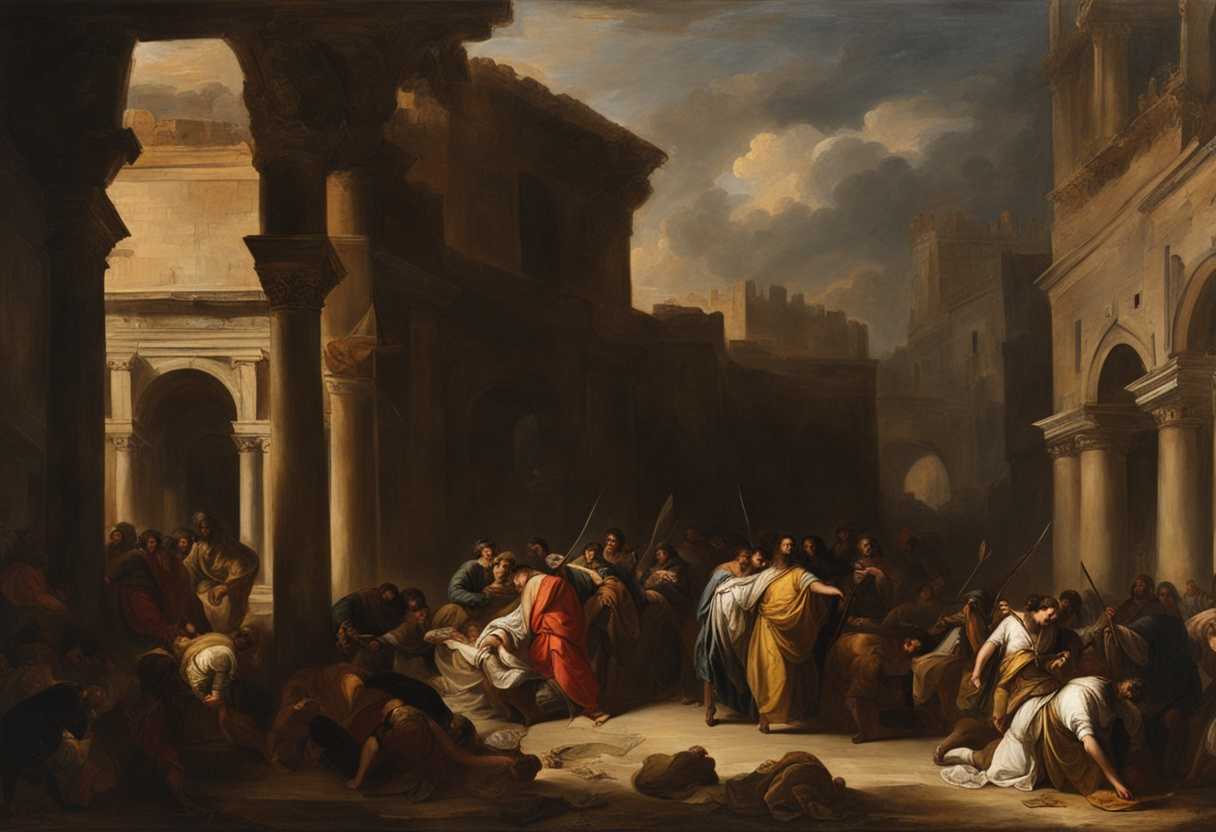
Setting the Scene for Jeremiah 52:7-11
The scene unfolds in the ancient city of Jerusalem, a place that has been the heart of the Jewish people and the center of their worship for generations. The air is thick with tension and despair as the city lies in ruins, the once-mighty walls now crumbling under the weight of siege and destruction. The sun hangs low in the sky, casting long shadows over the debris-strewn streets, where the echoes of the past still linger. Among the remnants of the city, a small group of survivors huddles together, their faces etched with fear and uncertainty. They are the remnants of a once-thriving community, now reduced to a few weary souls grappling with the aftermath of the Babylonian conquest.
In the midst of this devastation stands Zedekiah, the last king of Judah, a man who had once held power and authority but now finds himself stripped of both. He had been a puppet king, installed by Nebuchadnezzar, and his reign was marked by indecision and a failure to heed the warnings of the prophet Jeremiah. As the Babylonian forces breached the city walls, Zedekiah attempted to flee under the cover of darkness, but his escape was thwarted. Captured and brought before Nebuchadnezzar, he is now faced with the consequences of his actions. The weight of his choices hangs heavily upon him, and the reality of his fate looms large as he stands before the conqueror, a once-proud ruler now reduced to a mere prisoner.
Surrounding Zedekiah are the remnants of his royal court, a mix of loyal advisors and frightened citizens who have witnessed the fall of their beloved city. The atmosphere is charged with a sense of hopelessness, as the cries of the wounded and the lamentations of the grieving fill the air. The once-sacred Temple, a symbol of their faith and identity, lies in ruins, desecrated by the invaders. As Zedekiah is led away, his eyes reflect the anguish of his people, and the realization that their hopes for restoration and redemption have been shattered. The scene is a poignant reminder of the fragility of power and the dire consequences of turning away from divine guidance, as the people of Jerusalem grapple with the reality of their loss and the uncertain future that lies ahead.
What is Jeremiah 52:7-11 about?
Jeremiah 52:7-11 presents a poignant and sobering account of the fall of Jerusalem, highlighting the capture of King Zedekiah and his subsequent fate. Delve into this passage to consider what this narrative reveals about the consequences of leadership, disobedience, and the weight of divine judgment. Have you ever paused to think about the responsibilities that come with authority and how they can deeply impact the community? Zedekiah attempts to escape but is ultimately caught in a heartbreaking moment as the siege of Jerusalem culminates in these verses. The image of a king being taken captive carries profound symbolism. It signifies the collapse of a kingdom and the loss of hope for its people. Zedekiah’s tragic end—witnessing the execution of his sons before his own eyes, followed by his blinding and imprisonment—serves as a stark reminder of the dire consequences of turning away from God’s guidance. What does this tell us about the fragility of power and the importance of remaining faithful to one’s principles? This passage moreover invites us to reflect on our own lives. How do we respond to the challenges and decisions we face in positions of influence, whether in our careers, communities, or families? Are we firmly grounded in our values, or do we risk losing sight of them under pressure? The story of Zedekiah warns us about neglecting our responsibilities and the potential fallout that can arise from our choices. By examining this narrative, we can glean insights that resonate on a personal level and encourage us to cultivate a steadfast commitment to integrity and faithfulness in our own journeys.
Understanding what Jeremiah 52:7-11 really means
In Jeremiah 52:7-11, we encounter a poignant narrative that captures the fall of Jerusalem and the profound consequences of disobedience to God. This passage is not merely a historical account; it serves as a sobering reminder of the spiritual ramifications that arise when a community turns away from divine guidance. The destruction of the city and the temple marks a significant moment in Israel’s history, illustrating the seriousness of sin and the fulfillment of prophetic warnings. As we delve into these verses, we are invited to reflect on the broader implications of this tragic event.
One of the key themes in this passage is the concept of destruction and exile. The verses vividly depict the aftermath of Jerusalem’s fall, emphasizing that disobedience to God leads to dire consequences. The phrase “the city was broken up” encapsulates not only the physical devastation but also the emotional and spiritual disintegration of a community that once thrived under God’s protection. How often do we overlook the gravity of our choices, believing that our actions have no lasting impact? This passage challenges us to consider the weight of our decisions and their potential to lead us into our own forms of exile.
Another significant theme is God’s sovereignty, even amidst destruction. While the events described are tragic, they also reveal that God remains in control, orchestrating history according to His divine plan. This raises an important question: How do we reconcile the existence of suffering with the belief in a sovereign God? The narrative reminds us that, even in our darkest moments, God is still at work, guiding us toward restoration. This perspective can be a source of comfort for those grappling with their own hardships today.
The relevance of this passage extends beyond its historical context. Many individuals today experience their own “exiles,” whether through personal crises, loss, or a sense of separation from God. In a world filled with distractions and temptations, it is all too easy to stray from our faith. The consequences of such actions can lead to profound personal and communal suffering. Reflecting on our relationship with God becomes crucial. Are we nurturing our spiritual lives, or are we allowing external pressures to pull us away from our source of strength?
Consider the anecdote of a young man who, after years of neglecting his spiritual life, finds himself in a crisis. His job loss and strained relationships serve as a wake-up call, prompting him to seek God once more. This mirrors the experience of the Israelites, who often found themselves in dire situations before recognizing their need for divine intervention. Sometimes, it takes a fall to awaken us to the importance of God’s presence in our lives. How can we learn from these experiences without having to endure such hardships ourselves?
The phrases within these verses carry deep meaning. The act of the king of Babylon slaying the sons of Zedekiah signifies the end of a lineage and the severe consequences of rebellion against God’s authority. Similarly, Zedekiah’s loss of sight serves as a metaphor for spiritual blindness that can occur when one turns away from God. These vivid images compel us to examine our own spiritual vision. Are we seeing clearly, or are we blinded by our choices and distractions?
In conclusion, Jeremiah 52:7-11 serves as a powerful reminder of the importance of remaining faithful to God. It challenges us to reflect on our lives and the choices we make. In times of struggle, we can find hope in God’s promise of restoration and mercy. This passage encourages us to turn back to Him before we face our own moments of exile. As we navigate our spiritual journeys, let us remain vigilant, seeking to align our lives with God’s will and embracing the hope that comes from His unwavering presence.
What does it mean to trust God in despair?
Trusting God in despair involves surrendering one’s fears and uncertainties to a higher power, believing that there is a purpose even in the midst of suffering. Trusting God in times of anguish means leaning into faith rather than allowing despair to overpower your spirit. It’s a commitment to remain steadfast, recognizing that even when faced with overwhelming challenges, divine presence and guidance are still at work in our lives.
This trust is not about ignoring pain or pretending that everything is fine; instead, it embraces the reality of difficulty while seeking solace in the understanding that God remains sovereign over all situations. This belief can provide a sense of peace, allowing individuals to navigate their darkest moments with the assurance that they are not alone. It calls for a patience that often feels counterintuitive during despair, yet this is when genuine growth and faith can flourish. Trusting God in despair ultimately offers a pathway to resilience. It encourages individuals to hold onto hope and find strength in their spiritual connection, often leading to profound inner peace. One can cultivate a deeper relationship with God by experiencing and acknowledging the depths of despair, integrating faith into the very fabric of their being, and finding a way to move forward even when circumstances remain unchanged.
Application
Life is like a busy highway, where distractions can easily steer us off course. Just as we must keep our eyes on the road to reach our destination, we must also focus on our relationship with God. Take a moment to think about where you might have veered off track in your commitments—both to God and your family. Are you letting work or other distractions dilute your devotion? Now is the time to realign your priorities and get back on the right path. What small change can you make today to strengthen that bond?

Reverend Michael Johnson is an experienced Church Minister with a profound expertise in spirituality and guidance. With a serene presence and a compassionate heart, he has faithfully served his congregation for over 20 years, leading them on a spiritual journey towards inner peace and enlightenment. Reverend Johnson’s extensive knowledge of religious philosophies and profound understanding of human nature have made him a trusted confidant and mentor to many, as he seamlessly weaves his profound wisdom into life teachings. Reverend Johnson’s calming demeanor and empathetic nature continue to uplift and heal souls, nurturing a sense of unity and tranquility within his community.