
1 The word that came to Jeremiah from the Lord:
2 “Stand in the gate of the Lord’s house, and proclaim there this word, and say, Hear the word of the Lord, all you men of Judah who enter these gates to worship the Lord.”
3 Thus says the Lord of hosts, the God of Israel: Amend your ways and your deeds, and I will let you dwell in this place.
4 Do not trust in these deceptive words: ‘This is the temple of the Lord, the temple of the Lord, the temple of the Lord.’
5 “For if you truly amend your ways and your deeds, if you truly execute justice one with another,
6 if you do not oppress the sojourner, the fatherless, or the widow, or shed innocent blood in this place, and if you do not go after other gods to your own harm.
7 then I will let you dwell in this place, in the land that I gave of old to your fathers forever.
8 Behold, you trust in deceptive words to no avail.
9 Will you steal, murder, commit adultery, swear falsely, make offerings to Baal, and go after other gods that you have not known,
10 and then come and stand before me in this house, which is called by my name, and say, ‘We are delivered!’—only to go on doing all these abominations?
11 Has this house, which is called by my name, become a den of robbers in your eyes? Behold, I myself have seen it, declares the Lord.
12 Go now to my place that was in Shiloh, where I made my name dwell at first, and see what I did to it because of the evil of my people Israel.
13 And now, because you have done all these things, declares the Lord, and when I spoke to you persistently you did not listen, and when I called you, you did not answer,
14 therefore I will do to the house that is called by my name, and in which you trust, and to the place that I gave to you and to your fathers, as I did to Shiloh.
15 And I will cast you out of my sight, as I cast out all your kinsmen, all the offspring of Ephraim.
16 “As for you, do not pray for this people, or lift up a cry or prayer for them, and do not intercede with me, for I will not hear you.
17 Do you not see what they are doing in the cities of Judah and in the streets of Jerusalem?
18 The children gather wood, the fathers kindle fire, and the women knead dough, to make cakes for the queen of heaven. And they pour out drink offerings to other gods, to provoke me to anger.
19 Is it I whom they provoke? declares the Lord. Is it not themselves, to their own shame?
20 Therefore thus says the Lord God: Behold, my anger and my wrath will be poured out on this place, upon man and beast, upon the trees of the field and the fruit of the ground; it will burn and not be quenched.
21 Thus says the Lord of hosts, the God of Israel: “Add your burnt offerings to your sacrifices, and eat the flesh.
22 For in the day that I brought them out of the land of Egypt, I did not speak to your fathers or command them concerning burnt offerings and sacrifices.
23 But this command I gave them: ‘Obey my voice, and I will be your God, and you shall be my people. And walk in all the way that I command you, that it may be well with you.’
24 But they did not obey or incline their ear, but walked in their own counsels and the stubbornness of their evil hearts, and went backward and not forward.
25 From the day that your fathers came out of the land of Egypt to this day, I have persistently sent all my servants the prophets to them, day after day.
26 Yet they did not listen to me or incline their ear, but stiffened their neck. They did worse than their fathers.
27 “So you shall speak all these words to them, but they will not listen to you. You shall call to them, but they will not answer you.
28 And you shall say to them, ‘This is the nation that did not obey the voice of the Lord their God, and did not accept discipline; truth has perished; it is cut off from their lips.
29 Cut off your hair and cast it away;
raise a lamentation on the bare heights,
for the Lord has rejected and forsaken
the generation of his wrath.
30 “For the sons of Judah have done evil in my sight, declares the Lord. They have set their detestable things in the house that is called by my name, to defile it.”
31 And they have built the high places of Topheth, which is in the Valley of the Son of Hinnom, to burn their sons and their daughters in the fire, which I did not command, nor did it come into my mind.
32 Therefore, behold, the days are coming, declares the Lord, when it will no more be called Topheth, or the Valley of the Son of Hinnom, but the Valley of Slaughter; for they will bury in Topheth, because there is no room elsewhere.
33 And the dead bodies of this people will be food for the birds of the air, and for the beasts of the earth, and none will frighten them away.
34 Then I will make to cease from the cities of Judah and from the streets of Jerusalem the voice of mirth and the voice of gladness, the voice of the bridegroom and the voice of the bride, for the land shall become a waste.
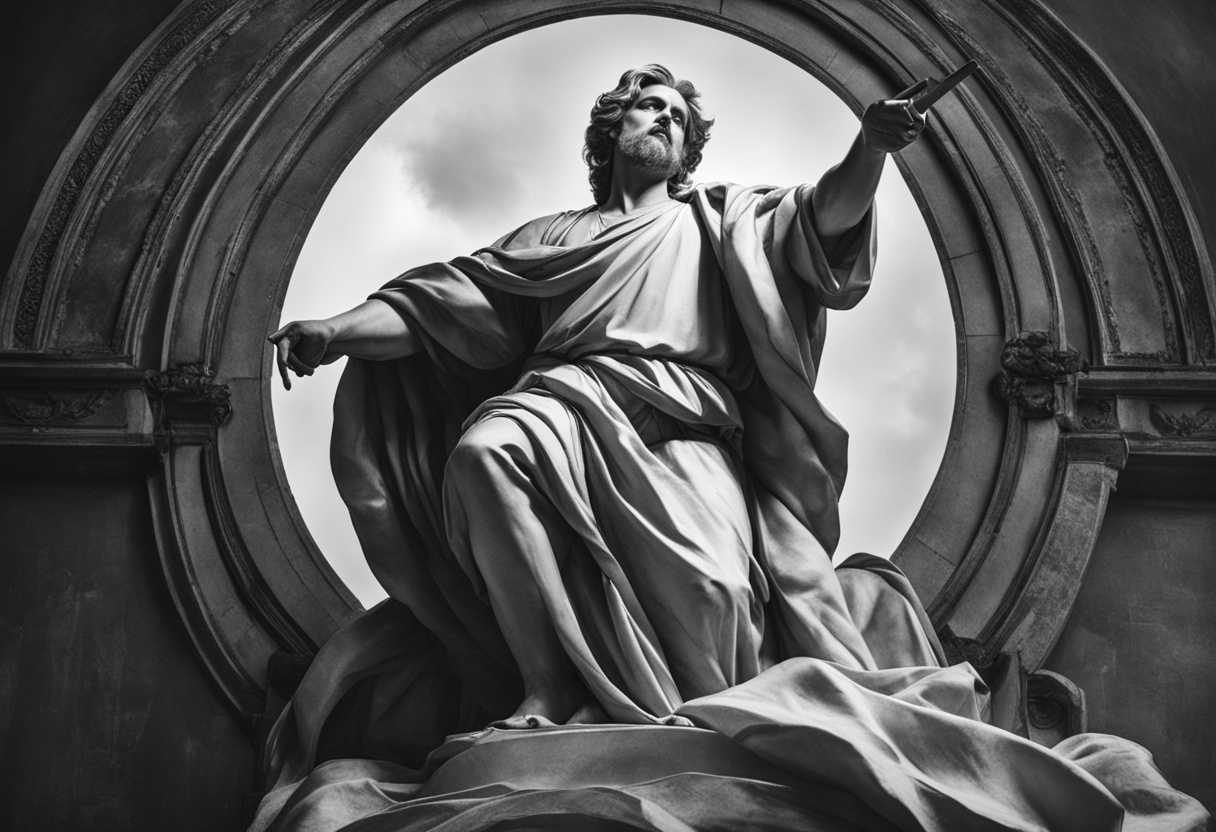
The True Meaning of Jeremiah 7
The book of Jeremiah was written by the prophet Jeremiah, who lived during a tumultuous time in Judah’s history. Jeremiah, as a young man, was called by God to be a prophet, delivering messages of warning and judgment to the people of Judah. Jeremiah addresses the people of Judah in this chapter, calling them to repentance and warning them of the impending consequences of their continued disobedience. He reminds them of the importance of true worship and righteous living, drawing parallels to the past failures of their ancestors. The chapter foreshadows the coming destruction of Jerusalem and the exile of the people, as Jeremiah pleads with them to turn back to God before it’s too late.
Throughout the passage, Jeremiah references other important biblical events, such as the Exodus (Jeremiah 7:22) and the establishment of the Mosaic covenant (Jeremiah 7:23). These allusions serve to emphasize the gravity of the situation and the need for the people to heed the prophet’s words. As we delve into this chapter, we will see Jeremiah’s unwavering commitment to his calling and the urgency of his message for the people of Judah.
Jeremiah 7:1-7
Jeremiah receives a message from the Lord in Jeremiah 7:1-7 to stand at the gate of the Lord’s house and proclaim a message to the people of Judah who have been coming to worship there.
-
Setting and Call to Repentance: The verse begins by highlighting the location where Jeremiah is standing, which is the gate of the Lord’s house. The significance of this location is that Jeremiah is speaking to the people who consider themselves faithful worshippers of God. It’s not just a random crowd; these are people who are actively involved in religious practices. This is a crucial detail because it shows that Jeremiah’s message is directed towards those who are religious but whose hearts are far from God. The call to repentance is a central theme in this passage. The people were going through the motions of worship but their hearts were not dedicated to God.
-
Warning against Hypocrisy: Jeremiah’s message to the people is a severe warning against hypocrisy. He tells them not to trust in deceptive words that say, “This is the temple of the Lord, the temple of the Lord, the temple of the Lord.” This repetition underscores the false sense of security that the people had because of the presence of the temple. They believed that merely going to the temple and engaging in religious rituals would protect them from God’s judgment, regardless of how they lived their lives. Jeremiah, however, is challenging this mindset, emphasizing that genuine repentance and righteous living are what truly matter to God.
-
Urgency of Repentance: Jeremiah urges the people to amend their ways and their actions if they want God to let them live in the land He gave to their ancestors. He warns them that if they don’t change their behavior, judgment will come upon them, and the consequences will be dire. This call to repentance is a recurring theme throughout the Bible. God calls His people to turn away from sin, seek His face, and live in righteousness in both the Old and New Testaments. Time and again, we see examples of God’s patience and mercy towards those who repent and seek Him wholeheartedly.
-
Lessons for Today: The message of Jeremiah to the people of Judah is timeless and applicable to believers today. It serves as a reminder that outward religious practices are not enough; genuine repentance and obedience are what God desires. It also warns against the dangers of hypocrisy and false security in religious rituals. God looks at the heart and desires sincere devotion from His people. This passage prompts believers to examine their own lives and ensure that their faith is not just superficial but stems from a sincere relationship with God. Jeremiah 7:1-7 serves as a poignant reminder of the importance of genuine repentance, righteous living, and wholehearted devotion to God. It challenges us to assess the sincerity of our faith and warns against the dangers of hypocrisy. It is a call to true worship that goes beyond rituals and ceremonies, penetrating to the core of our beings. Let us reflect on Jeremiah’s message to the people of Judah and seek to align our lives with God’s will by walking in obedience and humility before Him.
Jeremiah 7:8-11
Jeremiah delivers a powerful message in Jeremiah 7:8-11 on behalf of God to the people of Judah. The passage can be broken down into two main sections: the first being a rebuke of the people’s misplaced confidence in the temple, and the second highlighting their blatant disregard for God’s commandments and mistreatment of others. Jeremiah condemns the people’s false sense of security in the temple in the first section, declaring that they have turned it into a “den of thieves.”” Despite their outward displays of piety and religious rituals, the people have failed to uphold the true essence of their faith by engaging in sinful practices such as idolatry and oppression of the vulnerable. This critique by Jeremiah serves as a reminder that true worship is not about external ceremonies or religious buildings, but rather about a sincere and humble heart before God. This theme resonates throughout the Bible, where God consistently calls for authenticity and faithfulness in worship. Jesus echoed this sentiment in the New Testament when he cleansed the temple, driving out the money changers and merchants who had turned it into a marketplace (Matthew 21:12-13). This event further emphasizes the importance of honoring God with reverence and purity in our hearts. Jeremiah accuses the people of committing abominations by shedding innocent blood, engaging in idolatry, and committing various other sins in the second section of the passage. Despite their religious practices, their actions demonstrate a complete disregard for God’s commandments and a lack of compassion for their fellow human beings. This indictment mirrors the broader theme found throughout the Bible of God’s concern for justice, righteousness, and mercy. We are reminded in Isaiah 1:17 to “learn to do good; seek justice, correct oppression; bring justice to the fatherless, plead the widow’s cause.”” These verses reinforce the idea that true faith is manifested in actions that reflect God’s character and love for others. Jeremiah 7:8-11 serves as a poignant reminder that external religious practices hold no weight if they are not accompanied by a genuine heart transformation and obedience to God’s commandments. The passage challenges us to examine our own lives and ensure that our faith is not merely a facade, but a true reflection of God’s love, justice, and righteousness. It calls us to cultivate a relationship with God that goes beyond rituals and ceremonies to one that is rooted in love, humility, and obedience. The timeless message of this passage continues to resonate today, prompting us to live out our faith authentically and seek to honor God in all aspects of our lives.
Jeremiah 7:12-15
The verse in Jeremiah 7:12-15 is divided into key sections that reveal important aspects of God’s message to the people of Judah through the prophet Jeremiah. Let’s break down these sections for a deeper understanding.
Firstly, in verse 12, God instructs Jeremiah to go to Shiloh, where He first made His name dwell among the Israelites. Shiloh was once the religious center for the Israelites during the time of the judges. The mention of Shiloh in this context serves as a stark reminder of the consequences of disobedience and turning away from God. It alludes to the fact that, just as the Israelites lost the Ark of the Covenant and witnessed the destruction of Shiloh due to their faithlessness, Judah too faces the threat of God’s judgment for their idolatry and sin.
Moving on to verse 13, God emphasizes that He has been speaking to the people persistently, rising early and speaking, yet they have not listened. This highlights the theme of rebellion and stubbornness prevalent among the people of Judah. Despite God’s continuous efforts to call them back to Him through His prophets, the people have become deaf to His instructions and warnings, choosing instead to follow their own desires and worship idols. God declares in verse 14 that He will do to the house in which He has called His name (the temple in Jerusalem) what He did to Shiloh. This announcement of judgment signifies the impending destruction and desolation that will befall Judah and Jerusalem due to their unrepentant sins. The temple, once considered a sacred and secure place, will not be spared from the divine punishment as a result of the people’s blatant disregard for God’s commandments.
Finally, in verse 15, God clearly states that He will cast the people of Judah out of His sight, just as He cast out their brothers, the northern kingdom of Israel. This pronouncement serves as a severe warning of exile and separation from God’s presence for Judah if they do not repent and turn back to Him. The reference to the exile of the northern kingdom of Israel due to their idolatry underscores the severity of the consequences of turning away from God and serves as a cautionary tale for Judah. These verses reveal God’s unwavering justice and mercy in the broader context of Jeremiah 7. Despite the people’s persistent disobedience and idolatry, God continues to reach out to them through His prophets, urging them to repent and return to Him. However, their refusal to heed His warnings ultimately leads to the fulfillment of His judgment upon them, demonstrating the consequences of unfaithfulness and the importance of staying true to God’s commandments.
These verses also echo the recurring theme throughout the Bible of the consequences of sin and the importance of obedience to God. From the fall of man in the Garden of Eden to the exile of Israel and Judah, the Scriptures illustrate the patterns of disobedience and its repercussions. Through Jeremiah’s warnings and prophecies, we are reminded of the need to remain faithful and obedient to God, lest we too face the consequences of straying from His ways.
Jeremiah 7:16-20
God commands Jeremiah not to pray for the people of Judah or intercede on their behalf in a part of Jeremiah’s prophecy found in Jeremiah 7:16-20. The section starts with the Lord telling Jeremiah not to pray for the people or make supplication to Him on their behalf. This instruction from God highlights the seriousness of the sins committed by the people of Judah. The depth of their transgressions had reached a point where intercession or prayers for them would not change the impending judgment that God had decreed upon them.
The verse continues by describing the actions of the people that had provoked God’s anger: making offerings to foreign gods, worshiping idols, and turning their backs on God. Despite having the temple of the Lord in their midst, they chose to engage in detestable acts that were contrary to the covenant they had with God. This blatant disregard for God’s commands and their idolatrous practices were at the core of their disobedience.
This passage from Jeremiah serves as a cautionary tale about the consequences of forsaking God and following after idols. Throughout the Bible, we see numerous instances where the Israelites were warned against worshiping false gods and the repercussions of their actions. The story of the golden calf in Exodus 32 is a prime example of how the Israelites turned away from God soon after experiencing His miraculous deliverance from Egypt. This pattern of disobedience and idolatry persisted throughout Israel’s history, leading to their eventual downfall.
The severity of God’s judgment in Jeremiah 7:16-20 underscores the principle of reaping what one sows. The people of Judah had sown seeds of rebellion and idolatry, and they were now facing the harvest of God’s wrath. This passage serves as a stark reminder of the importance of faithfulness and obedience to God’s commands. It highlights the enduring message of the Bible that calls for a genuine relationship with God based on righteousness and faith, rather than outward rituals or empty worship. This passage foreshadows the impending destruction of Judah at the hands of the Babylonians in the broader context of the book of Jeremiah. Despite Jeremiah’s warnings and pleas for repentance, the people remained obstinate in their ways, leading to the fulfillment of God’s judgment. Jeremiah’s prophetic ministry reflects the mercy and justice of God, as well as the consequences of persistent sin and disobedience. The themes of repentance, judgment, and restoration are intricately woven throughout the book of Jeremiah, demonstrating God’s unfailing love and desire for His people to turn back to Him.
Jeremiah 7:21-26
A clearer understanding of the message being conveyed in Jeremiah 7:21-26 requires dissecting a few key sections.
Starting with verses 21 and 22, God speaks through Jeremiah to address the people of Judah regarding their insincere and empty religious practices. God declares that He did not command the Israelites to offer burnt offerings and sacrifices when He brought them out of Egypt. This statement is significant because it reveals that God prioritizes sincerity and authenticity in worship over mere outward rituals. It emphasizes the importance of true devotion and obedience rather than going through the motions of religious practices without genuine faith. This aligns with other passages in the Bible such as 1 Samuel 15:22 which states, “To obey is better than sacrifice.”
Moving on to verses 23 and 24, God reminds the people of Judah of His primary command to obey His voice. God’s desire for His people to listen and obey rather than offer sacrifices highlights the relational aspect of their covenant with Him. This echoes the sentiment in Deuteronomy 11:27 where it is stated, “Observe therefore this day, that I am he who speaks; behold, I am standing at the door and knocking.” This ongoing theme illustrates God’s longing for a meaningful relationship with His people based on obedience and faithfulness. God laments at how the people of Judah have continually turned away from Him and followed their own stubborn hearts in verses 25 and 26. Despite sending prophets to them time and time again to warn and instruct them, they refused to listen and persisted in their disobedience. This reflects a recurring pattern throughout the Old Testament where the Israelites repeatedly rebelled against God, leading to consequences for their actions. It serves as a cautionary tale for readers that disobedience and rebellion against God’s commands will inevitably result in judgment. Jeremiah 7:21-26 carries a timeless message about the importance of genuine worship, obedience to God’s commands, and the consequences of straying from His ways. It serves as a reminder for believers to prioritize authentic faith and devotion over empty rituals, to listen to and obey God’s voice, and to heed His warnings through scripture and messengers. True relationship with God is ultimately built on trust, obedience, and sincerity in worship.
Jeremiah 7:27-31
Verse 27 of Jeremiah chapter 7 starts with God addressing the Israelites, declaring that they have not listened to Him, even though He has been speaking to them persistently. This highlights the theme of disobedience and rejection of God’s words that permeates throughout the book of Jeremiah. God is admonishing the Israelites for disregarding His warnings and continuing in their sinful ways in this context. This demonstrates the importance of actively listening to and obeying God’s commands in order to avoid the consequences of disobedience. The verse also underscores the idea that God’s mercy and patience eventually have limits, and there will come a time when His judgment must be carried out.
Moving on to verse 28, God commands Jeremiah to speak to the Israelites, but declares that they will not listen to him. This sets the scene for Jeremiah’s difficult mission to deliver God’s messages to a people who have become hardened and resistant to divine guidance. It shows the prophet’s faithfulness to God’s call despite the challenging circumstances he faces. This rejection by the Israelites also foreshadows the coming exile and the severe consequences of their disobedience. It serves as a reminder of the consequences of ignoring God’s warnings and refusing to repent. God states in verse 29 that the people of Judah have followed the Baal gods, burning their sons and daughters in the fire as sacrifices. This reference to child sacrifice is a horrific image that captures the depths of the Israelites’ moral decline. Throughout the Bible, child sacrifice is portrayed as one of the gravest sins, indicating a complete disregard for the sanctity of life and a departure from God’s commandments. This practice was forbidden by God in the Law of Moses (Leviticus 18:21), making the Israelites’ actions even more abhorrent. The mention of child sacrifice emphasizes the severity of the Israelites’ sin and the urgent need for repentance.
Finally, in verse 31, God questions the Israelites by asking them to build high places in the Valley of Hinnom to burn their children as sacrifices, something He never commanded or even entered His mind. The Valley of Hinnom, also known as Gehenna, was a place where idolatrous practices and child sacrifices took place. God is confronting the Israelites with the shocking extent of their disobedience by referencing this location. The fact that such abominable practices were carried out in a place meant for the worship of false gods underscores the perversion of the Israelites’ religious practices. God’s statement that such actions never even entered His mind highlights the stark contrast between His holiness and the Israelites’ wickedness. Jeremiah 7:27-31 serves as a poignant reminder of the consequences of turning away from God and engaging in sinful practices. It showcases the Israelites’ stubbornness and idolatry, which eventually lead to their downfall and exile. The verses urge readers to heed the warnings of God, avoid following false gods, and uphold the sanctity of life. Through the story of Jeremiah and the Israelites, we learn about the importance of repentance, obedience, and staying faithful to God’s commands.
Jeremiah 7:32-34
The verse in Jeremiah 7:32-34 reads: “Therefore, behold, the days are coming, declares the LORD, when it will no more be called Topheth, or the Valley of the Son of Hinnom, but the Valley of Slaughter; for they will bury in Topheth, because there is no room elsewhere. And the dead bodies of this people will be food for the birds of the air, and for the beasts of the earth, and none will frighten them away. And I will silence in the cities of Judah and in the streets of Jerusalem the voice of mirth and the voice of gladness, the voice of the bridegroom and the voice of the bride, for the land shall become a waste.”
The first section indicates a change in the naming of a place that was formerly known as Topheth or the Valley of the Son of Hinnom to the Valley of Slaughter. Topheth was a place where children were sacrificed to the god Molech by burning them in fire. It was in this valley that the prophet Jeremiah condemned the people of Judah for their idolatry, especially for offering their children as sacrifices to false gods. The renaming of the place to the Valley of Slaughter signifies the judgment that was to come upon Judah for their sin and unfaithfulness. This act reminds us of the severity of God’s judgment on those who turn away from Him and engage in abominable practices.
The next section describes a grim image where the dead bodies of the people were to be left unburied, becoming food for the birds of the air and the beasts of the earth. This horrifying scene symbolizes the desolation and destruction that would come upon the land of Judah due to their disobedience. It serves as a stark warning of the consequences of forsaking God and living in disobedience. It also reflects the prophetic imagery found in other parts of the Bible, such as in the book of Revelation, where similar scenes of judgment and destruction are depicted for those who reject God’s way.
The final section of the verse speaks of the silence that would fall upon the cities of Judah and Jerusalem, where the sounds of joy and celebration would be replaced by desolation and mourning. The cessation of weddings, a time usually marked by great celebration in Jewish culture, emphasizes the seriousness of the judgment that was to come upon the land. This part of the verse highlights the consequences of sin not only on an individual level but also on a societal level, affecting the community as a whole. It serves as a reminder that the choices we make have far-reaching effects, not just for ourselves but for those around us as well. Jeremiah 7:32-34 conveys a powerful message about the importance of obedience to God, the consequences of turning away from Him, and the inevitable judgment that follows disobedience. It serves as a sobering reminder of the righteousness and holiness of God, as well as His faithfulness to both bless and discipline His people according to their actions. Through understanding and reflecting on such verses, we are encouraged to live lives that honor God, follow His commands, and remain steadfast in our faith regardless of the circumstances around us.
After Jeremiah 7
The people had turned away from God, worshipping false idols and living in sin. The prophet Jeremiah warned them to repent and return to the Lord, but they refused to listen. Jeremiah delivered a sobering message as the chapter drew to a close: if the people did not change their ways, they would face the consequences of God’s judgment.
Yet, even in the midst of this dire warning, a glimmer of hope remained. For the Lord, in His infinite mercy, was still willing to forgive and restore those who would turn back to Him. The next chapter would reveal the depth of God’s love and the promise of redemption, if only the people would heed the call to repentance.

Reverend Michael Johnson is an experienced Church Minister with a profound expertise in spirituality and guidance. With a serene presence and a compassionate heart, he has faithfully served his congregation for over 20 years, leading them on a spiritual journey towards inner peace and enlightenment. Reverend Johnson’s extensive knowledge of religious philosophies and profound understanding of human nature have made him a trusted confidant and mentor to many, as he seamlessly weaves his profound wisdom into life teachings. Reverend Johnson’s calming demeanor and empathetic nature continue to uplift and heal souls, nurturing a sense of unity and tranquility within his community.