
Jeremiah 7:8-11 is about God’s warning to the people of Judah that their outward acts of worship are meaningless if their hearts are not truly devoted to Him, emphasizing the importance of genuine repentance and righteous living over empty rituals and sacrifices.
8 Behold, you trust in deceptive words to no avail.
9 Will you steal, murder, commit adultery, swear falsely, make offerings to Baal, and go after other gods that you have not known,
10 and then come and stand before me in this house, which is called by my name, and say, ‘We are delivered!’—only to go on doing all these abominations?
11 Has this house, which is called by my name, become a den of robbers in your eyes? Behold, I myself have seen it, declares the Lord.
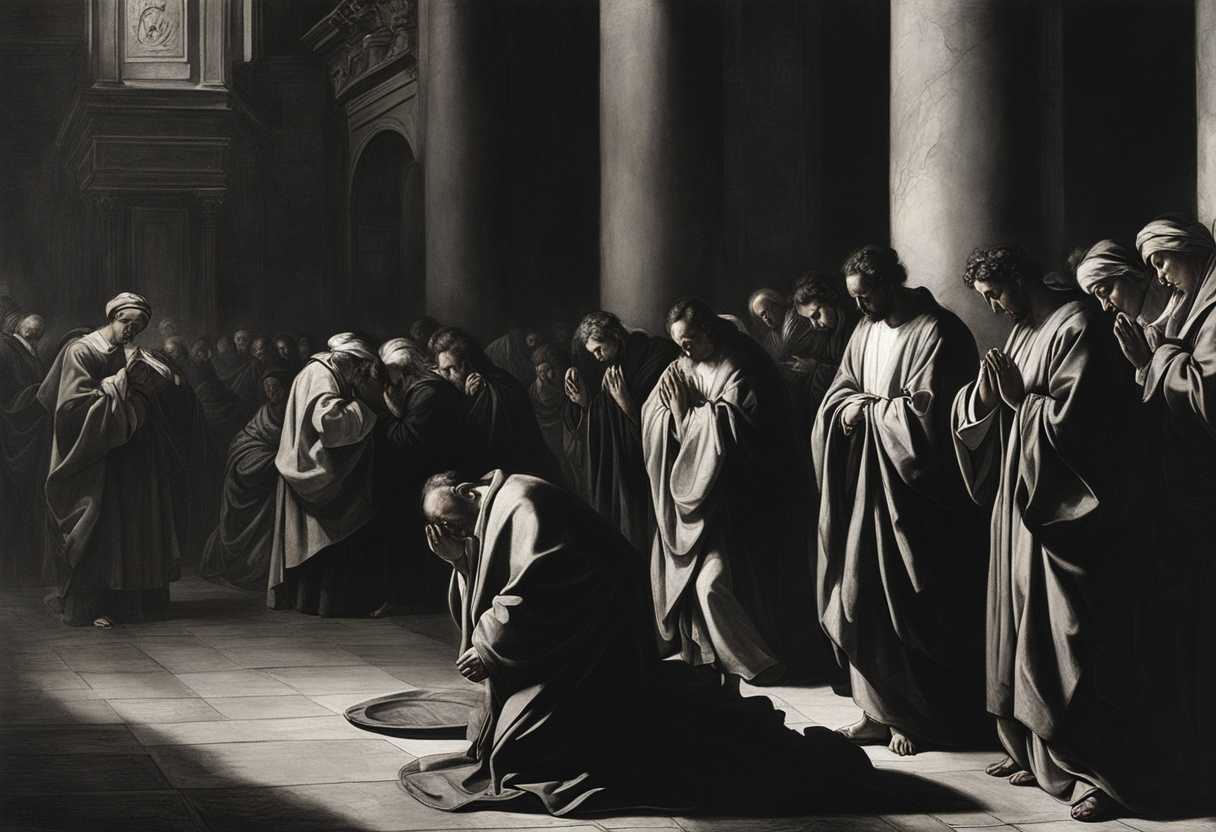
Setting the Scene for Jeremiah 7:8-11
In the scene described in Jeremiah 7:8-11, the prophet Jeremiah stands in the courtyard of the temple in Jerusalem, surrounded by a crowd of people who have come to worship. The air is thick with the scent of incense burning on the altars, and the sound of prayers and chants fills the sacred space. The sun beats down on the stone walls, casting long shadows across the courtyard.
Among the crowd are priests in their elaborate robes, leading the people in rituals and sacrifices. Merchants have set up stalls selling animals for offerings, and money changers exchange coins for the temple tax. The people have come from all over the land to seek favor from their God and to make offerings for their sins.
As Jeremiah looks out at the scene before him, he is filled with a sense of foreboding. He knows that despite the outward appearance of piety and devotion, the hearts of the people are far from God. They have turned to idolatry and injustice, neglecting the true worship that God desires. Jeremiah’s words of warning and rebuke hang heavy in the air, challenging the people to repent and turn back to the ways of the Lord.
What is Jeremiah 7:8-11 about?
Moses warned the Israelites about the consequences of hypocrisy and disobedience to God’s commandments. God is emphasizing the importance of sincerity and genuine reverence in our relationship with Him in this verse. Hypocrisy, especially in matters of faith, is a betrayal of the trust and devotion that God desires from His people. It is a call to reflect on our actions and intentions, ensuring they align with our professed beliefs. We, as teachers and guides, must ask ourselves: Are our words and deeds in harmony with our beliefs? Are we truly living out the values and principles that we preach to our students or the community? This verse serves as a powerful reminder to lead by example and to practice what we preach. We can cultivate a genuine connection with God and inspire those around us to do the same by embodying sincerity, authenticity, and integrity in all aspects of our lives.
Understanding what Jeremiah 7:8-11 really means
Jeremiah 7:8-11, part of the “Temple Sermon” by the prophet Jeremiah, confronts the people of Judah for their misplaced trust in rituals over genuine faith. The prophet exposes their false sense of security in temple worship, despite their engagement in idolatry and injustice. The key phrases in this passage highlight the hypocrisy of the people, who believed they could commit grave sins and still find refuge in the temple. Jeremiah’s rhetorical questions emphasize the absurdity of thinking that outward religious practices could cover up a lack of true repentance and obedience.
This passage resonates with contemporary believers, challenging us to reflect on our own worship practices. Just as the people of Judah were rebuked for their hypocrisy, we are reminded that true worship requires a heart aligned with God’s will, not just outward displays of religiosity. Many today may fall into the trap of relying on religious activities or church attendance for a false sense of security, neglecting the inner transformation and obedience that God truly desires.
The connection to other biblical passages, such as Jesus cleansing the temple in Matthew 21:12-13, underscores the continuity of God’s message against hypocrisy and misuse of sacred spaces. Isaiah 1:11-17 and Micah 6:6-8 further emphasize God’s disdain for empty rituals and the importance of justice, righteousness, and genuine worship. These passages collectively call us to genuine repentance and a return to living in alignment with God’s commandments, prioritizing actions and attitudes over mere outward displays of faith.
To illustrate the message of Jeremiah 7:8-11, consider a person who outwardly appears devout, actively participating in church activities and esteemed in the community. However, their conduct outside of religious settings is marked by dishonesty, mistreatment of others, and unethical behavior. Like the people of Judah, this individual may be trusting in deceptive words, finding false security in religious practices while lacking integrity in their daily life. True faith, as this anecdote illustrates, demands consistency and authenticity across all aspects of our existence, not just within the confines of religious gatherings.
In conclusion, Jeremiah 7:8-11 serves as a timeless admonition for believers to prioritize genuine faith and obedience over empty rituals. It prompts us to examine our lives for signs of hypocrisy and to pursue a deeper, more authentic relationship with God. Let us heed the prophet’s call to true repentance, recognizing that God values sincerity of heart and righteous living above mere outward displays of religiosity.
How can we ensure our worship is genuine?
To ensure our worship is genuine, we must not trust in deceptive words. This means that we should be mindful of the intentions behind our worship. Our words and actions in worship should be sincere and driven by true devotion to God, rather than by empty rituals or superficial displays.
Furthermore, we should not engage in practices that harm others or go against the teachings of God. Genuine worship involves not only honoring God through our prayers and rituals but also living a life that reflects His values of love, justice, and compassion. Our worship should lead to positive actions and behaviors that align with God’s will. Genuine worship ultimately comes from the heart. It is not about external appearances or empty gestures. It is a sincere expression of our love, gratitude, and reverence for God. We can cultivate a deep and meaningful connection with the divine by ensuring that our worship is grounded in authenticity and faithfulness.
Application
Reflect on your actions, are they in line with your deepest values? Take a moment to examine your path and make sure it aligns with your true purpose. It’s time to strive for goodness and integrity in every aspect of your life. Will you choose to walk in the light of your own moral compass?

Reverend Michael Johnson is an experienced Church Minister with a profound expertise in spirituality and guidance. With a serene presence and a compassionate heart, he has faithfully served his congregation for over 20 years, leading them on a spiritual journey towards inner peace and enlightenment. Reverend Johnson’s extensive knowledge of religious philosophies and profound understanding of human nature have made him a trusted confidant and mentor to many, as he seamlessly weaves his profound wisdom into life teachings. Reverend Johnson’s calming demeanor and empathetic nature continue to uplift and heal souls, nurturing a sense of unity and tranquility within his community.