
is about how even the creatures and elements of the earth possess wisdom and knowledge given to them by God, emphasizing the interconnectedness of all of creation.
7 “But ask the beasts, and they will teach you;
the birds of the heavens, and they will tell you;
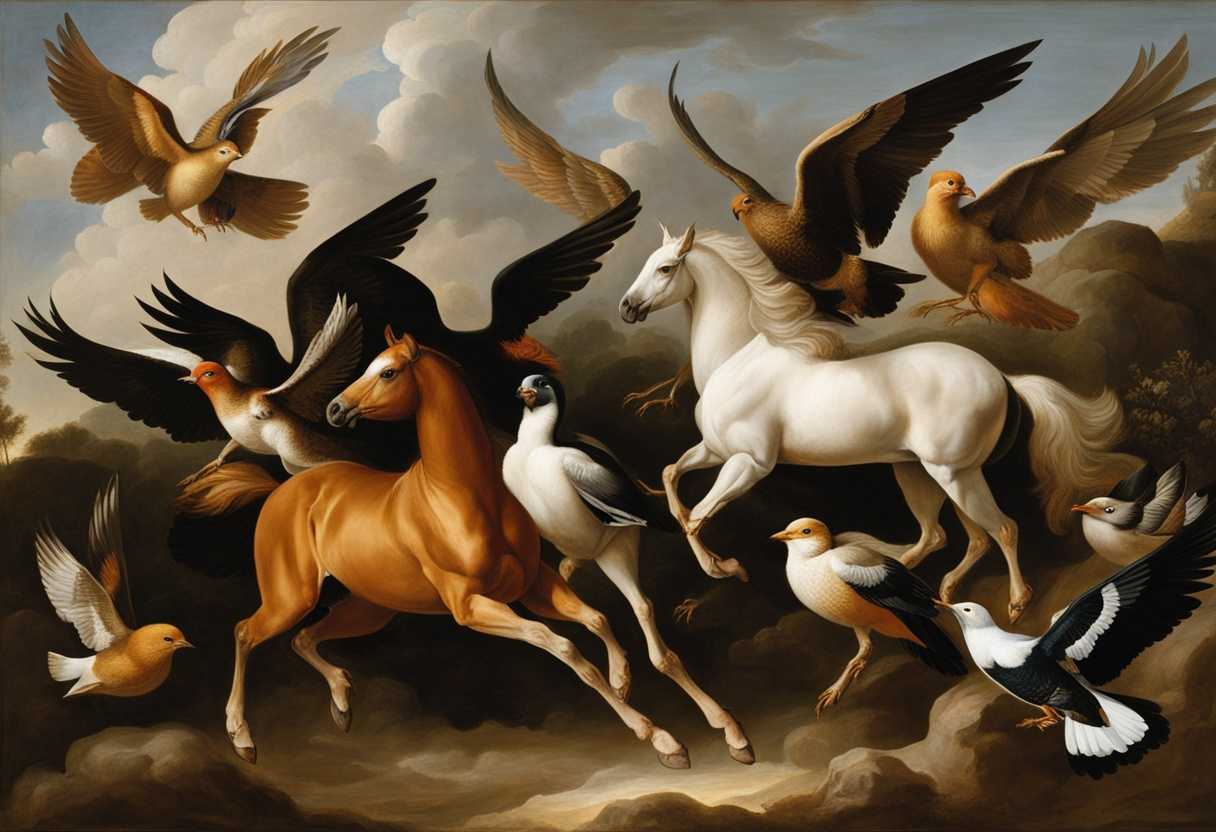
Setting the Scene for Job 12:7
In Job chapter 12, we find Job, a righteous man who is facing immense suffering and loss, sitting among the ashes, scraping his sores with a piece of broken pottery. Job’s friends, Eliphaz the Temanite, Bildad the Shuhite, and Zophar the Naamathite, have come to visit him upon hearing of his troubles. They sit with Job in silence for seven days and nights, mourning with him and sharing in his grief.
As the scene unfolds, Job, in his anguish, begins to question the ways of God and the reasons behind his suffering. In verse 7, Job speaks of turning to nature for wisdom, saying, “But ask the animals, and they will teach you, or the birds in the sky, and they will tell you.” The setting is somber and reflective, with Job and his friends grappling with the age-old question of why the righteous suffer.
Surrounded by the desolation of his circumstances, Job’s words in chapter 12 serve as a poignant reminder of the complexities of faith and the mysteries of God’s ways. The scene is heavy with emotion and deep theological ponderings, as Job and his friends wrestle with the profound questions of suffering, justice, and the nature of God.
What is Job 12:7 about?
Job recognizes and honors the wisdom and power of God reflected through His creation in nature in this verse. Job’s acknowledgment of God’s wisdom through nature serves as a reminder for us to look beyond ourselves and our limited understanding and seek deeper comprehension in the world around us. We can gain a better understanding of His sovereignty and the depth of His wisdom by observing and appreciating God’s intricate design in all of creation.
Have you ever marveled at the beauty of a sunrise or the intricacy of a flower’s petals? These are all manifestations of God’s wisdom and creativity. Just like Job, we are called to seek understanding in all aspects of creation, from the vast expanse of the universe to the smallest details of plant and animal life. We can cultivate a greater appreciation for the divine wisdom that surrounds us and deepen our connection with the Creator by doing so. Let us approach the world with a sense of wonder and reverence, seeking to learn from and be inspired by the wisdom of God displayed through His magnificent creation, following Job’s example.
Understanding what Job 12:7 really means
The Book of Job, known for its exploration of suffering and faith, presents a profound dialogue between Job and his friends as they grapple with the reasons behind Job’s trials. In Job 12:7, Job responds to his friends by urging them to seek wisdom not only from human sources but also from nature itself. This verse serves as a reminder that God’s creation holds valuable insights and lessons for those who are willing to observe and learn.
“But ask the animals, and they will teach you.” This statement underscores the idea that nature and its creatures can serve as teachers, revealing truths about God and His creation. In Genesis 1:20-25, we see God’s delight in His creation of animals, affirming their significance in His design. Animals, through their existence and behaviors, can offer glimpses of God’s wisdom and creativity.
“Or the birds in the sky, and they will tell you.” Birds, often symbolizing freedom and care in the Bible, are used here to emphasize God’s provision and care. Just as Jesus mentions in Matthew 6:26, where He points to the birds as recipients of God’s attention, this imagery highlights God’s intimate involvement in sustaining His creation.
In Psalm 19:1-4, the psalmist declares that the heavens and skies proclaim God’s glory and handiwork, reinforcing the idea that nature itself testifies to God’s greatness. Romans 1:20 further expounds on this concept, stating that God’s attributes are evident in His creation, leaving humanity without excuse in recognizing His existence and power.
In our modern, technology-driven world, the disconnect from nature can hinder our ability to appreciate God’s creation fully. Encouraging readers to spend time in nature, we emphasize the importance of reconnecting with the natural world to find peace, understanding, and a deeper sense of God’s presence. Personal anecdotes or stories can illustrate how moments in nature can lead to profound insights or spiritual experiences.
The phrase “Ask the animals” conveys the importance of humility and openness to learning from all aspects of God’s creation, not just human wisdom. It suggests that God’s truth is accessible and evident in the world around us, inviting us to seek wisdom beyond our limited perspectives. “They will teach you” emphasizes the value of observing and reflecting on nature, encouraging a posture of listening and learning from the lessons that God’s creation offers.
In conclusion, Job 12:7 reminds us of the profound wisdom that can be gleaned from nature and its creatures. By recognizing God’s revelation in the natural world, cultivating humility, and embracing a posture of learning, we can deepen our understanding of God and His ways. Let us take the time to observe and reflect on the beauty and intricacy of God’s creation, allowing it to enrich our spiritual journey and draw us closer to the Creator.
How can we seek wisdom from nature in hardship?
Nature can provide wisdom and guidance in times of hardship. We can learn from the resilience and adaptability of the natural world, just as the verse in Job 12 describes how the birds, fish, and even plants can teach us valuable lessons. Nature shows us the importance of enduring through difficult times, of finding strength in adversity, and of staying rooted in times of turmoil.
When facing challenges, we can turn to nature as a source of inspiration and comfort. The cycles of growth, change, and renewal found in the natural world remind us that hardships are often temporary and that a season of struggle can lead to growth and transformation. We can find solace and perspective in our own trials by observing the beauty, balance, and interconnectedness present in nature.
Nature has a way of showing us that even in the midst of chaos and uncertainty, there is a larger order at work. We can learn to trust in the process of life and find peace by seeking wisdom from the natural world, knowing that just as the seasons change, our hardships will pass. Connecting with the wisdom that nature offers us can help us find strength, resilience, and hope in times of struggle.
Application
Just as every team member plays a vital role in a successful project, every part of creation showcases God’s power and wisdom. From the soaring birds to the depths of the sea, His majesty shines through. Let this truth drive you to acknowledge His greatness and respect His handiwork in everything you do. Will you seize this moment to embrace a deeper reverence for God in every corner of your world?

Reverend Michael Johnson is an experienced Church Minister with a profound expertise in spirituality and guidance. With a serene presence and a compassionate heart, he has faithfully served his congregation for over 20 years, leading them on a spiritual journey towards inner peace and enlightenment. Reverend Johnson’s extensive knowledge of religious philosophies and profound understanding of human nature have made him a trusted confidant and mentor to many, as he seamlessly weaves his profound wisdom into life teachings. Reverend Johnson’s calming demeanor and empathetic nature continue to uplift and heal souls, nurturing a sense of unity and tranquility within his community.