
Joel 1:9 is about a lament over the loss of grain and wine due to the devastating locust invasion as a call to repentance and return to God.
9 The grain offering and the drink offering are cut off from the house of the Lord. The priests mourn, the ministers of the Lord.
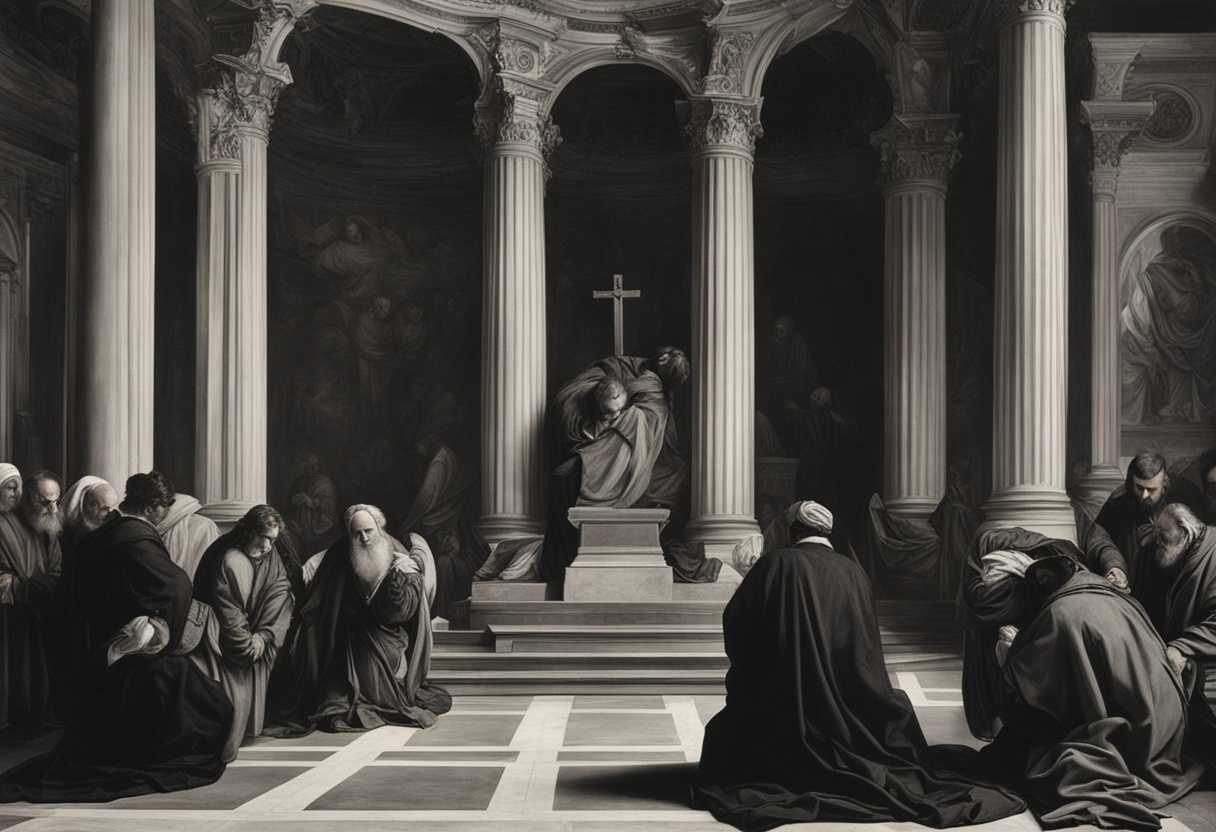
Setting the Scene for Joel 1:9
The scene in Joel 1:9 takes place in the ancient land of Judah during a time of great distress and devastation. The prophet Joel is addressing the people of Judah, calling for a solemn assembly to gather together in response to a severe locust plague that has ravaged the land. The once lush fields and vineyards are now barren and desolate, a stark contrast to their former abundance.
Among those present at this solemn assembly are the priests, the elders, the children, and even nursing infants. They have all come together in response to Joel’s urgent call to lament and seek the Lord’s mercy in the face of this disaster. The atmosphere is heavy with grief and desperation as the people realize the extent of the devastation that has befallen them.
The setting is somber, with the sound of wailing and mourning filling the air. The people are dressed in sackcloth and ashes, symbols of repentance and mourning. The once vibrant community is now united in their sorrow and seeking divine intervention to restore their land and livelihoods. It is a moment of collective reflection and supplication as they turn to God in the midst of their suffering.
What is Joel 1:9 about?
Oh, this verse is painting a picture of devastation and loss. When the grain and drink offerings are cut off, it signifies a deep disruption in the usual religious practices and rituals. Ancient cultures considered these offerings essential parts of worship, symbolizing thanksgiving and communion with the divine. So, the imagery of them being cut off conveys a profound sense of mourning and despair. Just imagine the emptiness and sorrow felt when something so integral to one’s spiritual life is suddenly taken away.
Reflect on the significance of these offerings – they were not just physical items, but expressions of faith and devotion. So, when they are mentioned as being cut off, it prompts us to consider the implications beyond the physical act. It beckons us to ponder on what happens to a community when its spiritual practices are disrupted. How does it impact their connection with the divine and with each other? This verse serves as a poignant reminder of the sacredness of rituals and highlights the deep emotional toll that can come with their cessation.
Understanding what Joel 1:9 really means
The Book of Joel, a prophetic text in the Old Testament, speaks to a time of crisis in Israel, marked by a devastating locust plague and severe drought. Joel’s message emphasizes the need for repentance and communal lamentation, urging the people to turn back to God in the face of calamity. In Joel 1:9, the phrase “Grain offering and drink offering are cut off” signifies a disruption in the relationship between the people and God, as these offerings were integral to worship practices in the Temple. The cessation of these offerings serves as a visible symbol of the spiritual decay and separation from God that the nation is experiencing.
Furthermore, the mention of “From the house of the Lord” underscores the centrality of the Temple in Israel’s spiritual life. The Temple was not just a physical structure but the dwelling place of God’s presence, where the community gathered for worship and communion. The sorrow of the priests in Joel 1:9 reflects the deep impact of this disruption on the spiritual leaders of the community, highlighting the gravity of the situation and the collective mourning that permeates the land.
In a broader biblical context, passages like Hosea 4:6, Amos 8:11, and Psalm 51:17 echo themes of spiritual awareness, consequences of turning away from God, and the importance of genuine repentance. These verses resonate with Joel’s call for repentance and restoration, emphasizing the significance of a contrite heart and a broken spirit before God. Today, these messages remain relevant as people can still experience spiritual disconnection, neglecting spiritual practices, or facing moral challenges that distance them from God.
The relevance of Joel’s message extends to contemporary society, where the call to repentance and the role of spiritual leaders in guiding communities are crucial. Just as the priests mourned in Joel’s time, pastors, priests, and spiritual leaders today play a vital role in fostering communal faith and resilience. Their guidance and support can help individuals navigate personal struggles and crises, leading them back to a place of spiritual renewal and healing.
To illustrate the impact of communal repentance and prayer, envision a town facing a severe drought and economic hardship. The local church, once vibrant, now struggles with dwindling attendance and a sense of despair. The pastor, moved by the community’s plight, calls for a day of prayer and fasting. As the townspeople gather, sharing burdens and seeking God’s intervention, a transformation begins. Through their collective repentance and faith, the community experiences not only physical relief but also a renewed spiritual vitality and unity, mirroring Joel’s call for communal restoration.
In conclusion, Joel 1:9 serves as a poignant reminder of the importance of maintaining a strong spiritual connection with God, especially in times of crisis. It prompts us to reflect on our spiritual practices, seek genuine repentance, and support one another in our faith journeys. Just as Joel called the people of his time to return to God with sincerity, his message resonates today, inviting us to embrace repentance, seek spiritual renewal, and stand united in faith.
How can we seek God’s guidance in calamity?
We can seek God’s guidance in times of calamity by turning to Him in prayer and seeking comfort and guidance through His Word. We open ourselves up to His leading and direction by humbling ourselves and bringing our concerns to Him in prayer. The verse Joel 1:9 conveys a message of urgency and desperation in seeking God’s help in the midst of hardship. God is always with us and ready to guide us through the storm, especially in moments of calamity.
Additionally, leaning on the support of a community of faith can also help us seek God’s guidance in times of calamity. We can find strength and encouragement as we navigate through difficult situations by coming together with fellow believers. This sense of unity and support can remind us that we are not alone in our struggles and that God is working through the love and compassion of those around us. Surrounding ourselves with a community that shares our faith can serve as a source of comfort and guidance in times of crisis.
Application
Embrace the urgency of Joel 1:9 and let it light a fire in your soul. Visualize the barrenness that neglect can bring and feel the pull to prioritize your spiritual well-being. Let the verse be the seed that grows into a blossoming connection with God through prayer, Scripture, and compassionate deeds. Will you seize this moment for your spiritual revival and rejuvenation?

Reverend Michael Johnson is an experienced Church Minister with a profound expertise in spirituality and guidance. With a serene presence and a compassionate heart, he has faithfully served his congregation for over 20 years, leading them on a spiritual journey towards inner peace and enlightenment. Reverend Johnson’s extensive knowledge of religious philosophies and profound understanding of human nature have made him a trusted confidant and mentor to many, as he seamlessly weaves his profound wisdom into life teachings. Reverend Johnson’s calming demeanor and empathetic nature continue to uplift and heal souls, nurturing a sense of unity and tranquility within his community.