
John 10:12 is about illustrating the contrast between a hired hand who abandons the sheep in times of danger versus a good shepherd who selflessly cares for and protects the flock.
12 He who is a hired hand and not a shepherd, who does not own the sheep, sees the wolf coming and leaves the sheep and flees, and the wolf snatches them and scatters them.
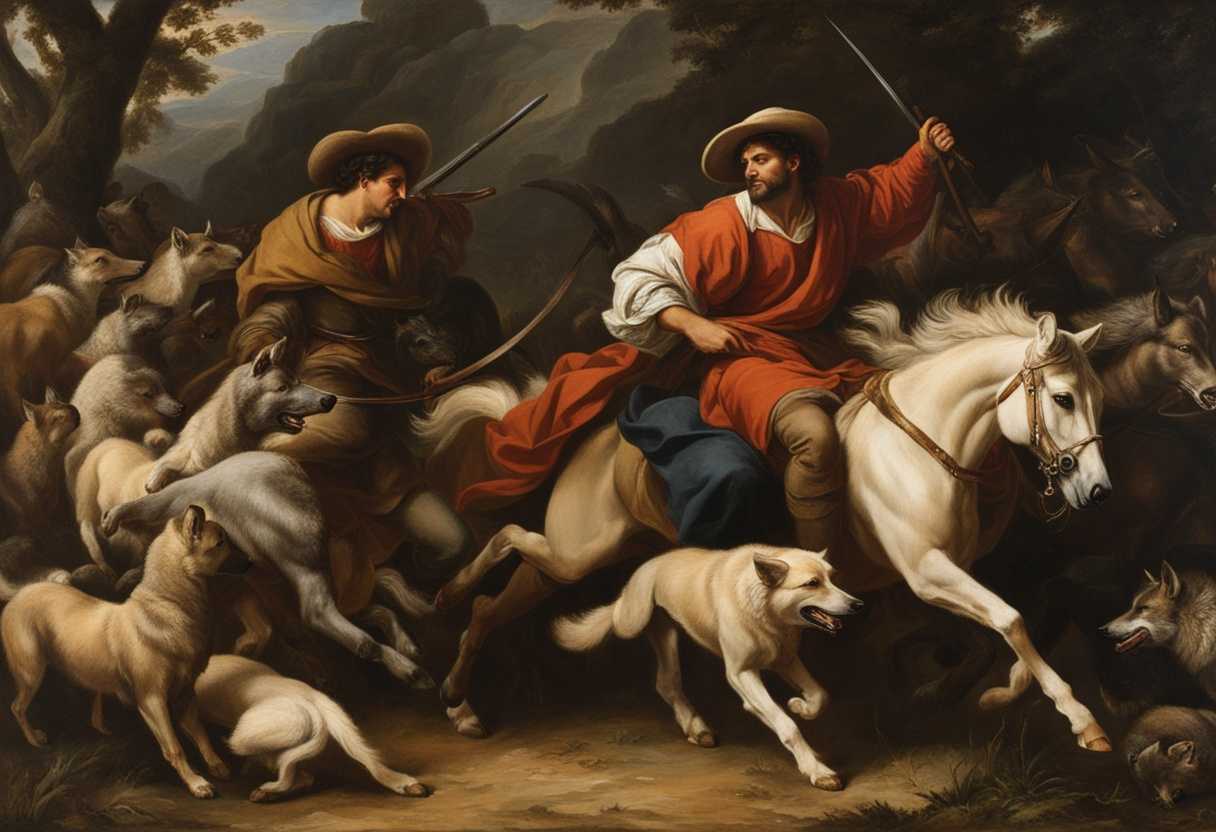
Setting the Scene for John 10:12
In John chapter 10, Jesus uses the metaphor of a shepherd and his sheep to illustrate his relationship with his followers. Set in the rolling hills of Judea, the scene unfolds with Jesus surrounded by a group of curious listeners, including his disciples and a crowd of onlookers. The sun is beginning to set, casting a warm golden glow over the landscape as Jesus sits on a large rock, his voice carrying across the peaceful countryside.
As Jesus speaks, his words are filled with compassion and authority, drawing in his audience with tales of the shepherd who knows his sheep by name and leads them to safety. The disciples, who have spent countless hours with Jesus, hang on his every word, their faces reflecting a mix of understanding and awe. The crowd, made up of both believers and skeptics, listens intently, some nodding in agreement while others furrow their brows in thought.
In this serene setting, Jesus paints a vivid picture of the loving relationship between the shepherd and his flock, emphasizing his role as the Good Shepherd who lays down his life for his sheep. The scene is one of tranquility and contemplation, with the gentle rustling of the wind through the grass serving as a backdrop to Jesus’ powerful teachings.
What is John 10:12 about?
Jesus in this verse is using a metaphor to explain the difference between a true shepherd and a hired hand who is only concerned with personal gain. The hired hand symbolizes someone who is not genuinely invested in the well-being of others, in this case, the sheep. When danger or difficulty arises, the hired hand’s loyalty and commitment are tested, and they ultimately choose to abandon the sheep to save themselves. This contrast highlights the importance of having a shepherd or leader who genuinely cares for and protects those under their care.
Think about it. Are you someone who sticks around only when things are easy and convenient, or are you willing to stay and face challenges for the sake of others? This verse challenges us to reflect on our own motivations and intentions in our relationships and responsibilities. It urges us to aspire to be like the true shepherd who is dedicated, selfless, and willing to sacrifice for the well-being of others. Let’s strive to be leaders who care for the “sheep” in our lives, whether it be family, friends, or our community, with unwavering compassion and commitment.
Understanding what John 10:12 really means
In the Gospel of John, chapter 10, verse 12, Jesus uses the analogy of the Good Shepherd to illustrate the qualities of true leadership and care. This verse is part of a larger discourse where Jesus distinguishes Himself as the Good Shepherd who lays down His life for the sheep, contrasting with a hired hand who abandons the flock in times of danger. The imagery of a shepherd was deeply significant in biblical times, where shepherds were responsible for guiding, protecting, and providing for their sheep. By understanding the cultural context of shepherding, we can appreciate the profound meaning behind Jesus’ words.
The key phrases in John 10:12 convey powerful messages about leadership and responsibility. The “hired hand” symbolizes individuals who are motivated by self-interest and lack genuine concern for those under their care. When the hired hand “sees the wolf coming,” it represents recognizing impending threats or challenges, yet choosing to prioritize personal safety over the well-being of others. The act of abandoning the sheep and running away signifies a lack of commitment and courage in the face of adversity, leading to harm and chaos as the wolf attacks and scatters the flock.
This verse resonates with other passages in the Bible that depict God as the ultimate Shepherd who guides and protects His people. Psalm 23 beautifully portrays the Lord as a caring shepherd who leads His flock beside still waters and restores their souls. In contrast, Ezekiel 34 condemns the leaders of Israel for their negligence, likening them to bad shepherds who exploit rather than nurture their flock. Jesus’ declaration in John 10:11 further emphasizes His sacrificial love as the Good Shepherd who lays down His life for His sheep, exemplifying true leadership through selflessness and dedication.
The relevance of John 10:12 extends beyond its historical context, serving as a timeless reminder for individuals in various roles of leadership. Whether in spiritual, professional, or personal capacities, the verse challenges us to reflect on our motives and actions. Are we merely fulfilling obligations like hired hands, or are we wholeheartedly committed to the well-being of those entrusted to us? The anecdote of volunteers at a community center illustrates the stark contrast between self-serving individuals and those who genuinely care for others, embodying the essence of the hired hand versus the Good Shepherd.
As we ponder the implications of John 10:12 in our lives, it prompts us to examine our attitudes and behaviors towards leadership and responsibility. Are there areas where we prioritize personal gain over the needs of others, akin to the hired hand who abandons the sheep? How can we emulate the qualities of the Good Shepherd by showing genuine care, sacrificial love, and unwavering commitment in our interactions and duties? By fostering a culture that values and seeks out leaders who exemplify these virtues, we contribute to creating communities and relationships built on trust, compassion, and integrity.
How can we show sacrificial love to others?
We can show sacrificial love to others by being willing to lay down our own wants, needs, and desires for the well-being of others. This means putting the needs of others before our own, even if it requires personal sacrifice or inconvenience on our part. Sacrificial love involves serving others selflessly, without expecting anything in return, just as Jesus showed us through His own sacrificial love for humanity. We can display compassion, kindness, and generosity to those around us by imitating Christ’s example of sacrificial love. This can be expressed through acts of service, kindness, forgiveness, and empathy towards others. Sacrificial love requires us to go beyond our comfort zones and put the needs of others first, just as Jesus willingly gave His life for us out of love. Sacrificial love is a powerful way to demonstrate our faith and reflect the love of Christ to the world ultimately.
Application
Imagine you’re the manager of a bustling office, or the pillar of your family. Just as Jesus, the Good Shepherd, sacrificed for His flock, you too can make a difference by showing selfless love to those around you. It’s time to step up, not just listen. Help and serve those in need, just like you would support your team or family. Are you ready to embody Christ’s love in your actions today?

Reverend Michael Johnson is an experienced Church Minister with a profound expertise in spirituality and guidance. With a serene presence and a compassionate heart, he has faithfully served his congregation for over 20 years, leading them on a spiritual journey towards inner peace and enlightenment. Reverend Johnson’s extensive knowledge of religious philosophies and profound understanding of human nature have made him a trusted confidant and mentor to many, as he seamlessly weaves his profound wisdom into life teachings. Reverend Johnson’s calming demeanor and empathetic nature continue to uplift and heal souls, nurturing a sense of unity and tranquility within his community.