
14 I am the good shepherd. I know my own and my own know me,
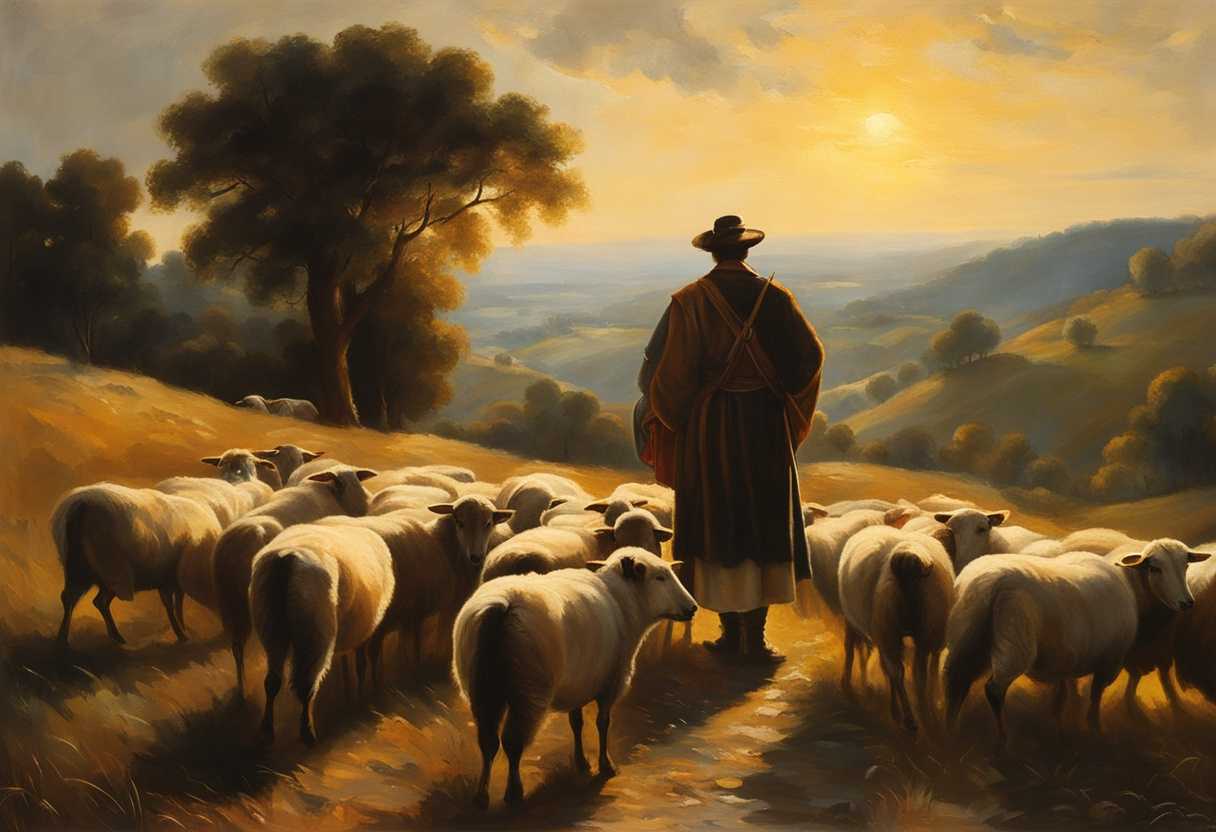
Setting the Scene for John 10:14
In John chapter 10, Jesus is speaking to a group of people in the temple in Jerusalem. The scene is set in a large courtyard with stone pillars and intricate carvings, surrounded by bustling crowds of people coming to worship and offer sacrifices. Jesus, the central figure in the scene, is surrounded by a mix of curious onlookers, religious leaders, and his devoted followers.
As Jesus speaks, his words resonate with authority and compassion, drawing in those who are seeking spiritual guidance and truth. The atmosphere is charged with anticipation and wonder as Jesus uses the metaphor of a shepherd to describe his relationship with his followers, emphasizing his care, protection, and intimate knowledge of each one of them. The listeners are captivated by his words, feeling a sense of comfort and security in knowing that they are known and loved by their shepherd.
Among the crowd are also skeptics and critics, who question Jesus’ claims and challenge his authority. The tension in the air is palpable as Jesus navigates through the diverse reactions of the people around him, ultimately revealing his divine nature and the depth of his love for all who are willing to follow him.
What is John 10:14 about?
Jesus refers to himself as the “good shepherd” in this verse, which holds significant meaning. A shepherd is someone who cares for, protects, and guides their sheep. Jesus highlights his love, care, and devotion to his followers by calling himself the Good Shepherd. He knows each of his sheep individually, understanding their needs, fears, and desires. His sheep recognize and trust him as their shepherd, relying on his guidance and provision.
Jesus’ statement emphasizes the intimate relationship between him and his followers. Jesus knows his followers on a personal level, just as a shepherd knows each of his sheep by name. This closeness fosters trust, loyalty, and a sense of security among the sheep. His followers can find comfort in knowing that they are known and cared for by their loving and protective leader, Jesus, by understanding and recognizing him as the Good Shepherd.
Reflecting on this verse prompts us to consider our own relationship with Jesus. Do we recognize him as our shepherd, who knows us intimately and cares for us deeply? Do we trust him to guide and protect us through life’s challenges and uncertainties? Embracing Jesus as the Good Shepherd invites us to strengthen our bond with him, finding solace and assurance in his unwavering love and guidance.
Understanding what John 10:14 really means
**1. Let us begin by understanding the context in which this verse is placed. Jesus speaks about Himself as the Good Shepherd in John 10. This metaphor is deeply rooted in the pastoral culture of the time and resonates with the imagery of care, guidance, and protection. Jesus contrasts Himself with hired hands who do not care for the sheep. He emphasizes His commitment and intimate knowledge of His followers by calling Himself the Good Shepherd.
2. Underlying Meaning and Key Phrases
A key phrase in this verse is “I am the good shepherd.” This declaration is profound. Jesus is not just any shepherd; He is the good shepherd. The adjective “good” here signifies moral excellence and genuine care. Unlike the hired hands, Jesus is invested in the well-being of His flock. The phrase “I know my sheep and my sheep know me” underscores a mutual, intimate relationship. This is not a superficial acquaintance but a deep, personal knowledge.
3. Biblical Cross-References
This idea of a shepherd caring for his flock is present throughout the Bible. David writes in Psalm 23, “The Lord is my shepherd, I lack nothing.”” This psalm reflects the same assurance of care and guidance. God promises to search for His sheep and look after them in Ezekiel 34:11-16. These references enhance our understanding of Jesus as the shepherd who fulfills these Old Testament promises.
**4. People in today’s world often feel lost or directionless, much like sheep without a shepherd. Jesus offers a sense of belonging and guidance. This verse reassures us that we are known and cared for. Knowing that Jesus recognizes and values us provides comfort and purpose in a society where individualism can lead to isolation.
**5. Sarah, a young woman, felt overwhelmed by life’s challenges. She struggled to find her path and doubted her worth. One day, she came across this verse and felt a profound sense of peace. She realized that she was not alone; Jesus knew her intimately and cared for her deeply. This realization transformed her life, giving her the confidence to face her struggles, knowing she was valued and guided by the Good Shepherd.
6. Reflection and Engagement
Reflect on this: Do you feel known and valued in your life? How does the knowledge that Jesus is your Good Shepherd change your perspective? Our daily lives can be hectic and confusing, but this verse invites us to rest in the assurance that we are known and loved. Can you think of ways to deepen your relationship with Jesus, the Good Shepherd, in your everyday life?
**7. John 10:14 offers profound insight into the character of Jesus and His relationship with us. He, as the Good Shepherd, knows us intimately and cares for us deeply. This truth is not only comforting but also empowering. It calls us to trust in His guidance and to cultivate a deeper relationship with Him. Let this verse be a reminder that no matter where we are in life, we are never alone.
How can we cultivate a deeper relationship with God?
To cultivate a deeper relationship with God, we can follow the example highlighted in John 10:14. We should strive to truly know God on a personal level and allow Him to know us intimately as well, just as a good shepherd knows his sheep and is known by them. This involves spending time in prayer, studying His Word, and seeking His presence in our daily lives. We can deepen our relationship with God by actively seeking to know and understand His character.
Furthermore, focusing on developing a two-way communication with God is essential. The shepherd and his sheep have a relationship of mutual knowledge and recognition in the verse mentioned. Similarly, we can cultivate a deeper connection with God by not only speaking to Him through prayer but also by listening for His voice in our hearts and through His Word. Building a relationship with God is a dynamic process that involves both sharing our hearts with Him and being open to receiving His guidance, comfort, and wisdom in return.
Lastly, emulating the qualities of a good sheep can help us grow closer to God. Sheep are known for their obedience, trust, and dependence on their shepherd. We can foster a deeper relationship with God by humbly submitting to His will, trusting in His plans, and relying on His guidance. We can walk closely with God by surrendering our lives to Him and allowing Him to lead us along the path He has set before us, just as a sheep follows its shepherd faithfully.
Application
Imagine Jesus as the manager who knows every detail about you, or the family member who always has your back. He’s your Good Shepherd, ready to guide you if you let Him. Take time for prayer, dig into the Word, and show love through actions. Are you ready to embrace Him and let Him lead you every step of the way?

Reverend Michael Johnson is an experienced Church Minister with a profound expertise in spirituality and guidance. With a serene presence and a compassionate heart, he has faithfully served his congregation for over 20 years, leading them on a spiritual journey towards inner peace and enlightenment. Reverend Johnson’s extensive knowledge of religious philosophies and profound understanding of human nature have made him a trusted confidant and mentor to many, as he seamlessly weaves his profound wisdom into life teachings. Reverend Johnson’s calming demeanor and empathetic nature continue to uplift and heal souls, nurturing a sense of unity and tranquility within his community.