
John 10:30-33 is about Jesus proclaiming his unity with God the Father, leading the Jewish leaders to accuse him of blasphemy for claiming divinity.
30 I and the Father are one.
31 The Jews picked up stones again to stone him.
32 Jesus answered them, “I have shown you many good works from the Father; for which of them are you going to stone me?”
33 The Jews answered him, “It is not for a good work that we are going to stone you but for blasphemy, because you, being a man, make yourself God.”
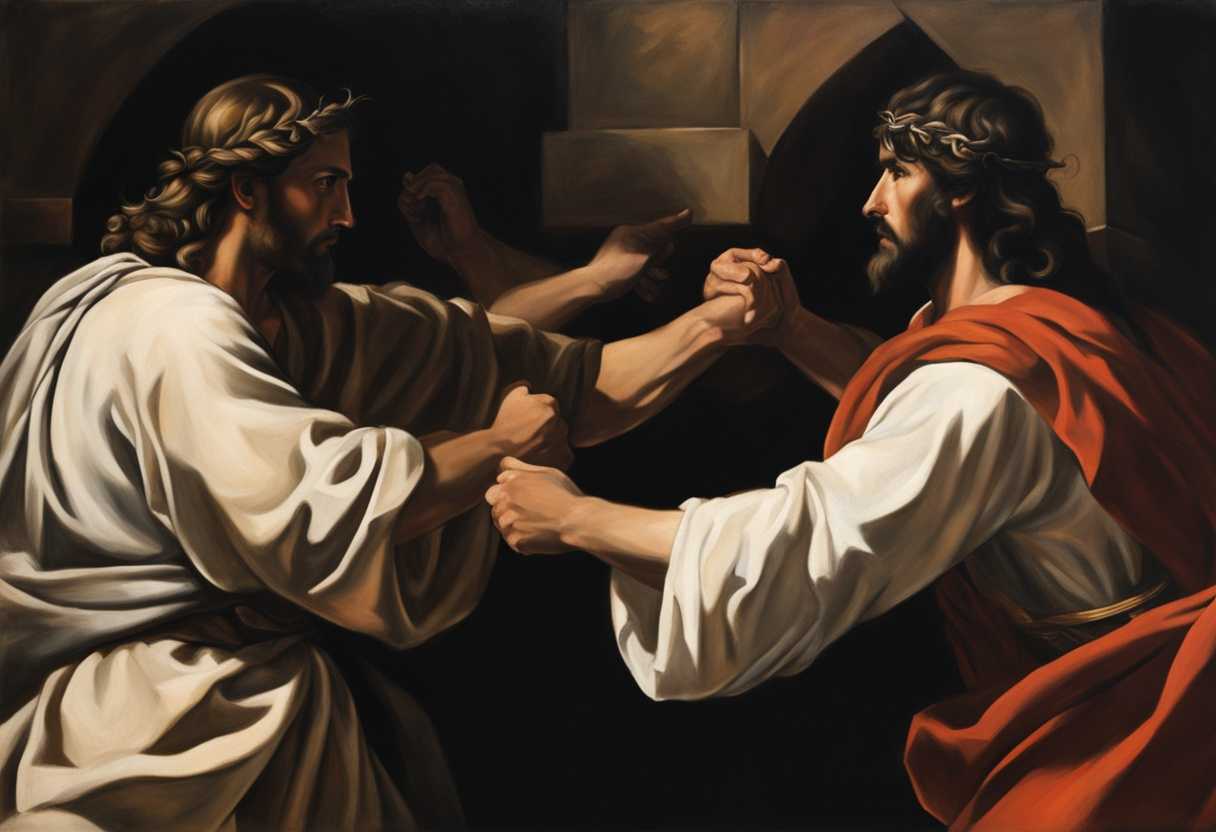
Setting the Scene for John 10:30-33
In John chapter 10, we find Jesus engaged in a heated discussion with the Jewish religious leaders in the temple courts in Jerusalem. The scene is tense as Jesus proclaims, “I and the Father are one” (John 10:30), asserting His divinity and the unity He shares with God the Father. The religious leaders, taken aback by this bold claim, pick up stones to stone Him for what they perceive as blasphemy.
Surrounded by a crowd of onlookers, including disciples, Pharisees, and other curious bystanders, Jesus stands firm in His declaration, challenging the religious leaders to consider the miraculous works He has performed as evidence of His divine authority. The atmosphere crackles with tension as the religious leaders accuse Jesus of making Himself out to be God, a charge that Jesus does not deny but rather uses as an opportunity to teach about His unique relationship with the Father.
As the confrontation escalates, the scene in the temple courts becomes a battleground of theological debate and spiritual warfare, with Jesus boldly asserting His identity as the Son of God amidst the growing hostility of His opponents. The clash of beliefs and the clash of wills reach a climax as the religious leaders, unable to bear Jesus’ claims any longer, make a final attempt to seize Him, only to be thwarted by His miraculous escape.
What is John 10:30-33 about?
Jesus declares the unity and oneness that He shares with God the Father in this verse, John 10:30. This statement of “I and the Father are one” emphasizes the deep and intimate relationship between Jesus and God. It signifies not just a physical or external connection but a spiritual and divine oneness. Jesus is asserting his divinity and His unity with the Father, highlighting the unique relationship He has with God.
When the Jews accuse Jesus of blasphemy for making such a claim, they are challenging His identity and authority. They are unable or unwilling to accept that Jesus could be divine, equal to God. This interaction highlights the ongoing tension between Jesus and the religious leaders of the time, who struggled to understand His true nature and purpose. It also serves as a moment for Jesus to reaffirm His divine status and mission to those who doubt Him. We reflect on this verse, pondering the profound mystery of the Trinity and the unity of God. It challenges us to deepen our understanding of who Jesus is and the significance of His relationship with the Father. It also prompts us to consider our own beliefs and reactions when faced with the teachings of Jesus. How do we respond to the idea of Jesus being one with God? Do we fully grasp the implications of this oneness for our faith and salvation? We contemplate the depth of Jesus’ divinity and the oneness He shares with the Father, seeking to align our hearts and minds with the truth He has revealed.
Understanding what John 10:30-33 really means
In the Gospel of John, we find Jesus engaging in a profound dialogue with the Jewish leaders during the Feast of Dedication in Jerusalem. At this critical moment, Jesus makes a striking declaration, saying, “I and the Father are one.” This statement goes beyond mere unity; it underscores the equality and divine nature of Jesus with God the Father. It is a bold assertion of His identity as the Son of God, challenging the understanding of those who questioned His authority.
The reaction of the Jewish leaders to Jesus’ claim is intense. They immediately pick up stones to stone Him, viewing His words as blasphemous. In their eyes, Jesus, a mere man in their perception, was making a claim to be God Himself. This response highlights the gravity of Jesus’ statement and the deep-seated theological conflict it stirred among the religious elite of that time.
Jesus, undeterred by their hostility, questions the basis of their actions, asking for which of His good works they intended to stone Him. He challenges their understanding, pointing to the evidence of His miracles and teachings as signs of His divine mission. This interaction reveals the tension between Jesus’ self-revelation and the disbelief of those who could not accept His divine nature.
The passage in John 10:30-33 resonates with other biblical texts that affirm Jesus’ divine identity. In John 1:1-14, the prologue speaks of the Word (Jesus) being with God and being God, reinforcing the concept of His eternal existence and deity. Similarly, in Philippians 2:6-7 and Colossians 1:15-20, Paul expounds on the preeminence and creative power of Jesus, emphasizing His divine nature and role in creation.
Today, this passage continues to challenge and inspire believers. It calls us to grapple with the profound truth of Jesus’ identity as the Son of God. In a world of diverse beliefs and ideologies, understanding and accepting Jesus’ divinity remain foundational to the Christian faith. His unity with the Father provides believers with assurance of His authority and the fulfillment of God’s promises.
Just as the Jewish leaders struggled with Jesus’ claims, individuals today may also face the challenge of accepting Jesus as God incarnate. This passage invites us to reflect deeply on our beliefs and to embrace the truth about Jesus with faith and conviction. It prompts us to seek a deeper understanding of His nature and to allow this truth to transform our lives and guide our faith journey.
Consider the weight of Jesus’ declaration, “I and the Father are one.” How does this profound statement shape your perception of who Jesus is? Take time to delve into the related passages and meditate on their implications for your faith. Engage in prayer, seeking a deeper revelation of God’s nature through Jesus. Embrace the transformative power of accepting Jesus’ divine identity, allowing it to illuminate your path and strengthen your faith journey.
Are we truly one with God?
Yes, the verse highlights the oneness between individuals and God. It emphasizes the unity and connection between believers and the divine. This oneness signifies a deep spiritual bond and a harmonious relationship between humans and God. Individuals can cultivate a sense of closeness and alignment with the divine by acknowledging this unity, allowing them to experience peace, love, and guidance from a higher power. It serves as a reminder of the inherent connection that exists between humanity and the divine, inviting individuals to deepen their faith and surrender to the will of God in their lives.
Application
Think of your life as a busy office or a tight-knit family. In John 10:30-33, Jesus faced resistance but stood firm. Let this spark a fire in you to deepen your bond with Him, not just as a teacher, but as the Son of God. Just like you’d stand by your team or family during tough times, stand strong in your faith. Will you step up and share Jesus’ truth with those who need to hear it?

Reverend Michael Johnson is an experienced Church Minister with a profound expertise in spirituality and guidance. With a serene presence and a compassionate heart, he has faithfully served his congregation for over 20 years, leading them on a spiritual journey towards inner peace and enlightenment. Reverend Johnson’s extensive knowledge of religious philosophies and profound understanding of human nature have made him a trusted confidant and mentor to many, as he seamlessly weaves his profound wisdom into life teachings. Reverend Johnson’s calming demeanor and empathetic nature continue to uplift and heal souls, nurturing a sense of unity and tranquility within his community.