
John 11:12 is about Jesus telling his disciples that Lazarus, who he referred to as being asleep, was actually dead, indicating that Jesus had the power to bring him back to life.
12 The disciples said to him, “Lord, if he has fallen asleep, he will recover.”
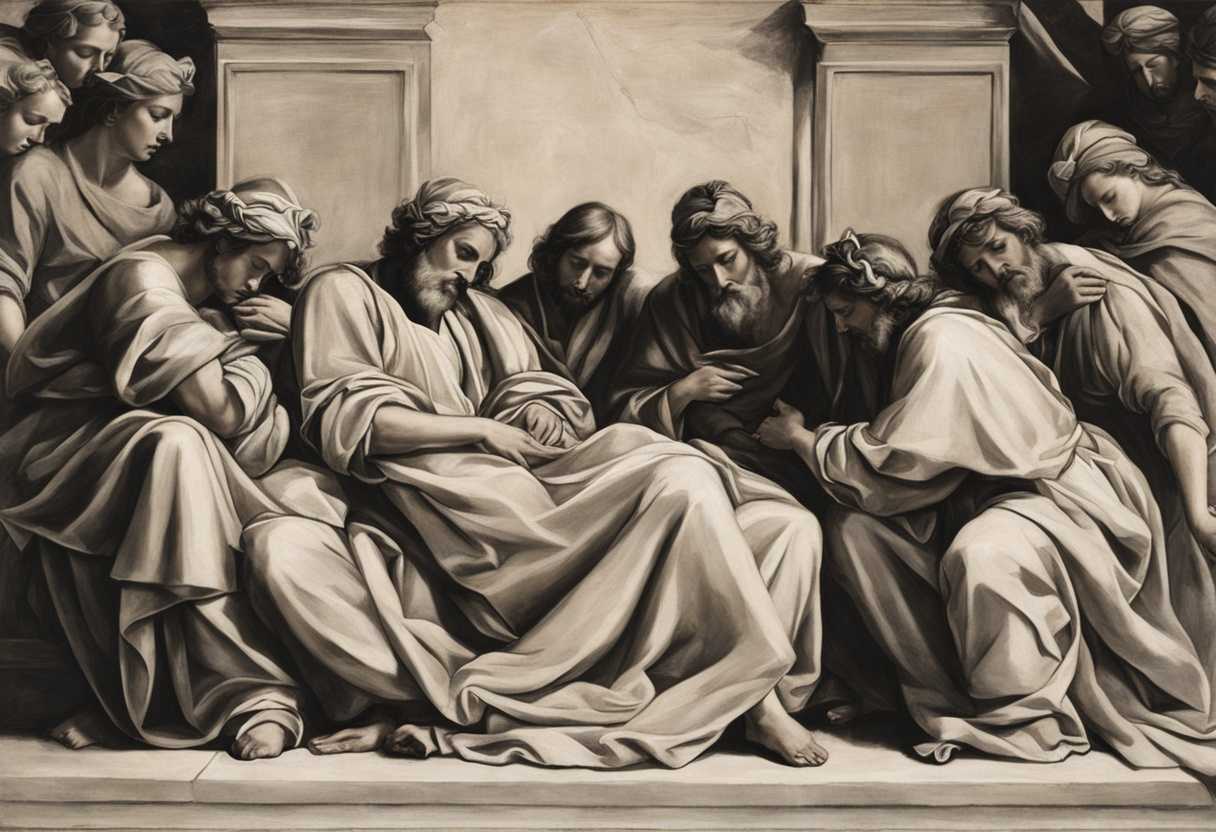
Setting the Scene for John 11:12
In John chapter 11, we find Jesus and his disciples in the town of Bethany, where a dear friend of Jesus, Lazarus, has fallen ill. Mary and Martha, Lazarus’ sisters, send word to Jesus, informing him of their brother’s sickness. Upon hearing this news, Jesus tells his disciples that Lazarus’ illness will not end in death but will be used to glorify God.
As they arrive in Bethany, the scene is filled with a sense of urgency and concern. Mary and Martha are grieving the loss of their brother, and many friends and family members have gathered to mourn with them. The atmosphere is heavy with sorrow and lamentation as Jesus approaches the tomb where Lazarus has been laid to rest.
Jesus, moved by the sorrow of those around him, asks for the stone to be rolled away from the entrance of the tomb. Despite the protests of Martha, who is worried about the stench of death after four days, Jesus calls out in a loud voice, “Lazarus, come out!” The onlookers are filled with awe and amazement as Lazarus emerges from the tomb, still wrapped in burial cloths. This miraculous event serves as a powerful demonstration of Jesus’ authority over death and his ability to bring forth new life.
What is John 11:12 about?
Jesus is using figurative language to describe death as “sleep” when speaking about Lazarus in this verse. When Jesus refers to Lazarus as being asleep, he is conveying the idea that death is not an end but rather a temporary state before resurrection or being awakened. This metaphor of sleep is commonly used in the Bible to illustrate the idea of death being a period of rest before being reawakened or brought back to life.
The disciples in this verse misunderstand Jesus’ figurative language and take his words literally, thinking that Lazarus is simply sleeping. This misunderstanding highlights the challenge of interpreting symbolic language and the importance of discerning the deeper meanings behind Jesus’ teachings. Jesus often used parables and metaphors to convey spiritual truths, and it was essential for his followers to have a keen understanding of these symbolic expressions to grasp the profound messages he was delivering. Let us consider the layers of meaning behind Jesus’ words as we reflect on this verse and delve deeper into the spiritual truths he shared. Just like the disciples, we may sometimes struggle to grasp the full significance of Jesus’ teachings, but by seeking to understand the deeper meanings and symbolism, we can gain profound insights into the mysteries of faith and the promises of eternal life that Jesus offers. May we approach the scriptures with open hearts and minds, ready to uncover the profound truths hidden within the symbolic language of Jesus’ teachings.
Understanding what John 11:12 really means
In the narrative of Lazarus’ death and resurrection, John 11:12 captures a pivotal moment where the disciples grapple with Jesus’ metaphorical language. Jesus refers to Lazarus as having “fallen asleep,” symbolizing his death. However, the disciples interpret this statement literally, showcasing their misunderstanding of Jesus’ deeper spiritual truths.
This verse is intricately linked to John 11:11, where Jesus declares His intention to awaken Lazarus from his slumber. The disciples’ confusion sets the stage for Jesus to illuminate His authority over life and death, foreshadowing the miraculous resurrection to come. The parallel in 1 Thessalonians 4:13-14, where Paul also uses the metaphor of sleep for death, underscores the theme of hope in resurrection for believers.
The relevance of this passage resonates with contemporary audiences, urging us to reflect on our own misunderstandings of God’s plans. Just as the disciples struggled to grasp Jesus’ words, we too often face confusion and uncertainty in our faith journeys. John 11:12 serves as a poignant reminder to seek deeper understanding and trust in God’s overarching purpose for our lives.
The metaphor of sleep for death offers solace and reassurance, suggesting that death is not a finality but a transition to eternal life. In times of sorrow and loss, this imagery provides comfort, reminding us of the hope we have in Christ’s promise of resurrection. Like a child hesitant to sleep, Jesus gently assures us that death is but a temporary state before awakening to a new, everlasting existence.
The disciples’ response, “Lord, if he sleeps, he will get better,” reflects their earthly perspective, focusing on physical recovery rather than spiritual truth. Jesus’ use of “fallen asleep” delicately portrays death as a temporary slumber, emphasizing the promise of awakening and renewal. This phrase underscores Jesus’ authority over death and His pledge of eternal life for those who believe in Him.
In conclusion, John 11:12 challenges us to move beyond surface-level understanding and embrace the profound truths of Jesus’ teachings. It prompts us to find hope in the face of mortality and to cultivate a deeper spiritual insight into God’s divine plan. Let us heed the call to trust in Jesus’ power over life and death, finding comfort in the assurance of resurrection and eternal life in Him.
How can we trust God’s timing in our lives?
We can trust God’s timing in our lives by understanding that He has a perfect plan for each of us. Just like in the verse from John 11:12, Jesus knew the right time to go to Judea despite the concerns of His disciples. God knows the perfect timing for everything that happens in our lives, even when we may not understand it at the moment.
Although we may struggle with impatience or doubt, we can find peace knowing that God’s timing is always for our ultimate good. The timing of events in our lives ultimately serves a greater purpose that we may not yet see, just as Jesus’ delay in going to Judea resulted in a powerful display of His glory through the resurrection of Lazarus. We can surrender our fears and worries by trusting in God’s timing, knowing that He is in control and that His plans for us are filled with love, wisdom, and purpose. We can trust that God’s timing will lead to blessings and growth in our own lives, just as Jesus’ delay in Judea led to the strengthening of faith and the glorification of God.
Application
Think of a challenging project at work—would you tackle it alone or lean on your team for support? Your spiritual journey is no different. Just as you rely on your family in tough times, lean on your faith community. Today, take a decisive step to deepen your bond with God and your faith family. Isn’t it time to fortify these vital connections?

Reverend Michael Johnson is an experienced Church Minister with a profound expertise in spirituality and guidance. With a serene presence and a compassionate heart, he has faithfully served his congregation for over 20 years, leading them on a spiritual journey towards inner peace and enlightenment. Reverend Johnson’s extensive knowledge of religious philosophies and profound understanding of human nature have made him a trusted confidant and mentor to many, as he seamlessly weaves his profound wisdom into life teachings. Reverend Johnson’s calming demeanor and empathetic nature continue to uplift and heal souls, nurturing a sense of unity and tranquility within his community.