
John 11:19-23 is about Martha expressing her faith in Jesus as the resurrection and the life, believing that even in the face of death, God will grant whatever Jesus asks.
19 and many of the Jews had come to Martha and Mary to console them concerning their brother.
20 So when Martha heard that Jesus was coming, she went and met him, but Mary remained seated in the house.
21 Martha said to Jesus, “Lord, if you had been here, my brother would not have died.
22 But even now I know that whatever you ask from God, God will give you.”
23 Jesus said to her, “Your brother will rise again.”
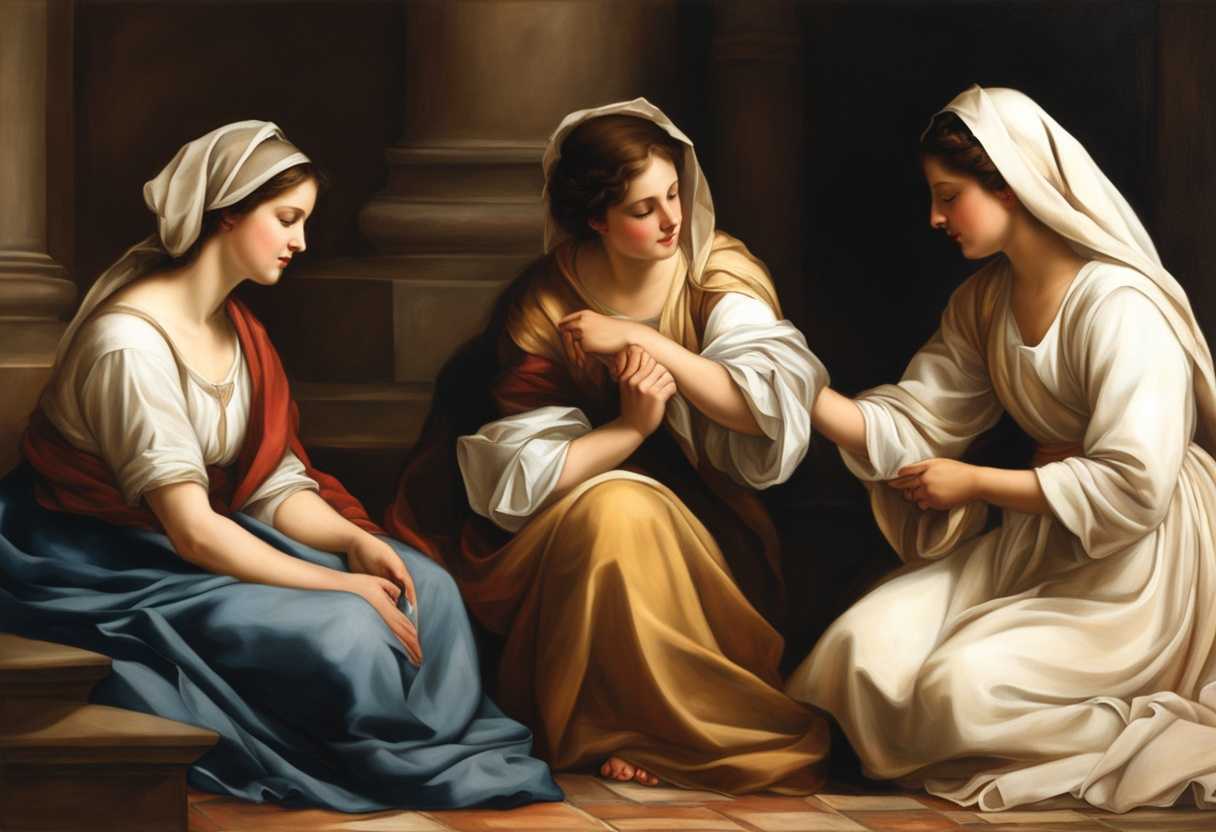
Setting the Scene for John 11:19-23
In John chapter 11, we find Jesus arriving in the town of Bethany after receiving news that his dear friend Lazarus has fallen ill. As Jesus approaches the village, he is met by Martha, Lazarus’ sister, who informs him that her brother has already passed away and has been in the tomb for four days. Martha is distraught, yet she still holds onto her faith in Jesus, believing that he has the power to bring her brother back to life.
The scene is set outside the tomb where Lazarus has been laid to rest. A crowd has gathered, consisting of Martha, Mary (Lazarus’ other sister), and various friends and mourners who have come to pay their respects. The atmosphere is heavy with grief and sorrow as the reality of Lazarus’ death weighs on everyone present. Jesus, moved by the sorrow of those around him, is deeply troubled in spirit and asks to be taken to the tomb where Lazarus is buried.
As Jesus stands before the tomb, surrounded by grieving friends and family, he prepares to perform one of his most powerful miracles yet – the raising of Lazarus from the dead. The stage is set for a profound display of Jesus’ divine power and compassion, as he is about to demonstrate that even death itself is subject to his authority.
What is John 11:19-23 about?
Jesus is displaying his deep compassion and understanding towards Martha after the death of her brother Lazarus in this verse. He is providing comfort and hope in the midst of sorrow and loss by reassuring her of resurrection and eternal life. Jesus is emphasizing the significance of faith and belief in God’s power to bring about new life even in the face of death.
So, what can we learn from this profound interaction between Jesus and Martha? It reminds us of the importance of holding onto our faith during difficult times, trusting that there is a bigger plan at play beyond what we can see. Jesus’ words offer solace and a reminder that death is not the end but rather a transition into eternal life with God. This verse challenges us to reflect on our own beliefs about life, death, and the afterlife, prompting us to find strength and comfort in the promises of resurrection and eternal life through our faith in God.
Understanding what John 11:19-23 really means
In the narrative of Lazarus’ death and resurrection, we find a poignant account of grief, faith, and the promise of eternal life. As Jesus learns of Lazarus’ illness and eventual passing, we witness the depth of human emotion in the face of loss. The scene unfolds in Bethany, where Mary and Martha are surrounded by a community of Jews who have come to offer comfort in their time of mourning. This communal response underscores the significance of support and solidarity during moments of sorrow, reminding us of the importance of coming together in times of need.
Martha’s heartfelt words to Jesus, “Lord, if you had been here, my brother would not have died,” encapsulate a blend of faith and lamentation. Her belief in Jesus’ healing power is evident, yet her grief is palpable as she grapples with the reality of her brother’s death. In response, Jesus offers a profound statement of hope, declaring, “Your brother will rise again.” This assurance not only speaks to Lazarus’ imminent resurrection but also points to Jesus’ authority over life and death, foreshadowing the ultimate victory over mortality through His resurrection.
The dialogue between Martha and Jesus in this passage resonates with timeless truths that extend beyond the immediate context. Jesus’ proclamation, “I am the resurrection and the life. The one who believes in me will live, even though they die,” echoes throughout the ages, offering solace and assurance to believers facing the inevitability of death. This promise of eternal life through faith in Christ is further reinforced in other biblical passages, such as Paul’s words in 1 Thessalonians and the vision of a future without pain or sorrow in Revelation.
In a world marked by loss and suffering, the message of resurrection holds profound relevance and comfort. It serves as a beacon of hope amidst the darkness of grief, reminding us that death is not the final chapter but a gateway to everlasting life for those who believe. Just as the community gathered around Mary and Martha in their time of mourning, we are called to support and uplift one another in times of sorrow, drawing strength from the promise of resurrection and the assurance of God’s enduring love.
Imagine a family grappling with the recent loss of a loved one, surrounded by a circle of friends and neighbors offering words of comfort and gestures of kindness. In the midst of their sorrow, a pastor shares the timeless truth of resurrection and eternal life, bringing a sense of peace and hope to their grieving hearts. This narrative mirrors the experience of Mary and Martha, who, despite their profound grief, found solace in Jesus’ promise of resurrection, a promise that transcends time and speaks to the deepest longings of the human soul.
In conclusion, the passage from John 11:19-23 serves as a poignant reminder of the power of community in times of loss and the enduring hope found in Christ’s promise of resurrection. It calls us to stand together in solidarity during moments of grief, offering support and compassion to those who mourn. As we navigate the complexities of life and death, may we hold fast to the assurance of eternal life through faith in Jesus, finding comfort and strength in the promise of resurrection that shines brightly in the darkest of hours.
What is your belief about resurrection and life?
Jesus emphasizes His power to bring the dead back to life as He speaks to Martha about resurrection and life in the passage. He reassures Martha that those who believe in Him will never truly die but will have eternal life. This conversation highlights the central belief in Christianity that through faith in Jesus, believers have the hope of resurrection and eternal life.
The concept of resurrection and life in this verse is grounded in the core Christian belief that Jesus, through His death and resurrection, conquered sin and death, offering believers the gift of eternal life. This belief gives Christians comfort and hope, knowing that physical death is not the end but rather a transition to a new and glorious existence in the presence of God. Christians ultimately view death as a gateway to eternal life with God, not something to be feared. It underscores the importance of faith in Jesus as the key to experiencing resurrection and eternal life, encouraging believers to hold firm to their faith and trust in the promise of life everlasting.
Application
Life is like juggling work and family—full of challenges and chaos. Reflect on John 11:19-23 and hear Jesus easing Martha’s pain. Place your faith in Him amid your struggles; He is the constant, unchanging source of life. Don’t let grief overwhelm you—embrace the hope and promise in His words. Are you ready to trust in His power and find true peace?

Reverend Michael Johnson is an experienced Church Minister with a profound expertise in spirituality and guidance. With a serene presence and a compassionate heart, he has faithfully served his congregation for over 20 years, leading them on a spiritual journey towards inner peace and enlightenment. Reverend Johnson’s extensive knowledge of religious philosophies and profound understanding of human nature have made him a trusted confidant and mentor to many, as he seamlessly weaves his profound wisdom into life teachings. Reverend Johnson’s calming demeanor and empathetic nature continue to uplift and heal souls, nurturing a sense of unity and tranquility within his community.