
John 11:21-27 is about Martha expressing her belief in Jesus as the resurrection and the life, and Jesus assuring her that those who believe in him will never die but will have eternal life.
21 Martha said to Jesus, “Lord, if you had been here, my brother would not have died.
22 But even now I know that whatever you ask from God, God will give you.”
23 Jesus said to her, “Your brother will rise again.”
24 Martha said to him, “I know that he will rise again in the resurrection on the last day.”
25 Jesus said to her, “I am the resurrection and the life. Whoever believes in me, though he die, yet shall he live,
26 and everyone who lives and believes in me shall never die. Do you believe this?”
27 She said to him, “Yes, Lord; I believe that you are the Christ, the Son of God, who is coming into the world.”
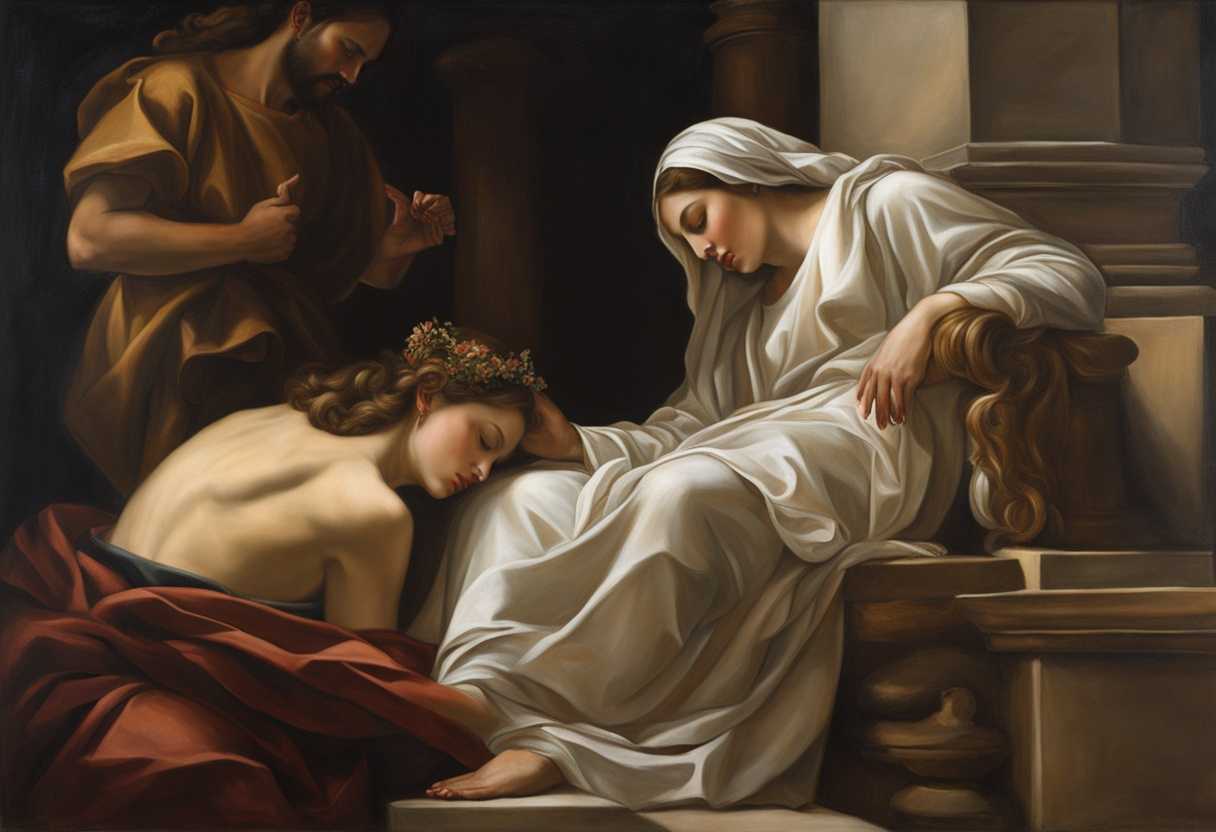
Setting the Scene for John 11:21-27
The scene in John chapter 11 takes place in the town of Bethany, where Jesus arrives after receiving news that his dear friend Lazarus has fallen ill. As Jesus approaches the village, he is met by Martha, the sister of Lazarus, who had sent word to Jesus about her brother’s condition. Martha, filled with grief and hope, goes out to meet Jesus and expresses her deep faith in him, saying, “Lord, if you had been here, my brother would not have died.”
Surrounded by a crowd of mourners who had come to console Martha and Mary, the atmosphere is heavy with sorrow and anticipation. The dusty streets of Bethany are filled with the sounds of weeping and lamentation as the community grieves the loss of Lazarus. Despite the somber mood, there is a sense of expectancy in the air as Martha’s encounter with Jesus sparks a conversation about faith, resurrection, and the power of belief in the face of death.
In this poignant moment, Martha’s faith is tested as Jesus reveals his divine authority over life and death. As the conversation unfolds, Martha makes a profound declaration of her belief in Jesus as the Messiah, proclaiming, “Yes, Lord; I believe that you are the Christ, the Son of God, who is coming into the world.” This powerful exchange sets the stage for one of the most miraculous events in the Gospels, as Jesus goes on to raise Lazarus from the dead, demonstrating his power over the grave and foreshadowing his own resurrection.
What is John 11:21-27 about?
Jesus, in this verse, is providing profound comfort and reassurance to Martha, who is grieving the loss of her brother, Lazarus. Jesus affirms His divine power over life and death by proclaiming Himself as “the resurrection and the life.” He is assuring Martha that belief in Him transcends physical death and that through Him, eternal life is promised. Jesus is offering Martha hope and solace during a time of deep sorrow and despair, reminding her that He holds the ultimate authority over life and death.
Reflecting on this verse, we can draw strength from Jesus’s words and find comfort in knowing that our faith in Him brings eternal life. It prompts us to ponder the significance of our belief in Jesus as not just a historical figure, but as the source of everlasting life. His declaration challenges us to deepen our relationship with Him and to trust in His promises, especially in times of hardship and loss. Jesus’s words to Martha resonate with a profound truth that resonates with believers, highlighting His supreme power and compassion as we navigate the challenges of life.
Understanding what John 11:21-27 really means
In the poignant narrative of Jesus raising Lazarus from the dead, we find Martha, Lazarus’ sister, engaging in a conversation with Jesus that delves deep into themes of faith, resurrection, and the divine authority of Christ. Martha’s initial words, “Lord, if you had been here, my brother would not have died,” encapsulate a blend of faith in Jesus’ healing power and the raw emotions of disappointment and grief. This sentiment resonates with our human tendency to question and mourn even amidst our faith, a struggle many can relate to in times of loss.
However, Martha’s unwavering faith shines through as she declares, “But I know that even now God will give you whatever you ask.” Her trust in Jesus’ connection to God’s power and ability to perform miracles serves as a powerful reminder for believers to maintain faith in God’s sovereignty, even in the midst of seemingly hopeless situations. This unwavering faith is a cornerstone of Christian belief, echoed in passages that emphasize the power of prayer and the importance of asking in faith without doubt.
Jesus’ assurance to Martha, “Your brother will rise again,” not only offers comfort in the face of death but also points to the core Christian belief in the promise of resurrection and eternal life. His profound declaration, “I am the resurrection and the life,” underscores His divine authority over life and death, emphasizing that belief in Him is the pathway to eternal life. This central tenet of the Christian faith is a source of hope and assurance for believers, anchoring their trust in the promise of everlasting life through Jesus.
In challenging Martha with the question, “Do you believe this?” Jesus prompts her to affirm her faith in His power and identity, a call to personal reflection that resonates through the ages. Martha’s resolute response, “Yes, Lord, I believe that you are the Messiah, the Son of God, who is to come into the world,” stands as a model of faith and confession for believers today, inspiring us to acknowledge Jesus’ divine identity and mission.
The relevance of this passage extends to people today, offering solace and encouragement in times of adversity. Just as Martha grappled with grief and faith, individuals face challenges that test their beliefs, yet the promise of eternal life provides comfort in the face of loss and uncertainty. Through personal reflection and affirmation of faith in Jesus, believers can find strength and hope in His promises, navigating life’s trials with unwavering trust in His divine authority.
An anecdote of a woman finding renewed faith and strength in Jesus’ promises during a period of despair serves as a poignant illustration of the enduring relevance of this passage. Her experience highlights how faith in Christ’s assurances can bring comfort and resilience in the midst of life’s storms, guiding individuals towards a deeper trust in His unfailing promises. As we ponder the profound truths encapsulated in John 11:21-27, may we be inspired to anchor our faith in Jesus, finding hope and assurance in His power over life, death, and the promise of eternal life.
What does it mean to believe in Jesus?
To believe in Jesus means to have faith in Him as the Son of God and the Savior. It involves trusting in Him completely and acknowledging His authority and power. Believing in Jesus is not just about acknowledging His existence, but also about following His teachings, accepting His sacrifice for our sins, and surrendering one’s life to Him. It is a personal commitment to a relationship with Jesus, relying on Him for guidance, support, and salvation.
When someone believes in Jesus, they are placing their hope and trust in Him for eternal life and salvation. This belief is not simply a mental assent to certain facts about Jesus, but a deep conviction that Jesus is who He claimed to be – the Way, the Truth, and the Life. Believing in Jesus also involves a transformation of the heart and a desire to live according to His will, striving to imitate His love, mercy, and compassion in all aspects of life. To believe in Jesus ultimately means accepting Him as the source of life, the answer to our deepest needs, and the foundation of our faith. It is a decision that has profound implications for how we live our lives, how we relate to others, and how we view the world around us. Believing in Jesus is the beginning of a journey of faith, hope, and love that leads to a life of purpose, joy, and fulfillment.
Application
Think about your busiest workday, the stress, the deadlines, and the family needs waiting at home. Now, imagine the unwavering faith Martha showed in dark times. She trusted Jesus even in her deepest loss. Can you find that kind of faith and trust in your own life? Use her strength to deepen your own commitment and lean on Jesus through every trial. Will you let this belief transform how you handle life’s challenges?

Reverend Michael Johnson is an experienced Church Minister with a profound expertise in spirituality and guidance. With a serene presence and a compassionate heart, he has faithfully served his congregation for over 20 years, leading them on a spiritual journey towards inner peace and enlightenment. Reverend Johnson’s extensive knowledge of religious philosophies and profound understanding of human nature have made him a trusted confidant and mentor to many, as he seamlessly weaves his profound wisdom into life teachings. Reverend Johnson’s calming demeanor and empathetic nature continue to uplift and heal souls, nurturing a sense of unity and tranquility within his community.