
John 11:25-36 is about Jesus revealing His power over death by raising Lazarus from the dead, displaying His deep compassion for humanity, and causing various reactions among the witnesses, demonstrating his divinity and ability to bring new life to those who believe in Him.
25 Jesus said to her, “I am the resurrection and the life. Whoever believes in me, though he die, yet shall he live,
26 and everyone who lives and believes in me shall never die. Do you believe this?”
27 She said to him, “Yes, Lord; I believe that you are the Christ, the Son of God, who is coming into the world.”
28 When she had said this, she went and called her sister Mary, saying in private, “The Teacher is here and is calling for you.”
29 When she heard this, she rose quickly and went to him.
30 Now Jesus had not yet come into the village, but was still in the place where Martha had met him.
31 Then the Jews who were with her in the house, consoling her, saw Mary rise quickly and go out. They followed her, supposing that she was going to the tomb to weep there.
32 Now when Mary came to where Jesus was and saw him, she fell at his feet, saying to him, “Lord, if you had been here, my brother would not have died.”
33 When Jesus saw her weeping, and the Jews who had come with her also weeping, he was deeply moved in his spirit and greatly troubled.
34 And he said, “Where have you laid him?” They said to him, “Lord, come and see.”
35 Jesus wept.
36 So the Jews said, “See how he loved him!”
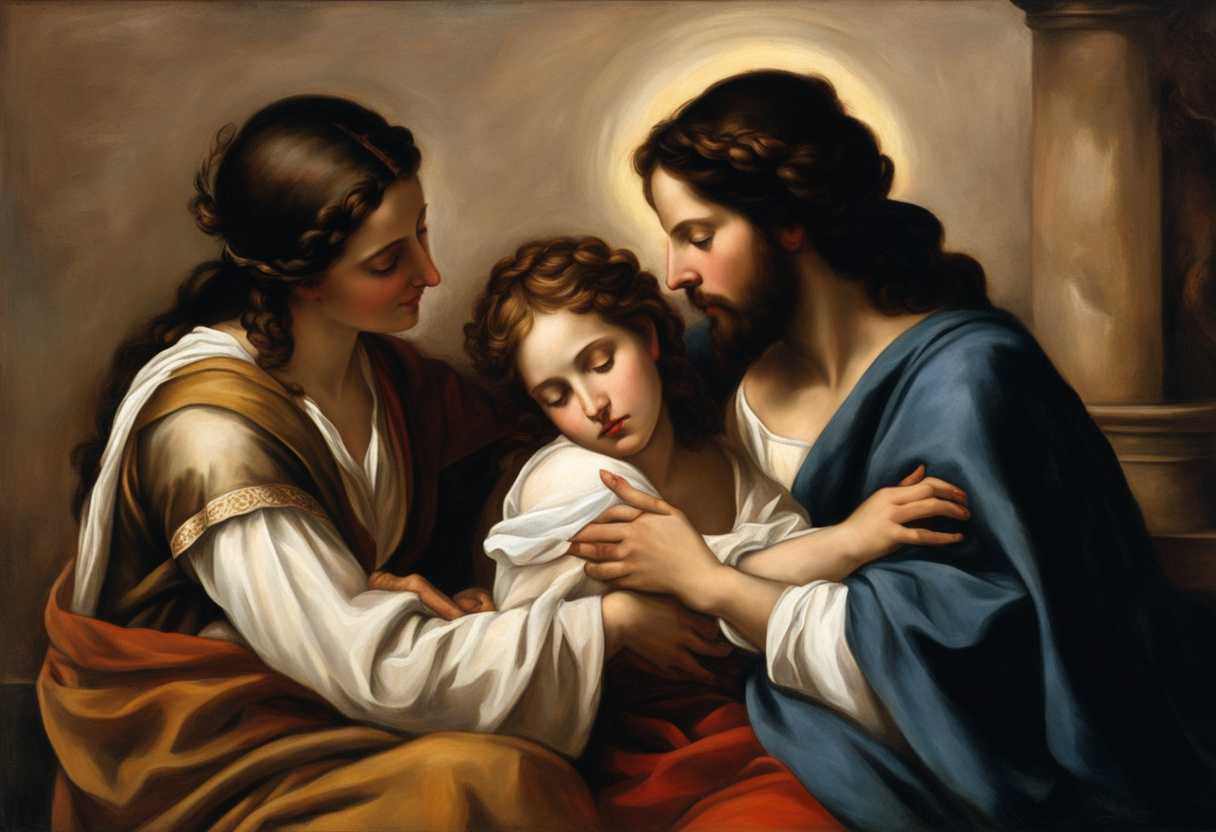
Setting the Scene for John 11:25-36
In John chapter 11, we find Jesus standing outside the tomb of his dear friend Lazarus, who had passed away four days earlier. The scene is filled with a mix of emotions as Mary and Martha, Lazarus’ sisters, are weeping and mourning the loss of their brother. A crowd has gathered around the tomb, offering their condolences and support to the grieving sisters.
Jesus, deeply moved by the sorrow around him, asks for the stone to be rolled away from the entrance of the tomb. Despite the objections of some who worry about the stench of the decaying body, Jesus insists. With a commanding voice, he calls out, “Lazarus, come out!” And to the amazement of all present, Lazarus emerges from the tomb, still wrapped in burial cloths.
The onlookers are stunned and overjoyed at this miraculous sight. Some fall to their knees in worship, while others run to help Lazarus out of his grave clothes. In this powerful moment, Jesus demonstrates his authority over death and reveals himself as the resurrection and the life, bringing hope and comfort to those who believe in him.
What is John 11:25-36 about?
Jesus defies the constraints of death itself in this powerful verse, showcasing a profound moment. Jesus reveals his divine power over the ultimate outcome of humanity – death by raising Lazarus from the dead. This miracle not only showcases Jesus’s ability to perform extraordinary feats but also signifies his role as the source of hope and life. Through this act, Jesus not only physically resurrects Lazarus but also symbolically offers eternal life to all who believe in him.
Have you ever felt overwhelmed by the inevitability of death or the challenges of life? This verse serves as a reminder that Jesus has the authority to overcome even the most daunting circumstances. It prompts us to reflect on our own understanding of faith, hope, and the transformative power of belief in Jesus. We are encouraged to trust in Jesus’s ability to bring new life and hope into our own situations, no matter how dire they may seem, as we ponder on this miraculous event. He can also breathe new life into our spirits and circumstances, offering us a sense of renewal and hope that transcends our earthly struggles, just as Jesus raised Lazarus from the dead.
Understanding what John 11:25-36 really means
In John 11:25-36, we find Jesus conversing with Martha following the death of her brother Lazarus. This moment holds profound significance in the Gospel of John as it showcases Jesus’ power over death and foreshadows His own resurrection. The passage captures a pivotal moment where Jesus declares, “I am the resurrection and the life,” asserting His divine authority over life and death. This statement echoes John 14:6, where Jesus proclaims Himself as “the way, the truth, and the life,” emphasizing His central role in salvation.
When Jesus states, “He who believes in me will live, even though he dies,” He offers a profound promise of eternal life through faith in Him. This assurance resonates with Romans 6:23, highlighting the contrast between the consequences of sin and the gift of eternal life in Christ. Furthermore, Jesus’ question to Martha, “Do you believe this?” serves as a direct challenge to her faith and underscores the importance of personal belief in Him. This question mirrors the call to faith in Mark 9:23, emphasizing the limitless possibilities for those who trust in Jesus.
The relevance of this passage extends to people today, offering assurance in times of grief by affirming the hope of resurrection for those who believe. Many find comfort and peace in the promise of eternal life, especially when faced with the loss of loved ones. This message of hope transcends time and circumstances, providing solace to those grappling with the reality of death. Encouraging individuals to place their trust in Jesus for eternal life, the passage speaks to modern struggles with doubt and the quest for meaning in a world filled with uncertainties.
Supporting passages such as 1 Thessalonians 4:13-14 and Revelation 21:4 further reinforce the hope of resurrection and the ultimate fulfillment of Jesus’ promise. These verses offer a glimpse into the future where death, mourning, and pain will be no more, underscoring the transformative power of Jesus’ words. As we reflect on Jesus’ power over death, the promise of eternal life, and the call to believe, we are invited to examine our own faith and the hope we have in Him. Let us hold fast to the truth that Jesus is the resurrection and the life, finding comfort and assurance in His promises. May those seeking solace and certainty in these truths be blessed with peace and strength as they journey in faith.
What does Jesus’ response to death teach us?
Jesus’ response to death teaches us the power he holds over it. He proclaims himself as the resurrection and the life, showing that he has ultimate authority over life and death. He demonstrates his ability to bring life even in the face of physical death by raising Lazarus from the dead. This challenges us to trust in him and believe that he has the power to bring life and hope to situations that seem hopeless.
Furthermore, Jesus’ response to death teaches us about his compassion and empathy. He weeps and mourns with those who are grieving in the face of death, showing us the importance of empathy and understanding in times of loss. His response reminds us that he is not distant or unaffected by our pain, but rather he enters into it with us, offering comfort and compassion.
Finally, Jesus’ response to death points to the ultimate victory that he will achieve over it through his own death and resurrection. His actions foreshadow the defeat of death and the promise of eternal life for those who believe in him. This gives us hope and reassurance that ultimately death will not have the final say, but that through Jesus, we can have victory over it.
Application
Imagine your work deadlines and family responsibilities weighing you down, feeling like there’s no escape. Jesus offers the ultimate relief, proving He conquers even death and feels your pain. Let this comfort motivate you to trust Him in your toughest times. Share this hope with those battling their own struggles. Will you bring Christ’s light into someone else’s darkness today?

Reverend Michael Johnson is an experienced Church Minister with a profound expertise in spirituality and guidance. With a serene presence and a compassionate heart, he has faithfully served his congregation for over 20 years, leading them on a spiritual journey towards inner peace and enlightenment. Reverend Johnson’s extensive knowledge of religious philosophies and profound understanding of human nature have made him a trusted confidant and mentor to many, as he seamlessly weaves his profound wisdom into life teachings. Reverend Johnson’s calming demeanor and empathetic nature continue to uplift and heal souls, nurturing a sense of unity and tranquility within his community.