
John 12:12-26 is about the fulfillment of prophecies regarding Jesus’ triumphal entry into Jerusalem, symbolizing his kingship and the paradoxical nature of his kingdom which requires death to bring forth abundant life.
12 The next day the large crowd that had come to the feast heard that Jesus was coming to Jerusalem.
12 So they took branches of palm trees and went out to meet him, crying out, “Hosanna! Blessed is he who comes in the name of the Lord, even the King of Israel!”
14 And Jesus found a young donkey and sat on it, just as it is written,
15 “Fear not, daughter of Zion; behold, your king is coming, sitting on a donkey’s colt!”
16 His disciples did not understand these things at first, but when Jesus was glorified, then they remembered that these things had been written about him and had been done to him.
17 So the crowd that had been with him when he called Lazarus out of the tomb and raised him from the dead continued to bear witness.
18 The reason why the crowd went to meet him was that they heard he had done this sign.
19 So the Pharisees said to one another, “You see that you are gaining nothing. Look, the world has gone after him.”
20 Now among those who went up to worship at the feast were some Greeks.
21 So these came to Philip, who was from Bethsaida in Galilee, and asked him, “Sir, we wish to see Jesus.”
22 Philip went and told Andrew; Andrew and Philip went and told Jesus.
23 And Jesus answered them, “The hour has come for the Son of Man to be glorified.
24 Truly, truly, I say to you, unless a grain of wheat falls into the earth and dies, it remains alone; but if it dies, it bears much fruit.
25 Whoever loves his life loses it, and whoever hates his life in this world will keep it for eternal life.
26 If anyone serves me, he must follow me; and where I am, there will my servant be also. If anyone serves me, the Father will honor him.
Setting the Scene for John 12:12-26
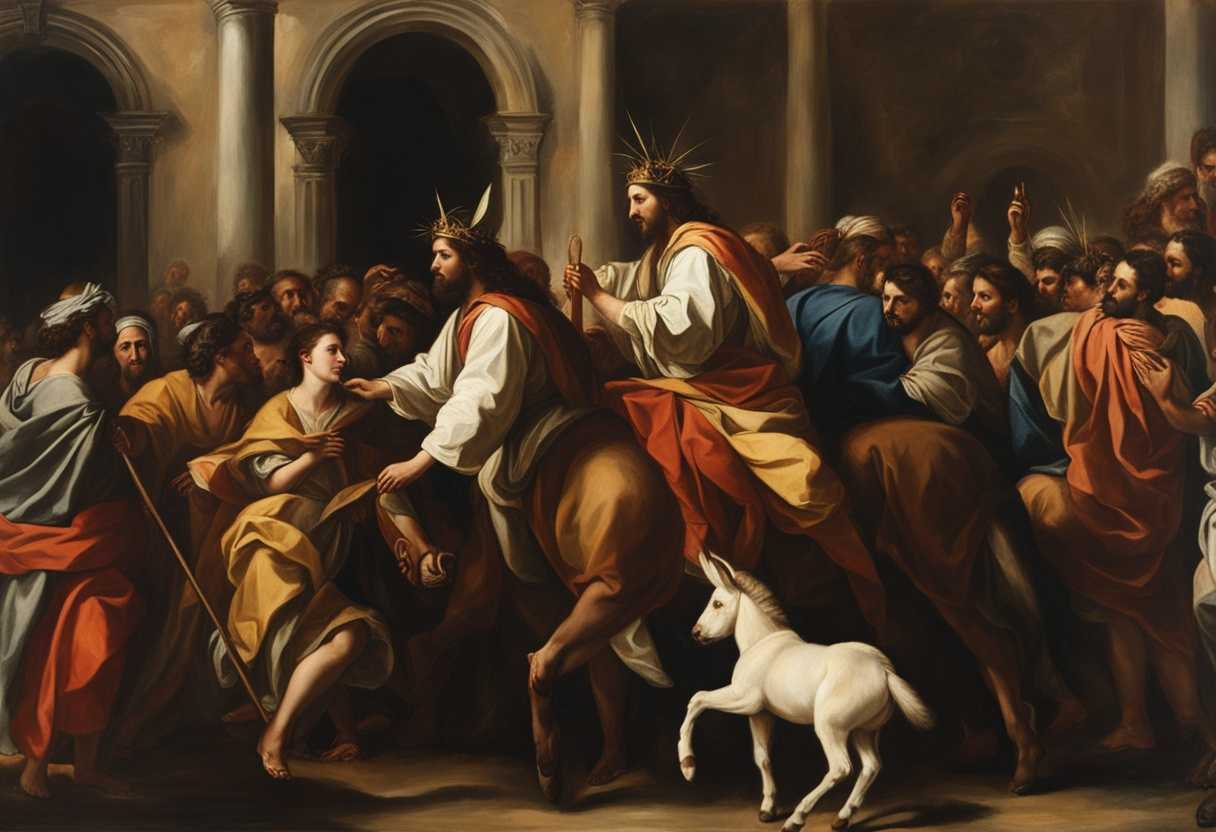
The scene in John chapter 12:12-26 takes place in Jerusalem during the time of the Passover festival. Jesus, accompanied by his disciples, enters the city riding on a donkey, fulfilling the prophecy in Zechariah 9:9. The people in the city had heard about Jesus raising Lazarus from the dead and were excited to see him, so they spread palm branches on the road and shouted “Hosanna! Blessed is he who comes in the name of the Lord!”
Among the crowd are not only the disciples but also many Jews who had come to Jerusalem for the Passover celebration. They were curious to see Jesus, the man who had performed miracles and gained a following. The atmosphere is charged with anticipation and excitement as the people recognize Jesus as the long-awaited Messiah. Jesus, aware of the significance of the moment, speaks to the crowd about his impending death and the need for his followers to serve and follow him.
The setting is bustling with activity, with people from all walks of life gathered in Jerusalem for the Passover. The streets are filled with the sounds of celebration and praise as Jesus makes his triumphant entry into the city. The scene sets the stage for the events that will unfold in the following days, leading up to Jesus’ crucifixion and resurrection.
What is John 12:12-26 about?
We witness a powerful demonstration of Jesus’ identity and purpose in this verse. The people’s recognition of Jesus as the King of Israel holds profound significance as He enters Jerusalem. The act of laying down their cloaks and palm branches before Him symbolizes a traditional gesture of homage and respect towards a royal figure. The people acknowledge His divinity and sovereignty over their lives by embracing Jesus as their King. Jesus foretelling His death and resurrection amplifies the depth of His mission on earth. This foreshadowing not only speaks to the sacrificial nature of Jesus’ purpose but also underscores the promise of hope and redemption through His resurrection. Jesus’ willingness to undergo suffering and death, followed by His triumphant resurrection, ultimately illustrates His unparalleled love for humanity and His ability to conquer death itself. We reflect on this verse, contemplating the profound implications of Jesus’ kingship and His ultimate sacrifice. What does it mean for us to recognize Jesus as our King and to submit our lives to His reign? How does the promise of His resurrection inspire us to have faith and hope in the face of challenges and adversity? Let us consider the powerful message of this verse and allow it to deepen our understanding of who Jesus is and the transformative impact He can have on our lives.
Understanding what John 12:12-26 really means
In John 12:12-26, we witness the momentous occasion of Jesus’ triumphal entry into Jerusalem, a precursor to the events leading to His crucifixion. This passage holds immense significance as it marks a pivotal moment in Jesus’ ministry, setting the stage for His ultimate sacrifice for humanity’s redemption.
As the crowds hailed Jesus with “Hosanna! Blessed is he who comes in the name of the Lord!” they were not merely expressing joyous praise but also crying out for salvation, recognizing Jesus as the long-awaited Messiah. This exclamation echoes Psalm 118:25-26, where “Hosanna” is a plea for deliverance and rescue.
Jesus’ proclamation, “The hour has come for the Son of Man to be glorified,” signifies His awareness that the time for His sacrificial death and subsequent glorification is imminent. This statement points to His impending crucifixion as the ultimate act of love and redemption. In John 17:1, Jesus prays for His glorification through the cross, underscoring the divine purpose behind His impending sacrifice.
Through the metaphor of a grain of wheat falling to the earth and dying to bear much fruit, Jesus illustrates the necessity of His death for the salvation of many. Just as a seed must undergo death to bring forth new life, Jesus emphasizes the transformative power of His sacrifice in bringing eternal life to those who believe. This concept is echoed in 1 Corinthians 15:36, where Paul speaks of resurrection through death, highlighting the paradoxical nature of Christian faith.
The relevance of this passage extends to contemporary audiences, emphasizing the values of sacrifice and service exemplified in Jesus’ life. It challenges individuals to consider the cost of discipleship and the call to selflessly serve others. By reflecting on modern-day examples of individuals who have sacrificed personal comfort for the betterment of others, we can grasp the profound impact of dying to self to bring life and hope to those in need.
Further biblical references such as Philippians 2:5-8, Matthew 16:24-25, and Romans 12:1 reinforce the themes of sacrificial love, self-denial, and offering oneself as a living sacrifice. These passages underscore the transformative power of embodying Christ-like virtues in our daily lives, echoing the call to follow Jesus’ example of humility, obedience, and service.
In conclusion, let us heed the call to action embedded in this passage, prompting us to reflect on how we can embody the principles of sacrifice and service in our own lives. May we draw strength and guidance from prayer as we strive to emulate Jesus’ sacrificial love and selfless service in our interactions with others.
How can we let go of our lives for God?
To let go of our lives for God means surrendering our own desires, plans, and ambitions to His will. It involves relinquishing control and trusting in His perfect plan for our lives. We too must surrender ourselves completely to God in order to experience true transformation and growth in our spiritual journey, just as a seed must fall to the ground and die to produce new life.
When we let go of our lives for God, we acknowledge that He is the ultimate authority and source of all things. We place our faith and hope in Him, knowing that His ways are higher than ours. We open ourselves up to His guidance, direction, and blessings in ways we may not have imagined by letting go. It is a decision to follow Christ wholeheartedly, even when it requires sacrificing our own desires and comforts. We experience the abundant life that Jesus promises to those who lose their lives for His sake.
Application
Picture this: in the hustle of life, you’re always balancing work and family. Now, envision laying down your ambitions and desires, just like Jesus did when He entered Jerusalem. Are you ready to follow His footsteps and serve with humility and love? Reflect on how you can transform your daily grind into acts of kindness and sacrifice. What will you do today to echo this profound example of love?

Reverend Michael Johnson is an experienced Church Minister with a profound expertise in spirituality and guidance. With a serene presence and a compassionate heart, he has faithfully served his congregation for over 20 years, leading them on a spiritual journey towards inner peace and enlightenment. Reverend Johnson’s extensive knowledge of religious philosophies and profound understanding of human nature have made him a trusted confidant and mentor to many, as he seamlessly weaves his profound wisdom into life teachings. Reverend Johnson’s calming demeanor and empathetic nature continue to uplift and heal souls, nurturing a sense of unity and tranquility within his community.