
John 12:20-26 is about Jesus predicting his own death and explaining that true discipleship involves following him and being willing to sacrifice one’s own life for the sake of eternal life.
20 Now among those who went up to worship at the feast were some Greeks.
21 So these came to Philip, who was from Bethsaida in Galilee, and asked him, “Sir, we wish to see Jesus.”
22 Philip went and told Andrew; Andrew and Philip went and told Jesus.
23 And Jesus answered them, “The hour has come for the Son of Man to be glorified.
24 Truly, truly, I say to you, unless a grain of wheat falls into the earth and dies, it remains alone; but if it dies, it bears much fruit.
25 Whoever loves his life loses it, and whoever hates his life in this world will keep it for eternal life.
26 If anyone serves me, he must follow me; and where I am, there will my servant be also. If anyone serves me, the Father will honor him.
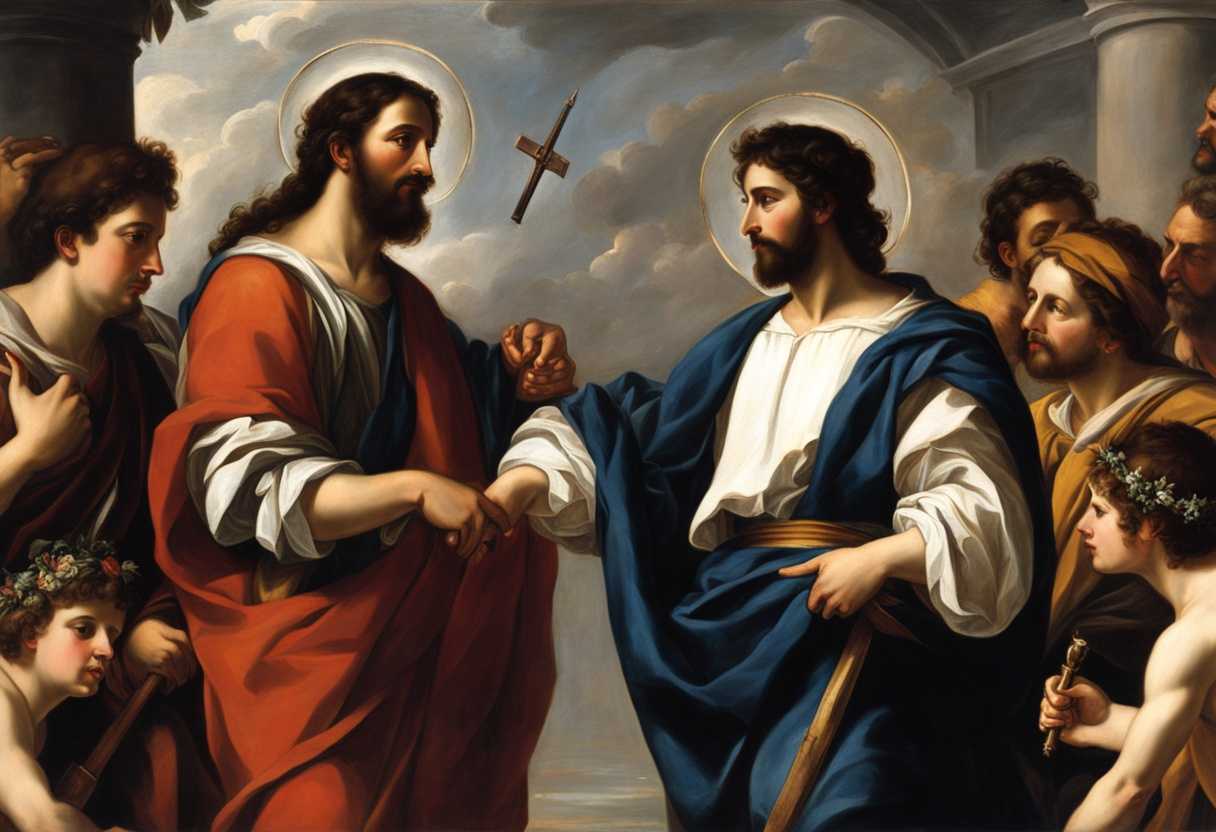
Setting the Scene for John 12:20-26
In John chapter 12, we find Jesus in Jerusalem during the time of the Passover feast. The scene is bustling with people from all over, gathered to celebrate this important Jewish festival. Among the crowd are Greeks who have come to worship at the feast. They approach Philip, one of the disciples, expressing their desire to see Jesus.
Philip, in turn, goes to Andrew, and together they bring the request to Jesus. Jesus responds by speaking about his impending death and the necessity of self-sacrifice for those who want to follow him. The atmosphere is charged with anticipation and curiosity as Jesus imparts these profound teachings to his disciples and the crowd gathered around him. The setting is likely outdoors, perhaps in a courtyard or a public space in Jerusalem, with the sounds of the bustling city in the background and the scent of incense lingering in the air from the temple rituals.
What is John 12:20-26 about?
Jesus in this verse is foretelling his impending death and resurrection, demonstrating his sacrifice for the salvation of all mankind. He is inviting us to walk the path of selflessness and service by calling believers to follow him, just as he exemplified throughout his life. Jesus is asking us to prioritize serving others above our own desires and comforts, mirroring his own selfless attitude. Jesus is emphasizing the profound importance of sacrificial love and service in the Christian faith by predicting his death and calling believers to follow him. He is challenging us to emulate his example of humility, compassion, and selflessness in our own lives. This verse serves as a reminder that true discipleship involves a willingness to lay down our lives for the benefit of others, just as Jesus did for us. Will we heed his call to follow him and serve others selflessly? Will we strive to live out his teachings in our daily interactions and choices?
Understanding what John 12:20-26 really means
During the final week of Jesus’ life, following His triumphant entry into Jerusalem, we encounter a pivotal moment in John 12:20-26. Here, the narrative unfolds with Greeks expressing a desire to see Jesus, highlighting the universal appeal of His message that transcends cultural boundaries. This interaction echoes the broader theme of inclusivity in God’s plan, as seen in Acts 10:34-35, where Peter recognizes God’s acceptance of all who fear Him, regardless of nationality.
The Greeks’ simple yet profound request to see Jesus reflects a genuine thirst for truth and understanding, reminiscent of the teaching in Matthew 7:7 about seeking and finding. Jesus responds by acknowledging that His hour of glorification through suffering is at hand, foreshadowing His impending crucifixion and resurrection. This moment underscores the paradoxical nature of His mission, where glory is achieved through the path of sacrifice and death, as articulated in John 17:1.
The analogy of the kernel of wheat falling to the ground and dying serves as a powerful illustration of the principle of sacrificial living. Just as a seed must perish to yield a bountiful harvest, Jesus teaches that true life and abundance come through self-denial and surrender. This concept finds resonance in 1 Corinthians 15:36, emphasizing the transformative power of death leading to new life.
Jesus’s profound statement about losing one’s life to gain eternal life challenges conventional notions of success and fulfillment. By prioritizing heavenly treasures over earthly pursuits, individuals are invited to embrace a radical shift in values, echoing the sentiment expressed in Matthew 16:25. This call to selflessness and devotion to Christ’s cause is a recurring theme in His teachings, emphasizing the eternal significance of discipleship.
The promise of divine honor for those who serve Jesus underscores the intrinsic link between following Him and experiencing God’s favor. This assurance of recognition and reward, as articulated in John 14:3, serves as a source of encouragement for believers to walk in obedience and service. In a world often consumed by self-interest, the call to discipleship stands as a counter-cultural invitation to sacrificial love and humble service.
Today, the timeless truths embedded in these verses continue to resonate with individuals seeking purpose, fulfillment, and spiritual growth. The universal appeal of Jesus’s message beckons people from all walks of life to seek Him earnestly, while the principle of sacrifice leading to greater rewards remains a guiding principle in personal development and community engagement. By embracing the call to discipleship, we are challenged to live lives marked by selflessness, service, and a steadfast commitment to following in the footsteps of our Savior.
How can we surrender our lives to Christ fully?
Surrendering our lives fully to Christ means willingly giving up our own desires, ambitions, and plans in order to follow Him wholeheartedly. It involves a complete submission to His will and a willingness to obey Him in all aspects of our lives. We must die to our own selfish desires and allow Christ to reign in every area of our lives, just as a seed must die in order to produce new life. This surrender requires a daily decision to put aside our own will and preferences, and to instead seek to honor and glorify God in all that we do.
To surrender our lives to Christ fully, we must be willing to let go of control and trust in His perfect plan for us. This means allowing Him to guide our steps, even when the path is uncertain or difficult. It involves casting our cares and anxieties on Him, knowing that He cares for us and will provide everything we need. Surrendering to Christ also involves yielding our talents, time, and resources to His service, recognizing that all we have ultimately belongs to Him and is to be used for His kingdom and glory. It is a lifelong journey of daily surrender and dependence on Him, trusting that His ways are higher than our ways and His plans are always good and perfect.
Application
Think of your life as a journey, with every task at work and every moment with your family shaping your path. Just like Jesus showed through His actions, true fulfillment comes from selflessness and sacrifice. Are you ready to serve others and put aside your own desires for the benefit of those around you? Can you take on the challenges, put in the effort, and walk the path of love and dedication? How will you make a difference today?

Reverend Michael Johnson is an experienced Church Minister with a profound expertise in spirituality and guidance. With a serene presence and a compassionate heart, he has faithfully served his congregation for over 20 years, leading them on a spiritual journey towards inner peace and enlightenment. Reverend Johnson’s extensive knowledge of religious philosophies and profound understanding of human nature have made him a trusted confidant and mentor to many, as he seamlessly weaves his profound wisdom into life teachings. Reverend Johnson’s calming demeanor and empathetic nature continue to uplift and heal souls, nurturing a sense of unity and tranquility within his community.