
John 12:23-24 is about the profound truth that Jesus’ death, like a seed that falls to the ground and dies to bear much fruit, was necessary for the salvation and eternal life of humanity to be realized.
23 And Jesus answered them, “The hour has come for the Son of Man to be glorified.
24 Truly, truly, I say to you, unless a grain of wheat falls into the earth and dies, it remains alone; but if it dies, it bears much fruit.
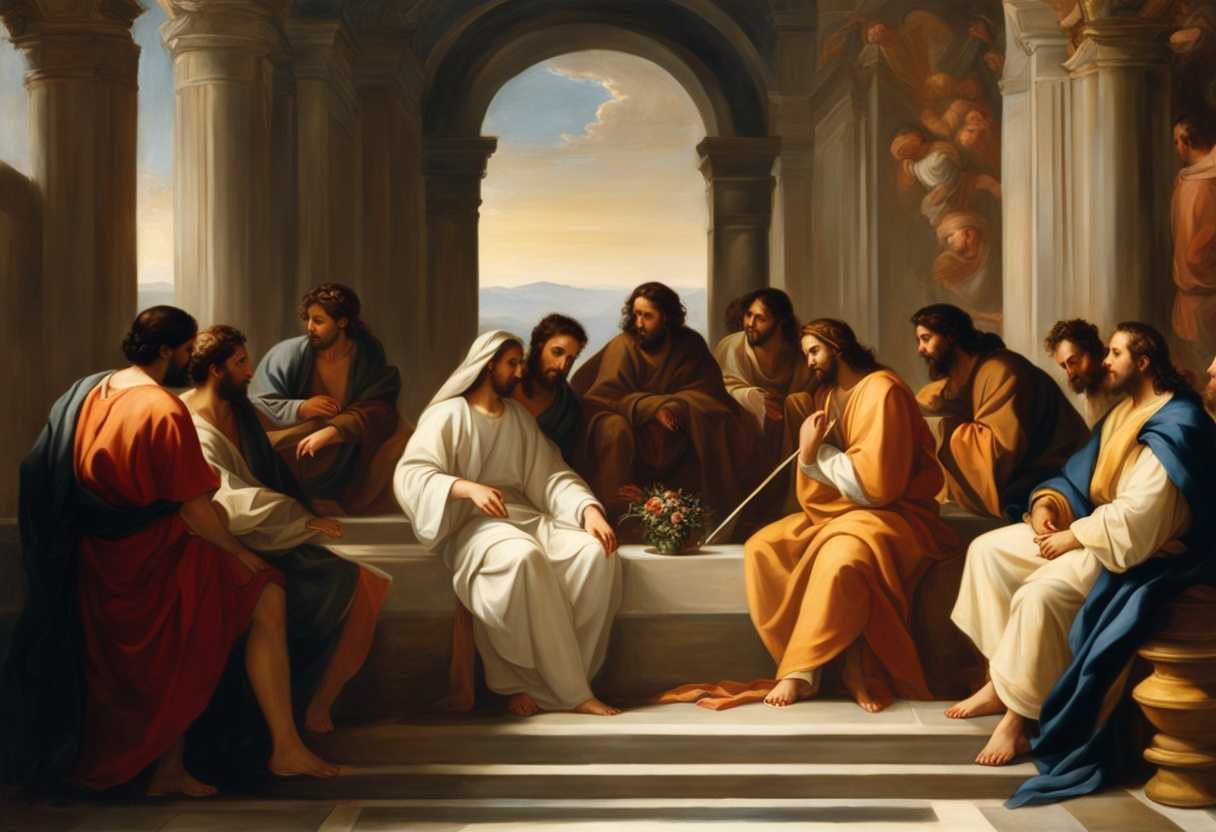
Setting the Scene for John 12:23-24
In John chapter 12, we find Jesus in Jerusalem during the time of the Passover festival. The scene is set in the bustling city streets filled with pilgrims and merchants from all over, preparing for the sacred celebrations. Jesus is surrounded by his disciples, including Peter, James, and John, as well as a crowd of curious onlookers who have heard of his miracles and teachings.
As Jesus walks through the crowded streets, he is approached by some Greeks who have come to worship at the festival. They express their desire to see Jesus, and this request prompts a profound moment. Jesus begins to speak about his impending death and the significance of it for all people. The atmosphere is charged with a mix of anticipation, confusion, and reverence as those around him try to grasp the weight of his words.
The sun is setting, casting a warm glow over the scene as Jesus uses the metaphor of a seed falling to the ground and dying to bear much fruit. The disciples listen intently, sensing the gravity of the moment and the deep truths being revealed. The air is filled with a sense of destiny and purpose as Jesus prepares himself for the ultimate sacrifice that will soon unfold.
What is John 12:23-24 about?
Jesus is using the metaphor of a seed to explain the concept of death and resurrection in this verse. Just like a seed must be planted in the ground, die, and then sprout into new life, Jesus is foreshadowing his own impending death and resurrection. He is trying to convey to his disciples that his death will not be the end but rather the beginning of something new and extraordinary. Jesus is using this analogy to prepare his disciples for the events that will soon unfold and to teach them a profound lesson about faith, renewal, and the cycle of life. Jesus must die before he can rise again in glory, just as a seed must first die before it can grow into a new plant. This verse serves as a powerful reminder that even in death, there is the potential for new life and transformation.
Next time you see a seed being planted, remember the significance of this verse. Reflect on the idea that just as a seed contains the potential for new life within it, so too did Jesus carry the promise of resurrection. Let this analogy deepen your understanding of the cycle of life and death, and the hope that can be found in the promise of new beginnings.
Understanding what John 12:23-24 really means
In John 12:23-24, Jesus speaks to His disciples, foretelling His imminent death and the purpose it serves in God’s plan. Understanding the metaphor Jesus uses is crucial for grasping the depth of His message. When Jesus says, “The hour has come for the Son of Man to be glorified,” He is alluding to His upcoming crucifixion, resurrection, and ascension, marking the fulfillment of His earthly mission. This momentous event signifies the ultimate display of God’s love and redemption for humanity.
Furthermore, Jesus employs the analogy of a grain of wheat falling to the ground and dying to bear much fruit. This metaphor underscores the necessity of His sacrificial death for the salvation of many. Just as a seed must undergo death to bring forth new life, Jesus emphasizes the principle of sacrifice leading to greater good. This concept of self-denial and transformation through sacrifice is central to Christian faith and discipleship.
Related passages in the Bible echo this theme of sacrificial love and the transformative power of death leading to life. John 15:13 emphasizes laying down one’s life for others as the ultimate act of love, mirroring Jesus’ own sacrificial death. Similarly, 1 Corinthians 15:36 and Romans 6:4 highlight the idea of new life emerging from death, illustrating the believer’s participation in Christ’s death and resurrection.
The relevance of Jesus’ words in John 12:23-24 extends to contemporary life in various ways. The principle of sacrifice and growth reminds believers that true fruitfulness often requires letting go of self-centered desires and embracing God’s will. Personal transformation, akin to the grain of wheat dying to produce fruit, calls individuals to shed old habits and attitudes to experience new life in Christ. Moreover, the emphasis on community and service encourages believers to live sacrificially for the betterment of others, fostering a spirit of unity and selflessness.
Consider the story of a missionary who left a comfortable life to serve in a remote area, facing numerous challenges but ultimately bringing many to faith. This narrative exemplifies the essence of dying to self to bear fruit, akin to the grain of wheat metaphor. The missionary’s sacrificial service mirrors Jesus’ call to lay down one’s life for others, demonstrating the transformative power of selfless love and service.
In conclusion, John 12:23-24 illuminates the profound truth of Jesus’ sacrifice, the principle of life emerging through death, and the call to sacrificial living. As readers reflect on these principles, may they discern areas in their lives where embracing self-denial and sacrificial love can lead to personal growth and communal flourishing. Let us heed Jesus’ words and strive to embody His sacrificial love in our daily lives, bearing fruit that glorifies God and blesses those around us.
How can we surrender ourselves to die for Christ?
To surrender ourselves to die for Christ means to completely let go of our own desires, plans, and ambitions in order to follow Him wholeheartedly. We must be willing to lay down our own lives in order to truly live for Christ, just as a grain of wheat must fall to the ground and die to bear much fruit. We choose to die to our old selves and allow Christ to live through us by surrendering our wills and surrendering to His will.
Dying for Christ also involves a complete surrender of our lives, even to the point of physical death if necessary. This type of surrender requires unwavering faith and trust in God’s plan, even in the face of persecution or hardship. We show our commitment and devotion to Christ above all else, even unto death, by surrendering our lives to Him in this way. This level of surrender requires courage, faith, and a deep love for Christ that surpasses all earthly desires. Surrendering ourselves to die for Christ ultimately is a powerful testimony of our faith and an opportunity to glorify Him through our actions. It is a profound act of sacrifice and obedience that demonstrates our love for Him above all else. We align our lives with His purpose and truly live out the calling He has placed on our lives by surrendering to die for Christ.
Application
Think of your life as juggling demanding work and family responsibilities daily. John 12:23-24 teaches us that just like a seed that must break apart to grow, we need to let go of some of our own desires to experience the life God has planned for us. Sacrifices often lead to greater growth and fulfillment. What could you give up today to embrace God’s abundant opportunities? Will you set aside your own will to let God nurture new beginnings in your life?

Reverend Michael Johnson is an experienced Church Minister with a profound expertise in spirituality and guidance. With a serene presence and a compassionate heart, he has faithfully served his congregation for over 20 years, leading them on a spiritual journey towards inner peace and enlightenment. Reverend Johnson’s extensive knowledge of religious philosophies and profound understanding of human nature have made him a trusted confidant and mentor to many, as he seamlessly weaves his profound wisdom into life teachings. Reverend Johnson’s calming demeanor and empathetic nature continue to uplift and heal souls, nurturing a sense of unity and tranquility within his community.