
John 12:23-28 is about Jesus explaining the significance of his impending death and resurrection, portraying it as the necessary process for bringing forth new life and glorifying God.
23 And Jesus answered them, “The hour has come for the Son of Man to be glorified.
24 Truly, truly, I say to you, unless a grain of wheat falls into the earth and dies, it remains alone; but if it dies, it bears much fruit.
25 Whoever loves his life loses it, and whoever hates his life in this world will keep it for eternal life.
26 If anyone serves me, he must follow me; and where I am, there will my servant be also. If anyone serves me, the Father will honor him.
27 “Now is my soul troubled. And what shall I say? ‘Father, save me from this hour’? But for this purpose I have come to this hour.”
28 Father, glorify your name.” Then a voice came from heaven: “I have glorified it, and I will glorify it again.”
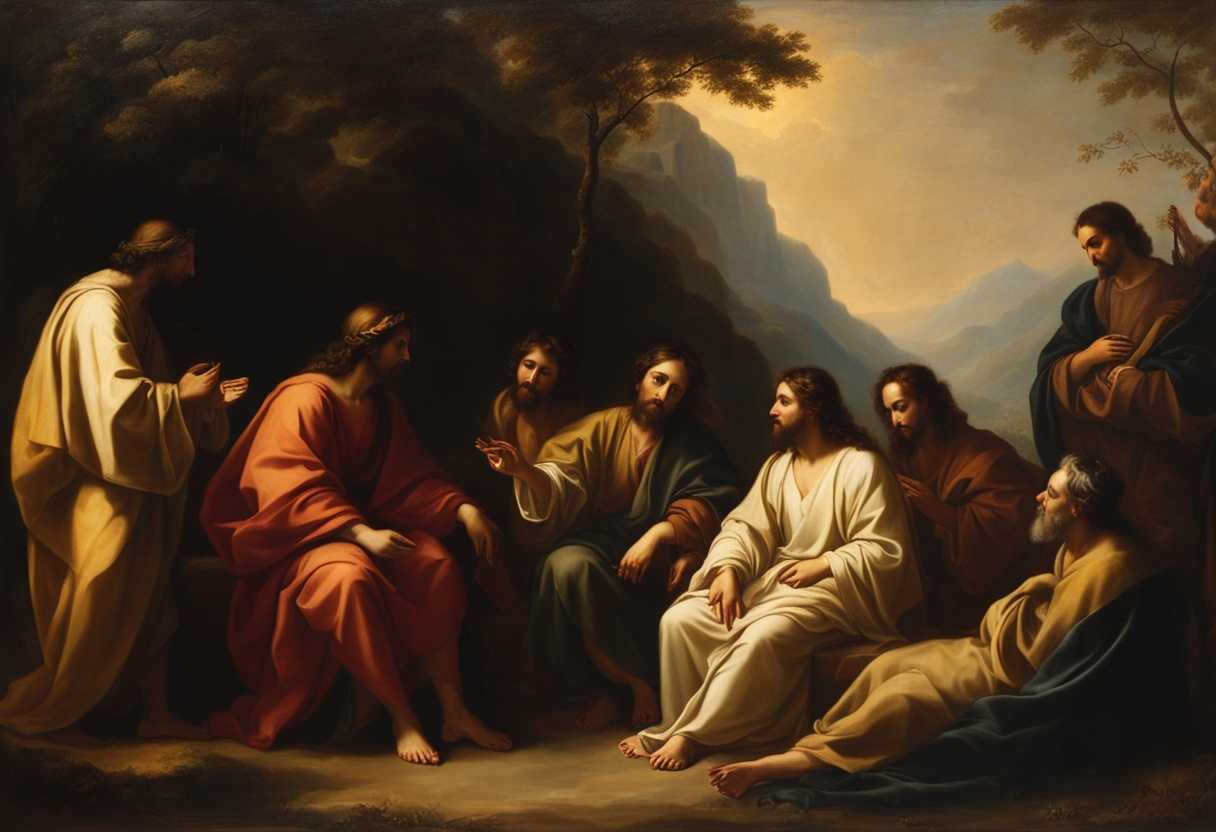
Setting the Scene for John 12:23-28
The scene in John chapter 12:23-28 takes place in the city of Jerusalem during the time of Passover. Jesus is in the city with his disciples, and news has spread about his miracles and teachings, drawing a large crowd of people who have come to see him. Among those present are some Greeks who have come to worship at the festival.
As Jesus is speaking to the crowd, he begins to talk about his impending death and the purpose for which he came into the world. He uses the metaphor of a grain of wheat falling to the ground and dying in order to bear much fruit, alluding to his own sacrificial death and resurrection. The atmosphere is tense as Jesus speaks about his upcoming suffering, but there is also a sense of reverence and awe among the listeners as they try to understand the significance of his words.
The setting is likely a bustling marketplace or gathering place in Jerusalem, with people from various backgrounds and walks of life coming together to celebrate the Passover festival. The air is filled with anticipation and curiosity as Jesus continues to teach and reveal more about his mission on earth. The scene is charged with emotion as Jesus prepares himself for the events that will soon unfold, and those around him grapple with the weight of his words.
What is John 12:23-28 about?
Jesus reveals the ultimate sacrifice He is about to undergo for the sake of humanity in this profound verse: His death and subsequent glorification. It is a moment of deep reflection and preparation for the disciples as Jesus imparts crucial teachings about the essence of true service and discipleship. Jesus underscores the importance of selflessness, humility, and obedience in following Him by using his impending sacrifice as a powerful example.
But what does it mean for us today, dear reader? It prompts us to consider the cost of true discipleship and the radical love that Jesus exemplified through His sacrifice. Are we willing to serve others sacrificially, just as Jesus did? Are we ready to lay down our lives for the sake of the gospel? Jesus’ words challenge us to examine our own hearts and motives, urging us to follow Him wholeheartedly and selflessly. True greatness lies in serving others and embracing the way of the cross often involves the path to glory.
Understanding what John 12:23-28 really means
In John 12:23-28, we find Jesus addressing His disciples and a crowd, preparing them for the events that will soon unfold. He speaks of the necessity of sacrifice and the glorification that follows, shedding light on profound truths that resonate through the ages.
“The hour has come for the Son of Man to be glorified.” Jesus’s words signify the imminent fulfillment of His purpose through His impending crucifixion and resurrection. This momentous occasion, foretold by prophets and now at hand, marks the pinnacle of God’s redemptive plan. Just as Jesus prayed for His glorification in John 17:1, we see the divine orchestration of events leading to His exaltation, as described in Philippians 2:8-9. This highlights the intricate tapestry of God’s timing and the ultimate glorification that stems from obedience to His will.
“Unless a kernel of wheat falls to the ground and dies, it remains only a single seed. But if it dies, it produces many seeds.” Through the metaphor of a seed, Jesus illustrates the transformative power of His sacrificial death. Just as a seed must die to bring forth new life, His sacrifice will yield abundant fruit in the form of salvation for many. This principle echoes in 1 Corinthians 15:36 and Romans 6:5, emphasizing the profound truth that through death comes life, urging us to embrace the concept of sacrifice for the greater good.
“Anyone who loves their life will lose it, while anyone who hates their life in this world will keep it for eternal life.” Jesus challenges us to reevaluate our priorities, urging us to prioritize spiritual growth over worldly pursuits. This call to self-denial and eternal perspective echoes in Matthew 16:25 and Luke 14:26, emphasizing the radical nature of discipleship and the eternal rewards that await those who forsake earthly desires for the sake of Christ.
“Whoever serves me must follow me; and where I am, my servant also will be. My Father will honor the one who serves me.” Jesus underscores the importance of discipleship and the promise of divine reward for those who faithfully follow Him. This assurance of God’s recognition and approval resonates in John 14:3 and Matthew 25:21, reminding us that our service and sacrifices for Christ are not in vain but are seen and honored by our Heavenly Father.
“Now my soul is troubled, and what shall I say? ‘Father, save me from this hour’? No, it was for this very reason I came to this hour. Father, glorify your name!” In this poignant moment, Jesus reveals His human struggle while reaffirming His unwavering commitment to God’s will. This inner turmoil and surrender to God’s plan mirror Jesus’s prayer in Gethsemane (Matthew 26:39) and the obedience He displayed through suffering (Hebrews 5:7-8). It serves as a powerful reminder of the importance of yielding to God’s will, even in the face of great challenges, trusting that His purposes far exceed our understanding.
In reflecting on these profound verses, we are called to consider the cost of discipleship, the transformative power of sacrifice, and the eternal rewards of following Christ wholeheartedly. May we, like Jesus, embrace the path of self-denial, trusting in God’s perfect timing and surrendering our lives for His glory.
How can we surrender our lives for God’s glory?
Surrendering our lives for God’s glory means putting aside our own desires, ambitions, and plans in order to wholeheartedly seek and follow God’s will for us. It involves acknowledging that our lives are not our own, but rather are meant to bring honor and praise to God. When we surrender ourselves to God, we are saying that His purposes take precedence over our own, and we trust in His wisdom and guidance above our own understanding.
This surrender is not a one-time event, but a daily decision to yield to God’s leading and trust Him with the outcome. It requires humility, faith, and a willingness to let go of control. Aligning our hearts and minds with God’s will can lead us to experience a deeper sense of purpose, peace, and fulfillment as we know that we are living in alignment with His plans for us. Surrendering our lives for God’s glory is a transformative act that allows us to step into the abundant life that Jesus promised to those who follow Him wholeheartedly.
Application
Think of your life as a project at work or a family commitment, requiring dedication and sacrifice. In John 12:23-28, Jesus talks about His forthcoming sacrifice, showing us what true commitment looks like. Reflect on how He gave everything for a greater purpose and challenge yourself to do the same in your daily grind. Are you ready to embrace this profound example of selflessness in your own life? How will you respond to this powerful call to action?

Reverend Michael Johnson is an experienced Church Minister with a profound expertise in spirituality and guidance. With a serene presence and a compassionate heart, he has faithfully served his congregation for over 20 years, leading them on a spiritual journey towards inner peace and enlightenment. Reverend Johnson’s extensive knowledge of religious philosophies and profound understanding of human nature have made him a trusted confidant and mentor to many, as he seamlessly weaves his profound wisdom into life teachings. Reverend Johnson’s calming demeanor and empathetic nature continue to uplift and heal souls, nurturing a sense of unity and tranquility within his community.