
John 12:27-36 is about Jesus acknowledging the turmoil and inner conflict he is experiencing in fulfilling his purpose, ultimately surrendering to God’s will and shining as a light for the world despite the impending darkness of his crucifixion.
27 “Now is my soul troubled. And what shall I say? ‘Father, save me from this hour’? But for this purpose I have come to this hour.”
28 Father, glorify your name.” Then a voice came from heaven: “I have glorified it, and I will glorify it again.”
29 The crowd that stood there and heard it said that it had thundered. Others said, “An angel has spoken to him.”
30 Jesus answered, “This voice has come for your sake, not mine.
31 Now is the judgment of this world; now will the ruler of this world be cast out.
32 And I, when I am lifted up from the earth, will draw all people to myself.”
33 He said this to show by what kind of death he was going to die.
34 So the crowd answered him, “We have heard from the Law that the Christ remains forever. How can you say that the Son of Man must be lifted up? Who is this Son of Man?”
35 So Jesus said to them, “The light is among you for a little while longer. Walk while you have the light, lest darkness overtake you. The one who walks in the darkness does not know where he is going.
36 While you have the light, believe in the light, that you may become sons of light.”
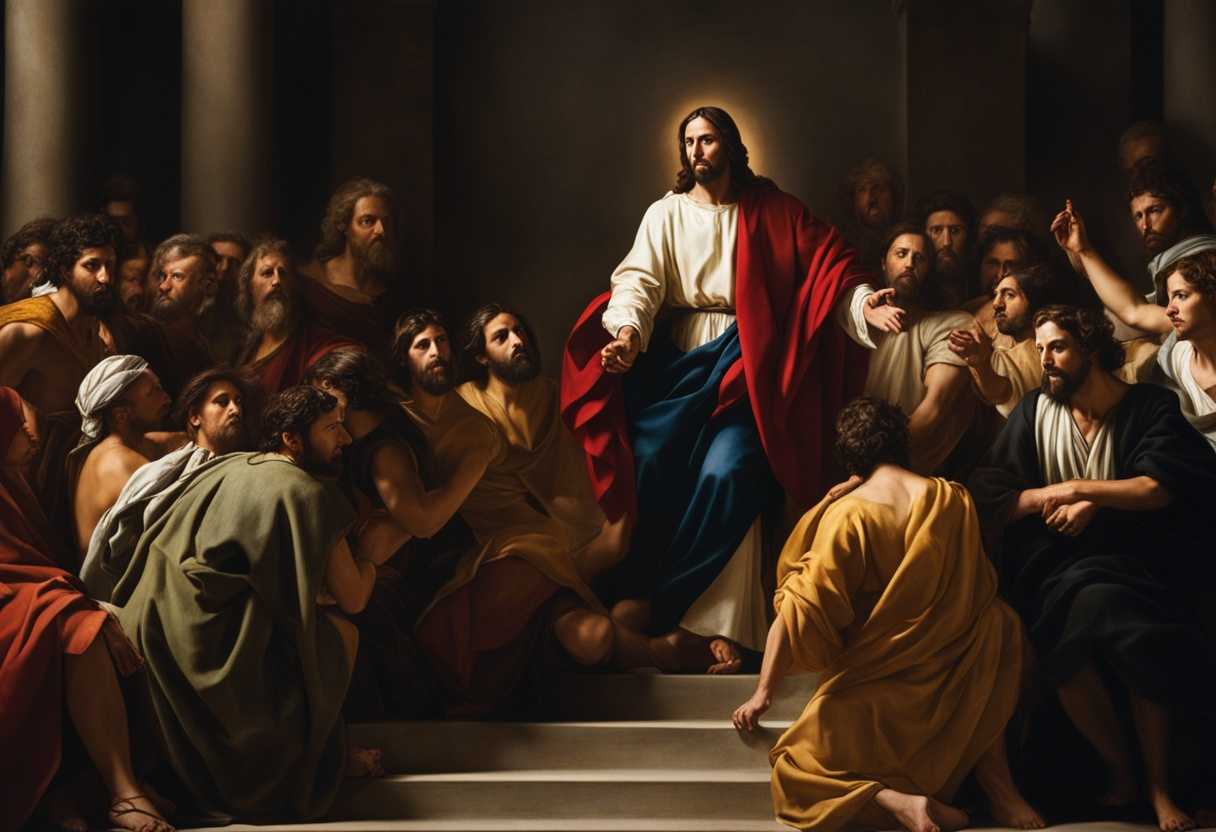
Setting the Scene for John 12:27-36
In John chapter 12, we find Jesus in the final days of His earthly ministry, just before His crucifixion. The scene takes place in Bethany, at the home of Mary, Martha, and Lazarus. Jesus is reclining at the table with His disciples, including Peter, James, and John. The atmosphere is tense as Jesus speaks about His impending death and the purpose for which He came into the world.
Mary, the sister of Lazarus, enters the room with an alabaster jar of expensive perfume, which she pours on Jesus’ feet and wipes with her hair. Judas Iscariot, one of the disciples, objects to this extravagant display of devotion, but Jesus defends Mary, commending her for understanding the significance of His upcoming sacrifice.
As the evening progresses, a crowd gathers outside the house, drawn by the news of Jesus raising Lazarus from the dead. Jesus takes the opportunity to address the people, proclaiming Himself as the light of the world and urging them to believe in Him before the darkness overtakes them. The scene is charged with emotion and anticipation as Jesus prepares His followers for the events that will soon unfold.
What is John 12:27-36 about?
This verse carries profound significance as it encapsulates Jesus’ unwavering commitment to carrying out God’s divine plan despite knowing the imminent suffering and sacrifice he would endure. Jesus not only demonstrates his unparalleled selflessness and obedience to God but also aims to prepare his disciples for the difficult path ahead by predicting his own death. It serves as a reminder of the profound love and sacrifice that underpins Christian faith, highlighting the immense weight of the crucifixion and the ultimate triumph of resurrection. We are called to consider the transformative power of faith in our own lives as we reflect on Jesus’ words urging belief in the light of God’s salvation. Like the disciples who witnessed Jesus’ teachings and miracles, we are challenged to embrace the light of God’s love and salvation, even in the face of uncertainty and trials. Through our belief in the redemptive power of Christ’s sacrifice, we can find solace, strength, and eternal hope, knowing that His light will guide us through the darkest moments of our journey. We should heed Jesus’ call to believe in the light, embodying his teachings of love, forgiveness, and grace as we walk in faith and trust in God’s plan for our lives.
Understanding what John 12:27-36 really means
In the Gospel of John, we find Jesus in a poignant moment, expressing the turmoil within His soul as He faces the impending crucifixion. His words, “Now my soul is troubled,” reveal the depth of His humanity and the weight of the sacrifice He is about to make. Despite His inner turmoil, Jesus submits to God’s will, crying out, “Father, glorify your name!” This act of surrender underscores the ultimate purpose of His mission on earth – to bring glory to the Father through His sacrificial love.
Jesus, referring to Himself as the light, warns the crowd that His presence among them is temporary. He urges them to believe in Him before the darkness of unbelief overtakes them. This dichotomy between light and darkness is a recurring theme in the Bible, symbolizing the contrast between righteousness and sin, belief and unbelief. Just as light dispels darkness, Jesus’ teachings illuminate the path to salvation, calling us to walk in His light and avoid the spiritual darkness that engulfs those who reject Him.
The urgency of belief is emphasized in this passage, echoing the transient nature of life. Jesus’ admonition to “walk while you have the light” serves as a call to action for all who hear His words. In a world filled with moral and spiritual darkness, the message of following Jesus and living according to His teachings is as relevant today as it was two thousand years ago. The choice between light and darkness, belief and unbelief, remains a crucial decision that each person must make.
Drawing parallels to our lives today, we can relate to Jesus’ sense of turmoil in the face of difficulties and uncertainties. His example teaches us that it is natural to feel troubled but also crucial to seek God’s will and glorify Him through our trials. Just as a person in a dark forest relies on a small flashlight to navigate safely, we must cling to Jesus, our light in a world shrouded in darkness. Keeping our faith in Him illuminates our path and guides us through life’s challenges, just as the flashlight guides the traveler through the forest.
In conclusion, the passage from John 12:27-36 calls us to acknowledge Jesus’ sacrifice, embrace His light, and live in a manner that brings glory to God. It reminds us of the urgency of belief and the comfort that comes from walking in the light of Christ. As we reflect on Jesus’ troubled soul and His unwavering commitment to God’s will, may we too find strength in our faith, knowing that His light shines brightly in the darkness of our world.
How can we fully surrender our will to God?
To fully surrender our will to God, we must first acknowledge His sovereignty and authority in our lives. This involves recognizing that God’s plans and purposes are ultimately for our good, even if they may not align with our own desires or understanding. Surrendering our will means letting go of our own preferences, plans, and ways of doing things, and instead trusting in God to lead and guide us according to His perfect will.
Surrendering our will to God also requires humility and a willingness to submit ourselves to His authority. This means seeking His guidance and wisdom through prayer, studying His Word, and spending time in His presence. Surrendering our will is a daily choice to align our thoughts, desires, and actions with God’s will, allowing Him to work in and through us for His glory. We ultimately fully surrender our will to God in a lifelong process of faith and obedience, knowing that He is faithful and trustworthy to lead us on the right path.
Application
Think about the worker who stays late or the parent who sacrifices sleep for their family. Jesus showed the ultimate sacrifice and humility. Can you commit to following His example in your everyday challenges? Be driven, be focused, show the same dedication in your life. How will you step up and shine His light in your world right now?

Reverend Michael Johnson is an experienced Church Minister with a profound expertise in spirituality and guidance. With a serene presence and a compassionate heart, he has faithfully served his congregation for over 20 years, leading them on a spiritual journey towards inner peace and enlightenment. Reverend Johnson’s extensive knowledge of religious philosophies and profound understanding of human nature have made him a trusted confidant and mentor to many, as he seamlessly weaves his profound wisdom into life teachings. Reverend Johnson’s calming demeanor and empathetic nature continue to uplift and heal souls, nurturing a sense of unity and tranquility within his community.