
John 12:4-5 is about Judas Iscariot questioning the use of expensive perfume for Jesus, highlighting his ulterior motives and lack of concern for the poor.
4 But Judas Iscariot, one of his disciples (he who was about to betray him), said,
5 “Why was this ointment not sold for three hundred denarii and given to the poor?”
Setting the Scene for John 12:4-5
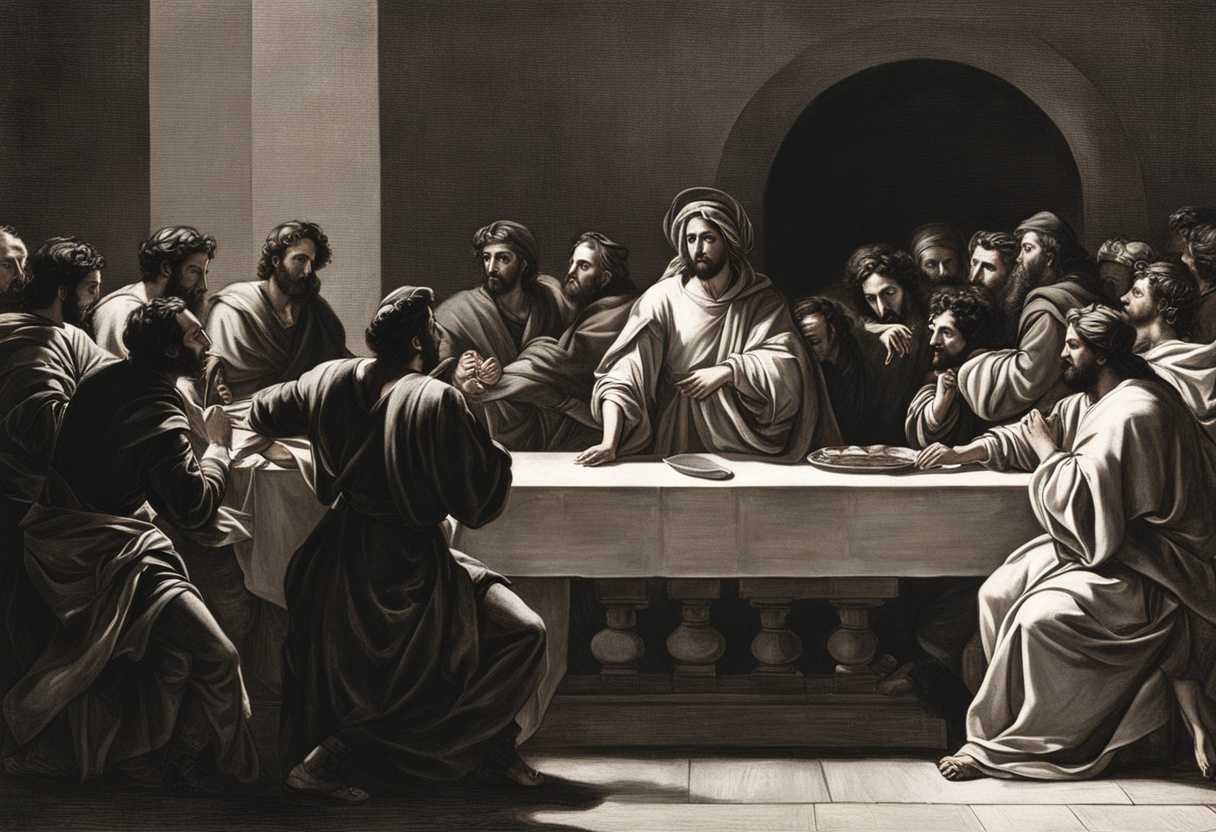
In John chapter 12, we find Jesus in the town of Bethany, where a dinner is being held in His honor. The scene is set in the home of Lazarus, whom Jesus had recently raised from the dead. Lazarus is reclining at the table with Jesus, along with his sisters, Mary and Martha. The atmosphere is filled with gratitude and awe as they all gather to share a meal and fellowship with Jesus.
As the guests enjoy the meal, Mary suddenly enters the room with an alabaster jar of expensive perfume. She approaches Jesus, breaks the jar, and pours the fragrant oil on His feet, then wipes them with her hair. The room falls silent as the sweet aroma fills the air, and Judas Iscariot, one of Jesus’ disciples, questions the extravagance of Mary’s gesture, suggesting that the perfume could have been sold to help the poor.
Jesus, aware of Judas’ motives, defends Mary’s actions, commending her for her act of love and devotion. The scene captures a moment of intimacy and worship, as Mary expresses her deep affection for Jesus in a profound and sacrificial way, foreshadowing the impending sacrifice that Jesus Himself would make for all humanity.
What is John 12:4-5 about?
This verse speaks to the concept of priorities and the depth of one’s faith in action. Judas’ criticism of Mary’s act of anointing Jesus with expensive perfume instead of using it to help the poor reveals a shallow understanding of the significance of Jesus’ presence and the value of worship. It prompts us to reflect on whether we prioritize material possessions and social causes over honoring and worshiping God in our lives.
Have you ever found yourself questioning acts of worship or devotion to God because they seem extravagant or impractical in worldly terms? This verse challenges us to consider the motives behind our actions and the sincerity of our faith. It invites us to ponder whether we are truly willing to go above and beyond in our worship of God, even if it means setting aside conventional notions of charity or social justice. This verse also raises questions about judgment and empathy in a broader context. It prompts us to reflect on how we view and criticize the actions of others, especially when it comes to matters of faith and devotion. Instead of focusing on external appearances or societal expectations, this verse encourages us to look deeper into the hearts and intentions of individuals, just as Jesus did when he defended Mary’s act of anointing him.
Understanding what John 12:4-5 really means
In the narrative of Jesus’ anointing at Bethany, a poignant moment unfolds as Judas Iscariot questions the use of expensive perfume on Jesus, suggesting it could have been sold to aid the poor. This seemingly altruistic inquiry masks Judas’ ulterior motives, revealing the tension between genuine acts of worship and feigned piety. The contrast between outward appearances and inner intentions is starkly illuminated in this exchange, prompting us to delve deeper into the authenticity of our own actions.
The phrase, “Why wasn’t this perfume sold and the money given to the poor?” encapsulates Judas’ outward display of concern for the less fortunate, yet unveils his underlying greed and deceit. It serves as a cautionary tale, reminding us that God scrutinizes the motives of our hearts rather than merely applauding outward gestures of charity. This interrogation challenges us to assess the purity of our intentions, urging us to prioritize sincerity over superficial displays of righteousness.
Drawing parallels with other biblical accounts such as Matthew 26:6-13 and Mark 14:3-9 provides a multifaceted perspective on the significance of the anointing at Bethany. John 12:6 further exposes Judas’ true nature, portraying him not as a compassionate advocate for the poor but as a thief driven by self-interest. This narrative echoes the timeless truth articulated in 1 Samuel 16:7, emphasizing God’s focus on the authenticity of our hearts rather than the external facade we present to the world.
The relevance of this passage reverberates through the ages, compelling us to scrutinize our own actions and motivations. It beckons us to introspection, challenging us to discern whether our deeds stem from genuine love and worship or are tainted by selfish desires. Just as Judas’ facade crumbled to reveal his true intentions, we are urged to strip away any pretense in our worship and service, embracing a spirit of authenticity and selflessness.
Consider a contemporary parallel where a community member’s generous donation to a charity is marred by ulterior motives of seeking tax benefits and public acclaim. This anecdote mirrors Judas’ duplicity, underscoring the enduring relevance of the passage in highlighting the importance of sincerity in our deeds. It serves as a cautionary tale, prompting us to evaluate the purity of our intentions and the authenticity of our worship and service.
As we reflect on this narrative, we are impelled to examine the core of our actions and the purity of our worship. Let us cultivate a heart of genuine devotion, prioritizing the sincerity of our intentions over the allure of external recognition. This passage serves as a poignant reminder that God values the authenticity of our hearts above the grandeur of our deeds, calling us to align our motives with His will and embody true love and service towards others.
Whose needs are we neglecting for self-interest?
The needs that we neglect for self-interest are often those of others, specifically the needs of the marginalized, the oppressed, and the less fortunate. When we prioritize our own desires and wants above the needs of others, we are acting in self-interest and ignoring the call to love and serve our neighbors. We neglect to show compassion, generosity, and selflessness in caring for those who may be in need. We fail to embody the true spirit of selflessness and sacrifice that is exemplified in the teachings of putting others before ourselves by focusing solely on our own interests and gains. When we neglect the needs of those around us for the sake of our own comfort or advancement, we are distancing ourselves from the essence of service and humility that is central to the teachings of love and compassion. It is when we set aside our self-interest and prioritize the needs of others that we truly reflect the light and love of God in this world.
Application
Imagine you’ve just earned a hard-fought promotion or spent years building a loving, supportive family. Wouldn’t you want to give them your very best? John 12:4-5 reminds us of Mary’s act of anointing Jesus’ feet with perfume—her most precious gift. Now, think about your own greatest treasures. Are you giving your all in honor and service to the Lord like you do for your career or family? Are you ready to lay down what’s most valuable for something even greater?

Reverend Michael Johnson is an experienced Church Minister with a profound expertise in spirituality and guidance. With a serene presence and a compassionate heart, he has faithfully served his congregation for over 20 years, leading them on a spiritual journey towards inner peace and enlightenment. Reverend Johnson’s extensive knowledge of religious philosophies and profound understanding of human nature have made him a trusted confidant and mentor to many, as he seamlessly weaves his profound wisdom into life teachings. Reverend Johnson’s calming demeanor and empathetic nature continue to uplift and heal souls, nurturing a sense of unity and tranquility within his community.