
John 13:1-7 is about Jesus demonstrating an act of humility by washing his disciples’ feet, teaching them about servant leadership and the importance of humility in discipleship.
1 Now before the Feast of the Passover, when Jesus knew that his hour had come to depart out of this world to the Father, having loved his own who were in the world, he loved them to the end.
2 During supper, when the devil had already put it into the heart of Judas Iscariot, Simon’s son, to betray him,
3 Jesus, knowing that the Father had given all things into his hands, and that he had come from God and was going back to God,
4 rose from supper. He laid aside his outer garments, and taking a towel, tied it around his waist.
5 Then he poured water into a basin and began to wash the disciples’ feet and to wipe them with the towel that was wrapped around him.
6 He came to Simon Peter, who said to him, “Lord, do you wash my feet?”
7 Jesus answered him, “What I am doing you do not understand now, but afterward you will understand.”
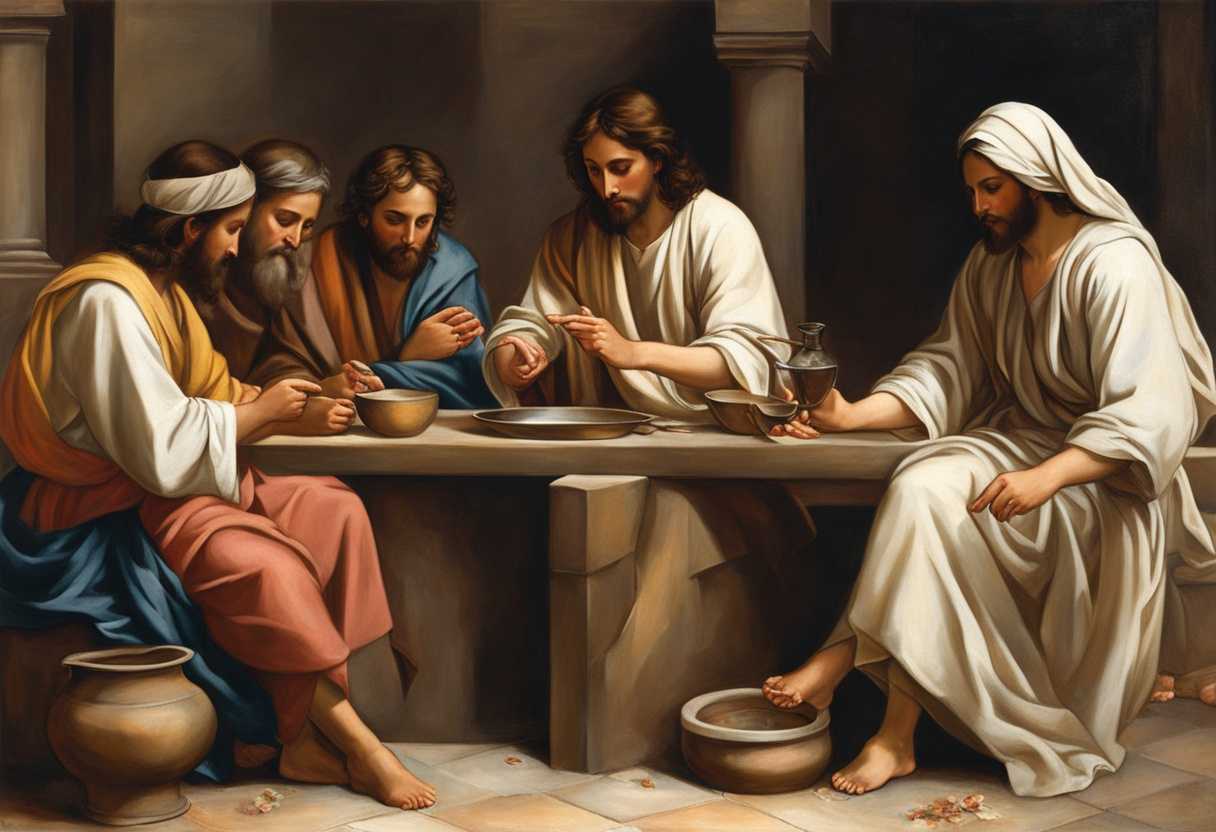
Setting the Scene for John 13:1-7
In John chapter 13, the scene is set in an upper room in Jerusalem where Jesus and his twelve disciples are gathered for the Passover meal. The room is dimly lit by oil lamps, casting a warm glow on the faces of those present. The disciples are reclining at the table, their sandals kicked off, and their feet dusty from the day’s journey through the bustling streets of the city.
Jesus, the central figure in the room, rises from the table and begins to remove his outer robe, wrapping a towel around his waist. The disciples watch in confusion as their teacher, the Son of God, takes on the role of a servant. One by one, Jesus kneels before each disciple, pouring water into a basin and washing their feet, a task usually reserved for the lowest of servants.
The disciples, including Peter who initially resists Jesus washing his feet, are humbled by this act of love and servanthood. Jesus uses this intimate moment to teach them about humility and service, setting an example for them to follow in their own lives. The atmosphere in the room is one of reverence and awe as the disciples witness their beloved teacher embodying the values he has been preaching to them throughout his ministry.
What is John 13:1-7 about?
This verse from the Bible exemplifies the fundamental lesson of humility and service taught by Jesus to his disciples. Jesus illustrates the value of serving others with love and selflessness by performing the act of washing his disciples’ feet. He challenges societal norms and expectations by taking on the role of a servant, emphasizing the importance of humility and care for one another. This gesture serves as a powerful reminder that true leadership is rooted in serving others and putting their needs above our own.
Have you ever stopped to consider the significance of Jesus choosing to wash his disciples’ feet, a task typically reserved for servants or lower-class individuals? This act of humility and service is a profound example of Jesus’ teachings on love and compassion. It challenges us to reflect on our own attitudes towards serving others and the importance of putting aside our pride to care for one another. We should remember the lesson Jesus imparted through the simple yet powerful act of washing his disciples’ feet as we strive to follow in his footsteps – that true greatness lies in humble service to others.
Understanding what John 13:1-7 really means
In the poignant setting of the Last Supper, just before the crucifixion of Jesus, we are given a glimpse into the profound humility and love exemplified by the Son of God. John 13:1-7 captures a pivotal moment where Jesus, aware of his impending betrayal and sacrifice, chooses to demonstrate the essence of servanthood to his disciples.
“Having loved his own who were in the world, he loved them to the end.” This opening verse encapsulates the enduring and unconditional nature of Jesus’ love. In a world where love is often conditional, Jesus’ example challenges us to embody sacrificial love, as seen in John 15:13 and Romans 5:8.
Even as the devil influenced Judas to betray him, Jesus continued to show love and humility. The presence of evil within close circles serves as a stark reminder of the fallen nature of humanity, yet Jesus’ unwavering commitment to his mission shines through, echoing the events in Luke 22:3 and Matthew 26:14-16.
Jesus’ profound awareness of his divine authority and mission is highlighted in verse 3. Understanding our identity and purpose in God, as Jesus did, empowers us to serve others selflessly, as reflected in Philippians 2:6-7.
The act of Jesus washing his disciples’ feet in verses 4-5 is a powerful symbol of humility and servanthood. By performing a task reserved for the lowest servant, Jesus challenges societal norms and teaches us the value of humility, echoing the sentiment in Matthew 20:28.
In the exchange with Simon Peter in verses 6-7, Jesus’ response to Peter’s confusion serves as a reminder that we may not always comprehend God’s plans immediately. Trusting in God’s purpose, even when it seems unclear, is a recurring theme in Proverbs 3:5-6.
Imagine a CEO cleaning the office bathrooms – a shocking yet inspiring act. Similarly, Jesus’ act of washing his disciples’ feet was a profound lesson in humility and service, challenging societal norms and expectations.
In conclusion, the passage in John 13:1-7 serves as a timeless example of love, humility, and servanthood. As followers of Christ, we are called to emulate his selfless service and trust in God’s greater plan, even when we may not fully understand it.
How can we humbly serve others like Jesus did?
We can humbly serve others like Jesus did by putting their needs above our own and being willing to serve them in practical ways. We can also look for opportunities to serve others in ways that may seem small or insignificant but are meaningful, just as Jesus took on the role of a servant and washed the feet of His disciples. This kind of humble service requires us to set aside our pride and ego, and to approach others with a heart full of love and compassion.
Furthermore, serving others like Jesus means doing so without seeking recognition or praise for ourselves. Jesus willingly served others without drawing attention to Himself, and He demonstrated that true service comes from a place of selflessness and humility. We can follow this example by serving others quietly, without expecting anything in return, and with a heart that seeks to uplift and support those in need. We can make a positive impact in the lives of those around us and reflect the love of God to the world by embodying the spirit of Christ-like service.
Application
Picture your work team—what would happen if everyone stepped up with selfless dedication like Jesus did when He washed His disciples’ feet? It’s time to put aside our pride and show genuine, humble service like He did. Imagine the impact on your family, colleagues, and friends if you led with compassion and humility. Will you choose to make a difference and serve others today?

Reverend Michael Johnson is an experienced Church Minister with a profound expertise in spirituality and guidance. With a serene presence and a compassionate heart, he has faithfully served his congregation for over 20 years, leading them on a spiritual journey towards inner peace and enlightenment. Reverend Johnson’s extensive knowledge of religious philosophies and profound understanding of human nature have made him a trusted confidant and mentor to many, as he seamlessly weaves his profound wisdom into life teachings. Reverend Johnson’s calming demeanor and empathetic nature continue to uplift and heal souls, nurturing a sense of unity and tranquility within his community.