
John 13:12-15 is about Jesus humbly washing the feet of his disciples, teaching them to practice humility and service towards others as he exemplified through his actions.
12 When he had washed their feet and put on his outer garments and resumed his place, he said to them, “Do you understand what I have done to you?
13 You call me Teacher and Lord, and you are right, for so I am.
14 If I then, your Lord and Teacher, have washed your feet, you also ought to wash one another’s feet.
15 For I have given you an example, that you also should do just as I have done to you.
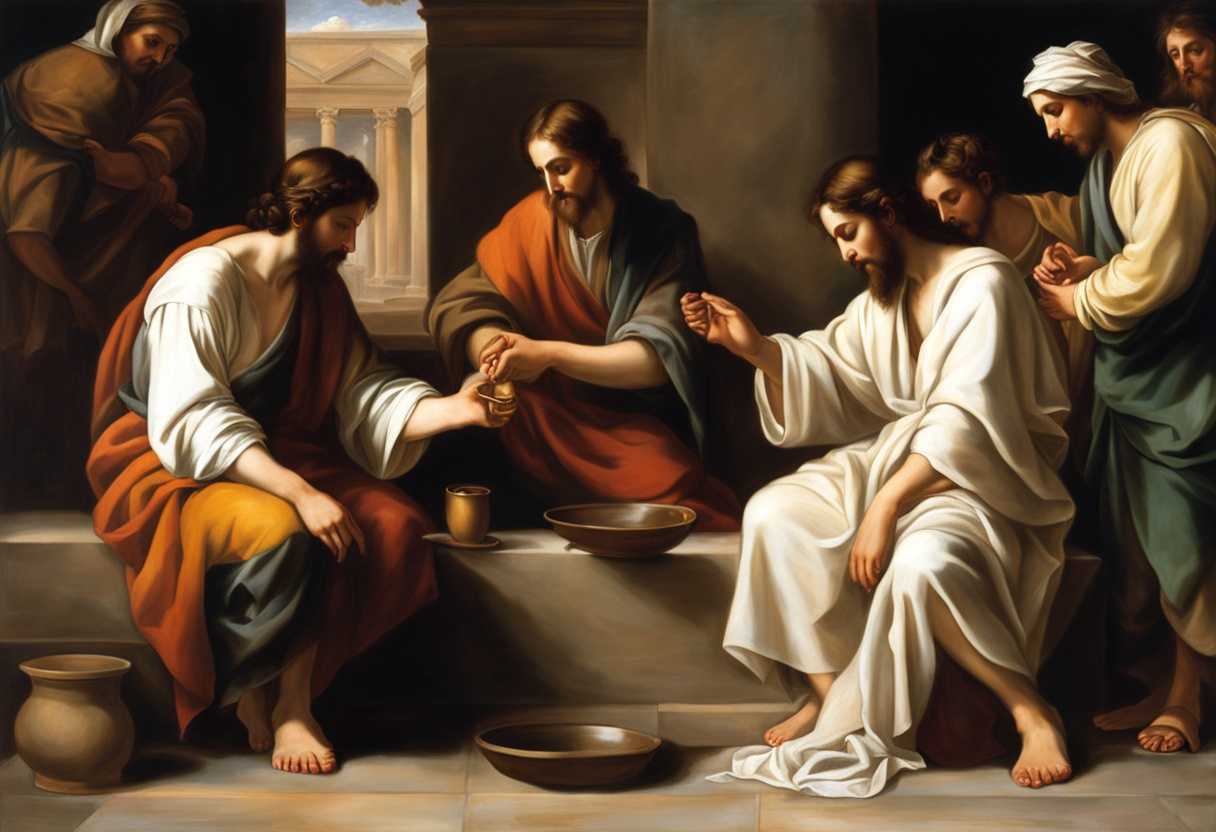
Setting the Scene for John 13:12-15
In John chapter 13, we find Jesus and his disciples gathered together in an upper room in Jerusalem to celebrate the Passover meal. The room is dimly lit by oil lamps, casting a warm glow over the group seated around a low table covered with simple dishes of bread, wine, and herbs. The disciples, including Peter, James, John, and the others, are reclining on cushions, their sandals kicked off as they lean on one elbow to eat.
Jesus, the central figure in the room, rises from the table and removes his outer garment, wrapping a towel around his waist. The disciples watch in confusion as he pours water into a basin and begins to wash their feet, a task typically reserved for servants. The room falls silent as Jesus humbly serves each of his followers, including Judas Iscariot, who will soon betray him.
As Jesus finishes washing their feet, he explains to his disciples that he has set an example for them to follow, teaching them about humility and service. This intimate moment of vulnerability and love sets the tone for the events that will soon unfold, leading up to Jesus’ ultimate sacrifice on the cross.
What is John 13:12-15 about?
Jesus demonstrates the essence of true leadership in this powerful moment where he washes the feet of his disciples. Jesus shows us the importance of humility, compassion, and putting others before ourselves by humbling himself to serve others in such a simple yet profound way. This act challenges us to reflect on our own attitudes and behaviors towards serving others.
Think about it – if the Son of God, the highest figure in Christianity, could humble himself to wash the feet of his disciples, how much more should we be willing to serve and uplift those around us? This verse serves as a reminder that true greatness is not found in power or authority, but in our willingness to serve and love one another selflessly. It calls us to consider how we can use our own talents and resources to make a positive impact in the lives of others, just as Jesus did with his disciples.
Understanding what John 13:12-15 really means
During the Last Supper, a poignant moment unfolds as Jesus, the Son of God, takes on the role of a servant by washing the feet of His disciples. This act of humility is not merely a practical gesture but a profound lesson in servant leadership. Jesus, the ultimate Teacher and Lord, humbles Himself to show that no one is above serving others, regardless of their status. His question, “Do you understand what I have done for you?” challenges His disciples to grasp the deeper significance of His actions, emphasizing the importance of humility and service in their lives.
In acknowledging His authority and position, Jesus sets a powerful example for His followers to emulate. He establishes a model of selfless service, urging His disciples to follow suit. The call to adopt the mindset of Christ Jesus, as highlighted in Philippians 2:5-7, reinforces the theme of humility and selflessness. Similarly, the passage in Matthew 20:26-28 underscores the essence of servant leadership, emphasizing that true greatness lies in serving others, mirroring the sacrificial love of Jesus.
In a world that often glorifies power and status, the message of humility and service in John 13:12-15 remains a poignant reminder of true leadership. It challenges us to reevaluate our priorities and embrace a mindset of selfless service in our interactions with others. Whether in our families, workplaces, or communities, the call to emulate Jesus’ example of humility and service transcends time and culture, offering a timeless blueprint for authentic leadership.
Imagine a scenario where a CEO chooses to work alongside their employees, understanding their challenges, and actively participating in their tasks. This act of humility and service transforms the workplace culture, fostering respect and unity among team members. Similarly, in our daily lives, when we prioritize serving others with humility and love, we contribute to the creation of compassionate and supportive communities.
In conclusion, the act of Jesus washing His disciples’ feet serves as a powerful illustration of humility and servant leadership. By following His example and embodying a spirit of selfless service, we can impact the world around us positively. Let us strive to emulate the humility and love demonstrated by Jesus, fostering a culture of compassion and service in our spheres of influence.
How can we humbly serve one another?
We can humbly serve one another by following the example set by Jesus in John 13:12-15. Jesus, being the ultimate example of humility, took on the role of a servant and washed the feet of his disciples. This act symbolizes the attitude of humility and servanthood that we should have towards others. We demonstrate the depth of our care and consideration for one another by serving one another in love and humility. We place the needs and well-being of others above our own desires by imitating Jesus’ humble service. This kind of selfless service involves sacrificing our own comfort and pride to uplift and support one another in practical ways. We show our genuine care and compassion for those around us by actively seeking opportunities to serve and support others, fostering a spirit of unity and love within our communities.
Humility in serving others is a reflection of our acknowledgment that we are all equal in the eyes of God, and that each person is deserving of kindness, respect, and support. We show a willingness to set aside our own agendas and preferences for the greater good of those around us by approaching acts of service with a humble heart. We strengthen our relationships and create a culture of mutual support and care within our communities by doing so.
Application
Think of your life as a bustling office or a busy family home. Just like the best leaders roll up their sleeves and dive into the work, Jesus showed us true leadership by washing his disciples’ feet. Are we ready to cast aside our pride and serve others with the same love and dedication? Picture the difference it could make, not just for others, but for you. Will you step up and lead through selfless service today?

Reverend Michael Johnson is an experienced Church Minister with a profound expertise in spirituality and guidance. With a serene presence and a compassionate heart, he has faithfully served his congregation for over 20 years, leading them on a spiritual journey towards inner peace and enlightenment. Reverend Johnson’s extensive knowledge of religious philosophies and profound understanding of human nature have made him a trusted confidant and mentor to many, as he seamlessly weaves his profound wisdom into life teachings. Reverend Johnson’s calming demeanor and empathetic nature continue to uplift and heal souls, nurturing a sense of unity and tranquility within his community.