
John 13:29 is about the disciple Judas, being instructed by Jesus to buy what was needed for the feast or to give something to the poor, symbolizing the choice between embracing material possessions and selflessness.
29 Some thought that, because Judas had the moneybag, Jesus was telling him, “Buy what we need for the feast,” or that he should give something to the poor.
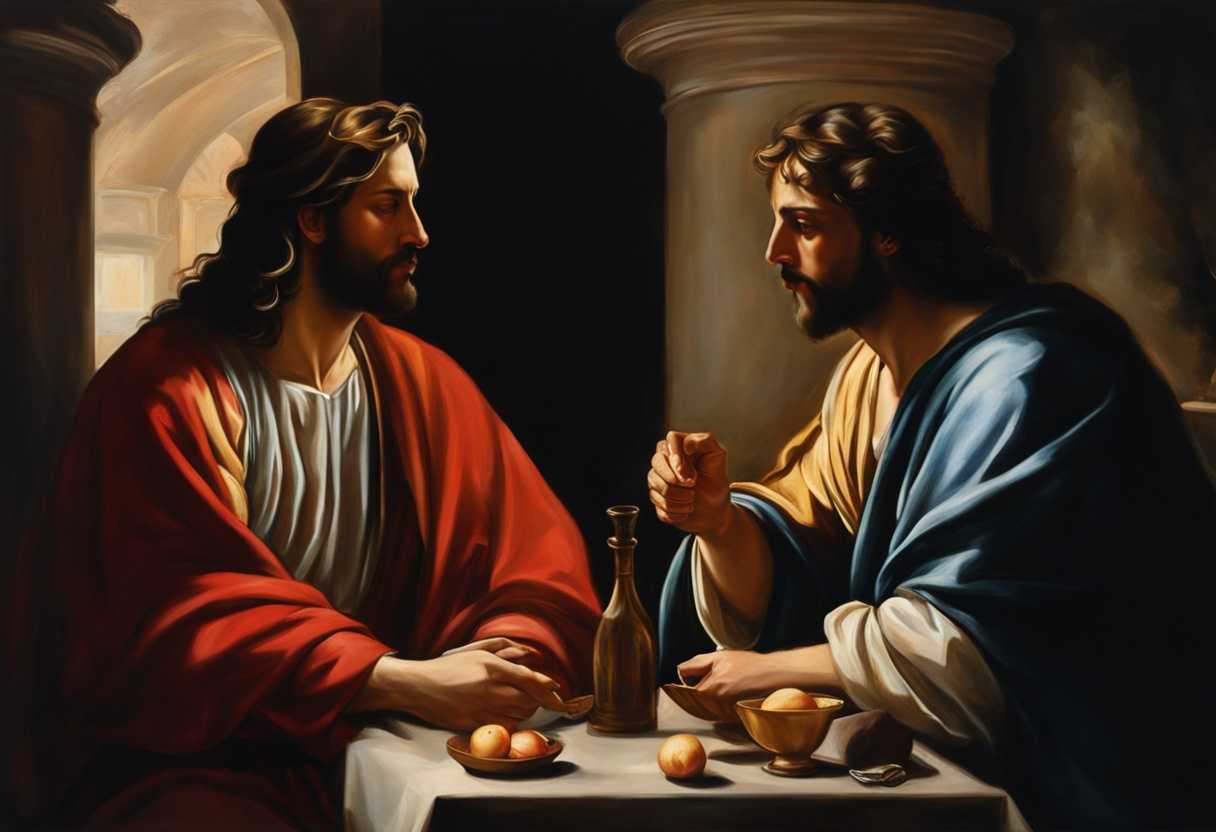
Setting the Scene for John 13:29
In John chapter 13, the scene is set in a large upper room in Jerusalem where Jesus and his twelve disciples are gathered for the Passover meal. The room is dimly lit by oil lamps, casting a warm glow on the faces of those present. The disciples are reclining at the table, their sandals kicked off, as was the custom of the time. The air is filled with the aroma of roasted lamb, unleavened bread, and bitter herbs, typical of a Passover feast.
Among the disciples present are Peter, James, John, Andrew, and Judas Iscariot. They have all followed Jesus for some time now, witnessing his miracles and teachings. As they share the meal, there is a sense of camaraderie and intimacy among them, despite the knowledge that betrayal and hardship lie ahead. Jesus, the central figure in the room, is serving his disciples, washing their feet as a symbol of humility and servanthood.
Judas Iscariot, troubled by his impending betrayal of Jesus, quietly slips out of the room to carry out his plan. The other disciples are unaware of his intentions, but Jesus knows what is to come. The atmosphere in the room is heavy with tension and anticipation, as Jesus prepares to reveal the depth of his love and the ultimate sacrifice he will make for all humanity.
What is John 13:29 about?
Jesus instructs Judas Iscariot to buy what is needed for the feast in this verse. On the surface, this may seem like a simple task assigned to Judas by Jesus, but there is a deeper underlying meaning to this interaction. Jesus is demonstrating his trust in Judas and including him in the group by asking Judas to take care of the preparations for the feast, despite knowing Judas will betray him later. This act of kindness and inclusion serves as a reminder of Jesus’ forgiveness and love even towards those who would ultimately betray him. Reflecting on this verse prompts us to consider the complexities of human relationships and forgiveness. Jesus’ actions towards Judas challenge us to think about how we treat others, even those who may have wronged us in the past. Can we extend grace and forgiveness to those who have hurt us, following Jesus’ example of love and inclusion? This verse invites us to ponder the power of forgiveness in healing relationships and the importance of showing kindness even towards those who may not deserve it.
Understanding what John 13:29 really means
In the midst of the poignant Last Supper scene, where Jesus shares a final meal with His disciples before His crucifixion, a subtle yet significant moment unfolds. Judas Iscariot, the disciple who would later betray Jesus, is present at the table. As Jesus cryptically instructs Judas to do what he must, the other disciples, unaware of the impending betrayal, misunderstand the situation. Some among them assume that Jesus is directing Judas, who held the money bag for the group, to either purchase provisions for the feast or to give to the poor. This misunderstanding sets the stage for a deeper reflection on trust, betrayal, and the complexities of human relationships.
The disciples’ assumption about Judas’ task sheds light on the dynamics of trust and responsibility within a close-knit group. Judas, entrusted with the financial matters of the disciples, held a position of stewardship that carried both practical and symbolic weight. The disciples’ immediate interpretation of Jesus’ words reveals how easily misunderstandings can arise, even among those who have shared intimate moments and experiences together. This narrative prompts us to consider the implications of assumptions in our own interactions, urging us to seek clarity and understanding rather than jumping to conclusions.
The mention of giving to the poor in the disciples’ speculation underscores the timeless value of compassion and generosity. Jesus’ teachings consistently emphasized caring for the marginalized and vulnerable in society, highlighting the enduring importance of supporting those in need. This aspect of the disciples’ interpretation serves as a poignant reminder for us today to actively seek ways to extend a helping hand to those who are less fortunate, embodying the spirit of compassion and solidarity that Jesus exemplified throughout His ministry.
The character of Judas, as portrayed in this verse and other related passages, invites us to reflect on the themes of integrity and responsibility in stewardship. Judas’ betrayal, fueled by greed and deceit, stands as a cautionary tale against the pitfalls of succumbing to personal gain at the expense of trust and loyalty. Just as Judas’ actions had far-reaching consequences, our choices in managing resources and relationships carry weight and moral implications that shape our character and impact those around us.
In our contemporary context, the narrative of John 13:29 resonates with profound relevance, prompting us to examine our own roles as stewards of resources, communicators of intentions, and bearers of compassion. By delving into the layers of meaning embedded in this verse, we are challenged to cultivate integrity in our actions, clarity in our communications, and empathy in our interactions. May this reflection on the nuances of trust, betrayal, and responsibility inspire us to navigate our relationships and responsibilities with wisdom, grace, and a steadfast commitment to upholding the values of honesty, compassion, and accountability.
How can we discern and follow God’s specific instructions?
We must first have a relationship with God through prayer, reading His Word, and seeking His guidance in order to discern and follow His specific instructions. Through prayer, we can ask God for wisdom, clarity, and understanding so that we can recognize His voice and discern His instructions. Reading and studying the Bible is key to understanding God’s character and His will for us. We can align our thoughts and actions with His teachings by immersing ourselves in His Word.
Furthermore, it is essential to be obedient and willing to follow God’s instructions once we have discerned them. Obedience requires humility, faith, and trust in God’s plan. When we trust in His guidance, He will lead us on the right path and equip us with the strength and resources to carry out His will. It is important to remember that following God’s specific instructions may not always be easy or comfortable, but His ways are higher than ours, and He knows what is best for us. We can experience His peace, guidance, and blessings in our lives by surrendering our will to His.
Application
Think of life like a busy office or a bustling household. Every task counts, and every action matters. Just like you’d help a colleague swamped with work or a family member in need, look around you—there are people who need your kindness right now. Be that person who steps up and makes a difference. Will you seize the moment to lend a hand today?

Reverend Michael Johnson is an experienced Church Minister with a profound expertise in spirituality and guidance. With a serene presence and a compassionate heart, he has faithfully served his congregation for over 20 years, leading them on a spiritual journey towards inner peace and enlightenment. Reverend Johnson’s extensive knowledge of religious philosophies and profound understanding of human nature have made him a trusted confidant and mentor to many, as he seamlessly weaves his profound wisdom into life teachings. Reverend Johnson’s calming demeanor and empathetic nature continue to uplift and heal souls, nurturing a sense of unity and tranquility within his community.