
John 13:36-38 is about Peter’s declaration of loyalty to Jesus, a reflection of the human struggle with faith and loyalty in times of adversity and uncertainty.
36 Simon Peter said to him, “Lord, where are you going?” Jesus answered him, “Where I am going you cannot follow me now, but you will follow afterward.”
37 Peter said to him, “Lord, why can I not follow you now? I will lay down my life for you.”
38 Jesus answered, “Will you lay down your life for me? Truly, truly, I say to you, the rooster will not crow till you have denied me three times.
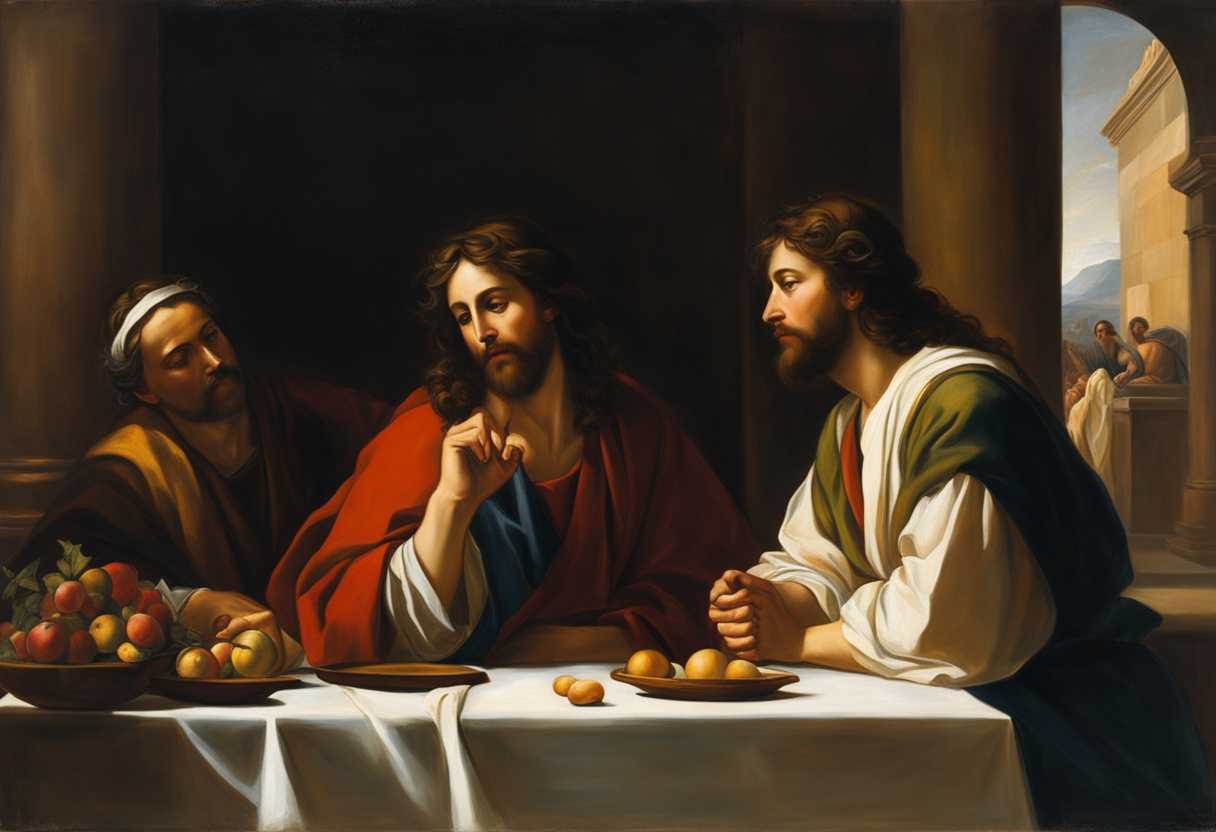
Setting the Scene for John 13:36-38
The scene in John chapter 13 takes place during the Last Supper, a significant event in the life of Jesus and his disciples. Jesus and his twelve disciples, including Peter, John, James, and the others, are gathered in an upper room in Jerusalem to share a final meal before Jesus’ crucifixion. The room is dimly lit by oil lamps, casting a warm glow over the group as they recline at the table.
As they eat, Jesus drops a bombshell by revealing that one of his disciples will betray him. This news causes a stir among the group, with each disciple questioning if they could be the one to betray their beloved teacher. Peter, always eager and impulsive, boldly declares that he would never betray Jesus, even if it meant laying down his life for him. However, Jesus foretells that Peter will deny him three times before the rooster crows.
The tension in the room is palpable as Jesus and his disciples grapple with the impending betrayal and denial. Despite the somber atmosphere, there is a sense of camaraderie and love among the group, as they share this intimate and emotional moment together before the events of Jesus’ crucifixion unfold.
What is John 13:36-38 about?
When we examine this verse, we see a powerful example of the foresight and wisdom of Jesus. He prophesies that Peter, one of his closest disciples, would deny him three times before the rooster crows. This prediction is a heartbreaking moment foreshadowing the events leading to Jesus’ crucifixion. It highlights the human weakness and fallibility even among those who are closest to God. Reflecting on this verse prompts us to consider the complexities of faith, loyalty, and human nature. We are reminded that even the most dedicated followers can falter in times of trial. It challenges us to examine our own vulnerabilities and the strength of our convictions. Are we willing to stand firm in our beliefs, even when faced with adversity? Can we learn from Peter’s denial and strive to strengthen our faith and integrity in challenging circumstances? This verse serves as a poignant reminder of the importance of staying true to our beliefs and seeking forgiveness and redemption when we fall short.
Understanding what John 13:36-38 really means
In the poignant narrative of the Last Supper, John 13:36-38 captures a moment of profound significance between Jesus and Peter. As Jesus foretells His impending departure, Peter, ever impulsive and devoted, expresses his eagerness to follow his beloved teacher. However, Jesus cryptically informs Peter that his current path does not align with where Jesus is headed, foreshadowing the imminent trials that Peter will face. This exchange sets the stage for a dramatic revelation of human frailty and divine foresight.
Jesus’ words, “Where I am going, you cannot follow now, but you will follow later,” carry a weighty message of sacrifice and redemption. By alluding to His crucifixion and ascension, Jesus underscores the temporal limitations of human understanding and the ultimate victory that awaits those who remain faithful. In response to Peter’s fervent declaration of loyalty, Jesus poses a probing question, “Will you really lay down your life for me?” This interrogation pierces through Peter’s bravado, exposing the gaping chasm between human resolve and divine knowledge.
The somber prophecy, “Before the rooster crows, you will disown me three times!” reverberates with the harsh reality of human fallibility. Despite Peter’s professed allegiance, his denial of Jesus looms ominously on the horizon, a stark reminder of the frail nature of human commitment. This narrative echoes across the Gospels, with parallel accounts in Matthew, Luke, and Mark, painting a vivid portrait of Peter’s struggle and eventual redemption.
In a world marked by uncertainty and moral ambiguity, the story of Peter resonates deeply with contemporary audiences. It serves as a poignant reminder of the delicate balance between faith and doubt, loyalty and betrayal. Just as Peter’s journey from denial to restoration exemplifies the transformative power of divine grace, so too can we find solace in the knowledge that our failures are not the final chapter of our story.
Consider the modern-day parallel of David, a zealous young man whose faith is tested in the crucible of personal crisis. Like Peter, David’s initial fervor is tempered by moments of doubt and weakness. Yet, through the unwavering support of his faith community and the boundless grace of God, David discovers that true strength lies not in his own abilities but in his reliance on the divine.
In conclusion, John 13:36-38 serves as a poignant reminder of the intricate interplay between human frailty and divine grace. It challenges us to confront our limitations with humility, to embrace our vulnerabilities with courage, and to trust in the redemptive power of a God whose love knows no bounds. Just as Peter’s journey from denial to restoration offers hope and renewal, so too can we find solace in the enduring promise of a faith that transcends our failings.
How can we remain faithful to Jesus during trials?
To remain faithful to Jesus during trials, we can learn from Peter’s experience in John 13:36-38. Despite his initial bold proclamation of unwavering loyalty to Jesus, Peter later denied Him three times out of fear and weakness. This serves as a reminder that even the most devoted followers may falter in times of adversity. However, the key is not to let our failures define us, but to repent, seek forgiveness, and strive to walk closely with Jesus once again.
When faced with trials, it is important to stay rooted in prayer and seek strength from God. We can draw closer to Jesus and find the courage and endurance needed to navigate challenges by maintaining consistent communication through prayer, meditation on scripture, and fellowship with other believers. Additionally, remembering Jesus’ own words of encouragement and promises of His presence and help can provide comfort and reassurance during difficult times. Keeping our focus on Jesus and trusting in His faithfulness is crucial in times of trial. We can find hope, peace, and strength to persevere through the storms of life by fixing our eyes on Him. We too can experience restoration and renewal in our faith journey when we turn back to Jesus in humility and reliance on His grace, just as Jesus reinstated Peter and continued to use him for His purposes despite his denial.
Application
Imagine working tirelessly to meet a deadline or being there for family when they need you most. In John 13:36-38, Peter denies Jesus three times. How often do we falter in our faith when faced with life’s pressures? Use this reminder to fortify your commitment to Christ, regardless of the challenges. Will you stand unwavering for your faith when it truly counts?

Reverend Michael Johnson is an experienced Church Minister with a profound expertise in spirituality and guidance. With a serene presence and a compassionate heart, he has faithfully served his congregation for over 20 years, leading them on a spiritual journey towards inner peace and enlightenment. Reverend Johnson’s extensive knowledge of religious philosophies and profound understanding of human nature have made him a trusted confidant and mentor to many, as he seamlessly weaves his profound wisdom into life teachings. Reverend Johnson’s calming demeanor and empathetic nature continue to uplift and heal souls, nurturing a sense of unity and tranquility within his community.