
John 14:22-24 is about Jesus explaining that those who love Him will obey His teachings, and through their obedience, both Jesus and God the Father will make their home with them.
22 Judas (not Iscariot) said to him, “Lord, how is it that you will manifest yourself to us, and not to the world?”
23 Jesus answered him, “If anyone loves me, he will keep my word, and my Father will love him, and we will come to him and make our home with him.
24 Whoever does not love me does not keep my words. And the word that you hear is not mine but the Father’s who sent me.
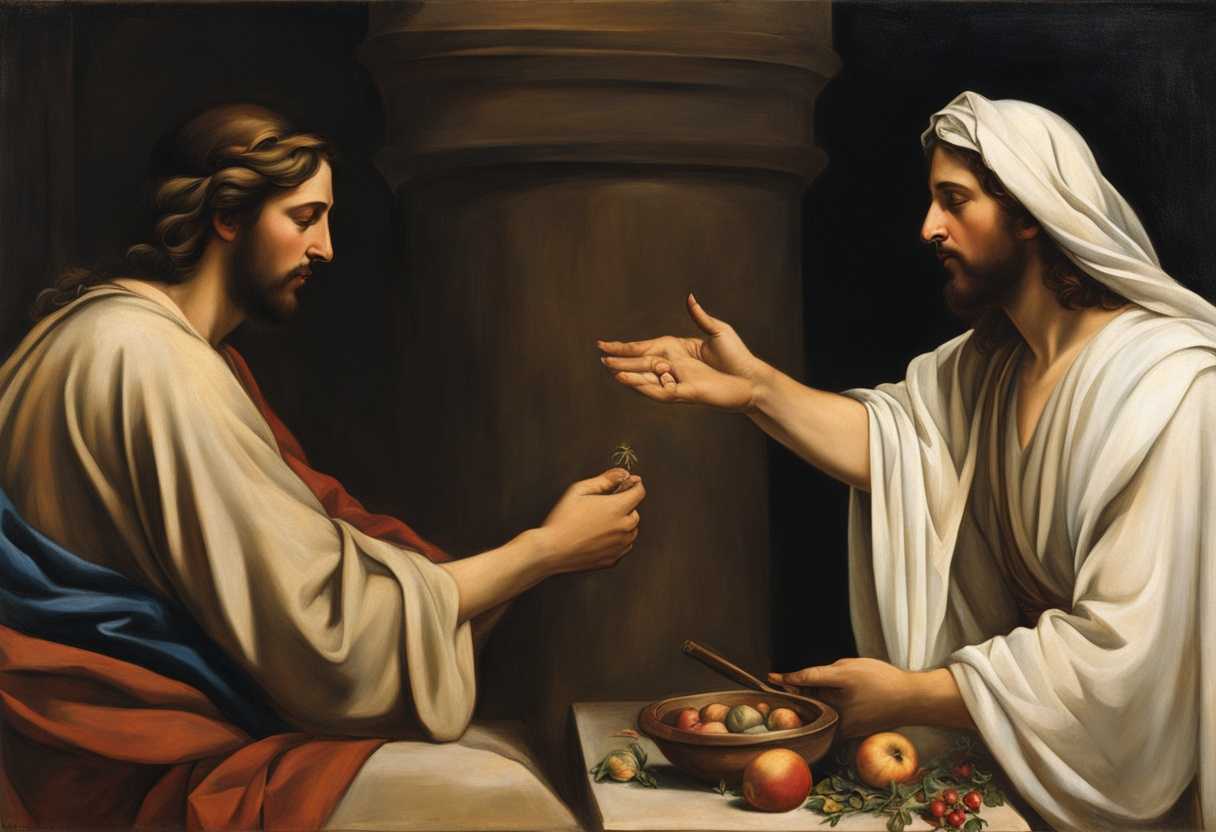
Setting the Scene for John 14:22-24
In John chapter 14, we find Jesus speaking to His disciples in the upper room in Jerusalem, just before His crucifixion. The room is dimly lit by oil lamps, casting a warm glow on the faces of those gathered. The air is heavy with anticipation and the disciples are gathered closely around Jesus, hanging on His every word.
Among the disciples present are Peter, James, John, Thomas, and Philip, each with a look of concern and confusion on their faces as Jesus speaks about His impending departure. They had followed Him for years, witnessed miracles, and heard profound teachings, but now they were faced with the reality of Jesus leaving them.
As Jesus speaks about the coming of the Holy Spirit and the importance of keeping His commandments, the disciples listen intently, trying to grasp the depth of His words. They are a mix of emotions – fear, sadness, and uncertainty – as they try to come to terms with what the future holds. Jesus, in His infinite wisdom and love, reassures them of His presence and promises that those who love Him will be loved by the Father. The scene is one of intimacy, vulnerability, and profound spiritual teaching that would shape the disciples’ understanding of their faith in the days to come.
What is John 14:22-24 about?
Imagine walking with Jesus, feeling His presence beside you as He shares the depths of His wisdom. He emphasizes the connection between love and obedience in this verse. He invites us to ponder deeply: How do we demonstrate our love for Jesus? Is it through our words alone, or is it through our actions and the way we live out His teachings?
When Jesus mentions obeying His commandments, He isn’t speaking of blind adherence to rules but of embodying His teachings in our daily lives. He is asking us to align our actions with His words, to demonstrate our love for Him by following His guidance and spreading His message of love and compassion to others. We reflect on this verse, prompting us to examine our own lives. Are we truly embracing Jesus’s teachings in our actions? Are we showing our love for Him through our choices and interactions with others? We should strive to not only profess our love for Jesus but also to live it out tangibly each day, knowing that our obedience to His teachings is a powerful expression of our love for Him.
Understanding what John 14:22-24 really means
In the poignant farewell discourse of Jesus to His disciples, as He readies them for His departure and the advent of the Holy Spirit, the verses in John 14:22-24 illuminate a profound connection between love, obedience, and the divine presence. Jesus unequivocally states that genuine love for Him is evidenced through obedience to His teachings, underscoring the active nature of love in the Christian faith. The promise that God the Father and Jesus will make their home with those who love and obey Him speaks to the intimate relationship and indwelling presence of the divine in the lives of believers, offering a profound sense of closeness and communion with God.
The interplay between love and obedience is a recurring theme in the Bible, resonating with passages like John 15:10, which reinforces the idea that abiding in God’s love is intricately linked to keeping His commands. Similarly, 1 John 5:3 emphasizes that true love for God is manifested through obedience, portraying His commands not as burdensome obligations but as expressions of love and devotion. Revelation 3:20 further echoes the promise of divine presence, illustrating the invitation for a personal and intimate relationship with Jesus, where His presence is a constant and comforting reality for those who open their hearts to Him.
In a contemporary world where love is often reduced to mere sentiment or fleeting emotions, these verses serve as a clarion call for a deeper understanding of love as an active and obedient response to Jesus. The assurance of God’s abiding presence offers solace and certainty, particularly in moments of doubt or solitude, reminding believers that they are never alone but continually surrounded by the love and presence of God. The challenge to obedience not only shapes individual lives but also influences communities, fostering a culture of faithfulness and authenticity among believers.
Consider a parent-child relationship where love is demonstrated through actions rather than words. Just as a child shows love for their parent by heeding their guidance and rules, our love for Jesus is exemplified through our willingness to follow His teachings. Reflect on a personal testimony within our congregation, where a member grappled with a difficult teaching of Jesus but found peace and a deepened sense of God’s presence through prayerful obedience. This narrative underscores the transformative power of aligning our actions with our professed love for Christ.
In conclusion, these verses beckon us to a more profound and committed relationship with Jesus, where love and obedience intertwine to form the bedrock of our faith. They remind us that God’s presence is not a distant concept but a tangible reality intricately woven into our daily lives through our love and obedience to Him. As we endeavor to live out these truths, we open ourselves to the fullness of God’s love and presence, experiencing a depth of relationship with Him that transcends mere words or emotions, and permeates every aspect of our existence.
How can we truly love and obey God?
To truly love and obey God, we must keep His commandments with a genuine heart of obedience and faith. This involves not just following a list of rules out of obligation, but aligning our actions and attitudes with the will of God because we love Him. True obedience stems from a deep love for God, which drives us to live in a way that pleases Him.
Our love for God should be reflected in our actions towards Him and others. This means showing love, compassion, and mercy towards one another, just as God has shown us. We demonstrate our love for God by loving others and caring for them. Obedience flows naturally from a heart filled with love for God, as we seek to honor Him in all that we do. To truly love and obey God is to have a personal, intimate relationship with Him ultimately. This relationship is built on communication, prayer, worship, and a desire to know Him more deeply. Our obedience becomes a joyful response to His love for us as we grow in our love for God. Our love and obedience to God are intertwined, shaping our lives to reflect His love and light to the world.
Application
Let’s think of our relationship with Christ like a team effort, where we show our commitment through our actions. Are we genuinely embodying Jesus’s teachings out of love, or is there room for more? Let’s step up and align our daily choices with His will, making our faith tangible through what we do. How will you take up this challenge to grow in love and obedience towards the Lord?

Reverend Michael Johnson is an experienced Church Minister with a profound expertise in spirituality and guidance. With a serene presence and a compassionate heart, he has faithfully served his congregation for over 20 years, leading them on a spiritual journey towards inner peace and enlightenment. Reverend Johnson’s extensive knowledge of religious philosophies and profound understanding of human nature have made him a trusted confidant and mentor to many, as he seamlessly weaves his profound wisdom into life teachings. Reverend Johnson’s calming demeanor and empathetic nature continue to uplift and heal souls, nurturing a sense of unity and tranquility within his community.