
28 You heard me say to you, ‘I am going away, and I will come to you.’ If you loved me, you would have rejoiced, because I am going to the Father, for the Father is greater than I.
Setting the Scene for John 14:28
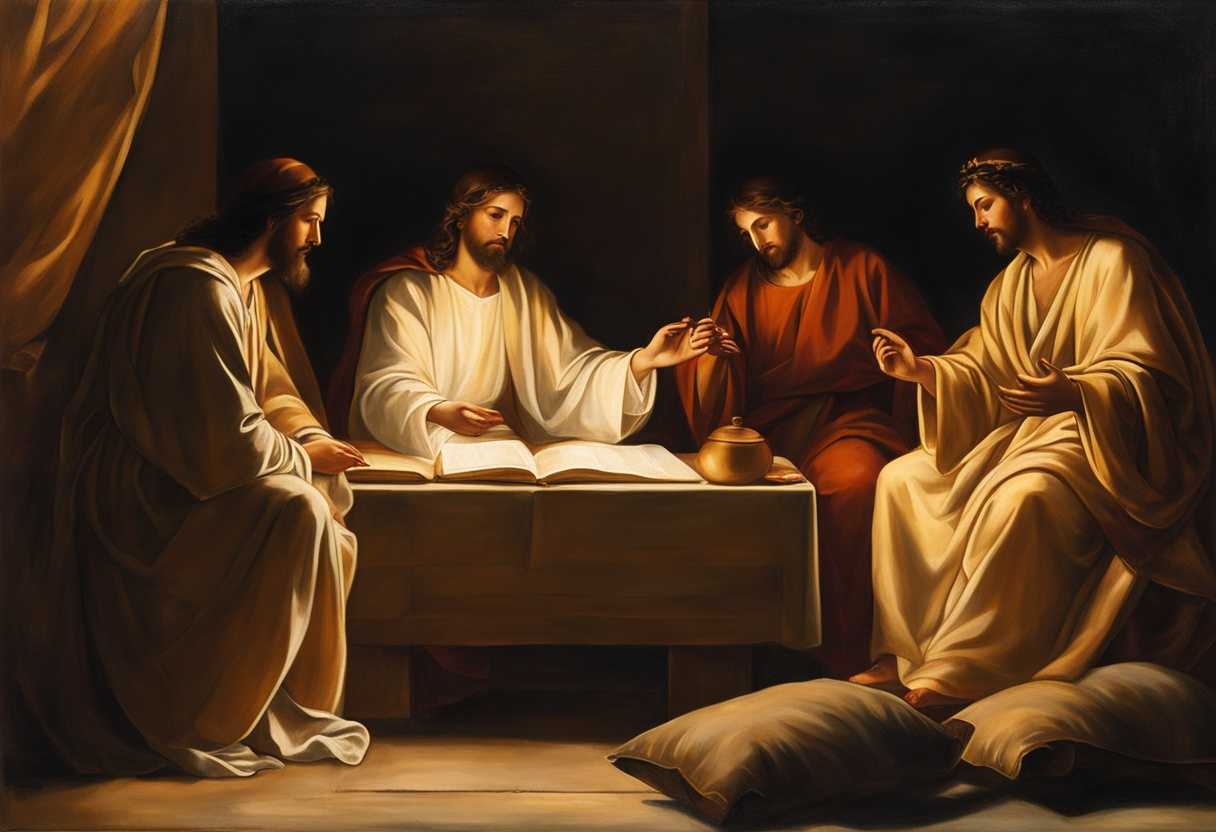
In John chapter 14, we find Jesus speaking to his disciples in the upper room in Jerusalem, just before his crucifixion. The room is dimly lit by oil lamps, casting a warm glow on the faces of those gathered. The disciples are seated around a low table, their expressions a mix of confusion and concern as Jesus speaks to them about his impending departure.
Among the disciples present are Peter, James, John, Thomas, and Philip, each listening intently to Jesus’ words. They had come to the upper room after sharing the Passover meal with Jesus, where he had washed their feet and foretold of his betrayal by Judas. The atmosphere is heavy with emotion, as the disciples grapple with the news that their beloved teacher will soon be taken from them.
As Jesus speaks, he reassures his disciples that although he must leave them physically, he will not leave them alone. He promises to send the Holy Spirit to be their comforter and guide in his absence. Despite the sorrow and uncertainty in the room, there is a sense of peace that descends as Jesus reminds them that his departure is necessary for the fulfillment of God’s plan.
What is John 14:28 about?
This verse highlights the powerful bond between Jesus and His disciples, assuring them of His imminent return to the Father after completing His mission on Earth. His words convey a sense of comfort and reassurance, reminding the disciples of His divine origin and the ultimate purpose of His presence among them. Jesus emphasizes the significance of His teachings and the fulfillment of his role as the Son of God by emphasizing His relationship with the Father. Jesus instilled profound trust and faith in His disciples as you reflect on these words. Imagine the sense of hope and assurance they must have felt, knowing that despite His physical absence, Jesus was returning to the Father to continue His divine work. This verse serves as a reminder of the unwavering connection between Jesus and His followers, encouraging us to trust in His promises and to remain steadfast in our faith, even in times of uncertainty or difficulty. Let these words inspire you to strengthen your own relationship with Jesus and to place your trust in His eternal plan for salvation and redemption.
Understanding what John 14:28 really means
Commentary Structure:
- Introduction to the Verse
- Context within the Chapter
- Key Phrases and Their Meanings
- Cross-References to Other Scriptures
- Relevance Today
- Anecdote for Illustration
- Conclusion and Reflection
Commentary:
-
Introduction to the Verse
John 14:28 is a pivotal verse where Jesus speaks to His disciples about His departure, return, and relationship with the Father. This verse encapsulates themes of comfort, reassurance, and divine hierarchy. Let’s delve into its context and meaning to fully appreciate its depth. -
Jesus is preparing His disciples for His imminent departure in John 14. He comforts them with promises of the Holy Spirit and His eventual return. This chapter is rich with the themes of love, obedience, and divine presence. The verse in question is part of this larger dialogue aimed at providing solace and understanding to His followers.
-
Key Phrases and Their Meanings
- “You heard me say, ‘I am going away and I am coming back to you.’” Here, Jesus reiterates His earlier statement, emphasizing the certainty of both His departure and return. This dual promise is foundational for Christian hope.
- “If you loved me, you would be glad that I am going to the Father.” This phrase challenges the disciples to shift their perspective from sorrow to joy. It suggests that true love for Jesus includes rejoicing in His reunion with the Father.
-
“For the Father is greater than I.” This statement underscores the distinct roles within the Trinity, highlighting Jesus’ submission to the Father’s will while affirming their unity in essence.
-
Cross-References to Other Scriptures
- Philippians 2:6-8 speaks of Jesus’ humility and obedience, even to the point of death, which complements His submission to the Father mentioned in John 14:28. Jesus explains in John 16:7 that His departure is necessary for the coming of the Helper, the Holy Spirit, which aligns with the promise of His return and continued presence through the Spirit.
-
Hebrews 1:3 portrays Jesus as the radiance of God’s glory and the exact representation of His being, reinforcing the idea of their unique yet unified roles.
-
Relevance Today
The reassurance Jesus offers in this verse is timeless. His promises provide a foundation of hope in a world filled with uncertainty and change. Understanding the relationship between Jesus and the Father can deepen our faith and trust in God’s greater plan. This verse invites us to find joy in divine purposes, even when they are beyond our immediate understanding. -
Anecdote for Illustration
Imagine a child whose parent is going away for a while. The parent reassures the child, explaining that the separation is necessary for a better future. Though the child might feel sadness, the parent’s promise of return and a better situation brings comfort. Similarly, Jesus’ departure was a step towards a greater good—the coming of the Holy Spirit and the ultimate reunion in heaven. -
Conclusion and Reflection
John 14:28 is more than a historical conversation; it is a message of hope and trust. It calls us to rejoice in God’s divine plan, even when it involves temporary separation or hardship. Reflect on how this verse can transform your perspective on life’s challenges. Are you able to find joy in God’s greater plan, trusting in His promises? Meditate on this verse to deepen your love for Jesus and your trust in the Father’s perfect will.
How can we grow in our humility?
We can grow in our humility by recognizing that ultimately, all good things come from God. Understanding that He is greater than us helps to humble ourselves before Him. We demonstrate humility in our actions and attitude by acknowledging His sovereignty over our lives and submitting to His will.
Furthermore, we can cultivate humility by acknowledging our own limitations and weaknesses. Instead of relying solely on our own abilities and understanding, we can seek guidance and wisdom from God and others. This willingness to recognize our need for help and guidance shows humility by acknowledging that we are not self-sufficient. Growing in humility ultimately involves continually reflecting on oneself, repenting, and seeking to follow the example of Jesus. We can develop a humble heart that reflects the character of Christ by recognizing our own shortcomings and striving to align our thoughts and actions with God’s will.
Application
Imagine you’re working tirelessly, balancing your career and family life. Just like waiting for that important email or eagerly anticipating a family reunion, Jesus’ promise to return should fuel your every action. John 14:28 reminds you to stay prepared and let faith steer your decisions. Will you let worldly distractions dictate your life, or will you live each day in anticipation, rooted in the promise of His return?

Reverend Michael Johnson is an experienced Church Minister with a profound expertise in spirituality and guidance. With a serene presence and a compassionate heart, he has faithfully served his congregation for over 20 years, leading them on a spiritual journey towards inner peace and enlightenment. Reverend Johnson’s extensive knowledge of religious philosophies and profound understanding of human nature have made him a trusted confidant and mentor to many, as he seamlessly weaves his profound wisdom into life teachings. Reverend Johnson’s calming demeanor and empathetic nature continue to uplift and heal souls, nurturing a sense of unity and tranquility within his community.