
John 14:5-11 is about Philip wanting Jesus to show them the Father, to which Jesus explains that seeing Him is seeing the Father, emphasizing their inseparable connection and identity.
5 Thomas said to him, “Lord, we do not know where you are going. How can we know the way?”
6 Jesus said to him, “I am the way, and the truth, and the life. No one comes to the Father except through me.
7 If you had known me, you would have known my Father also. From now on you do know him and have seen him.
8 Philip said to him, “Lord, show us the Father, and it is enough for us.”
9 Jesus said to him, “Have I been with you so long, and you still do not know me, Philip? Whoever has seen me has seen the Father. How can you say, ‘Show us the Father’?
10 Do you not believe that I am in the Father and the Father is in me? The words that I say to you I do not speak on my own authority, but the Father who dwells in me does his works.
11 Believe me that I am in the Father and the Father is in me, or else believe on account of the works themselves.
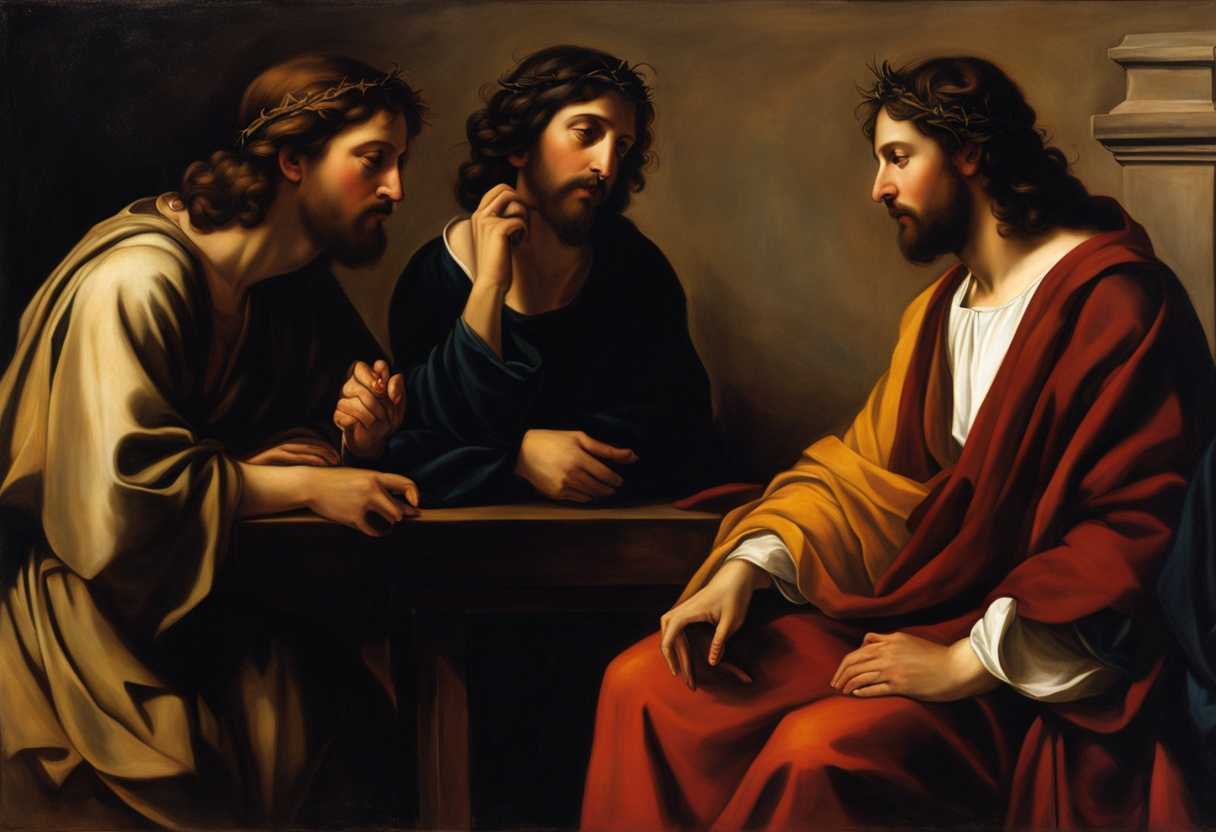
Setting the Scene for John 14:5-11
In John chapter 14, we find Jesus speaking to his disciples in the upper room in Jerusalem, just before his crucifixion. The room is dimly lit by oil lamps, casting a warm glow on the faces of those gathered. The disciples are seated around a low table, their expressions a mix of confusion and concern as Jesus talks about his impending departure.
Peter, Thomas, Philip, and the other disciples are present, their eyes fixed on Jesus as he speaks with a calm authority. Thomas, known for his skepticism, speaks up, voicing the questions that weigh on the minds of all the disciples. Philip, ever practical, seeks clarification on how they can know the way to where Jesus is going. Jesus, in his gentle yet firm manner, reassures them, “I am the way and the truth and the life. No one comes to the Father except through me.” His words hang in the air, offering comfort and guidance to his beloved followers in their time of uncertainty.
What is John 14:5-11 about?
This verse emphasizes the exclusive role of Jesus as the pathway to God. It is a profound statement that highlights the unique relationship between Jesus and God the Father. Through this verse, we are reminded that Jesus serves as the mediator between humanity and God, bridging the gap created by sin and offering us salvation and reconciliation with our Creator. By knowing and following Jesus, we not only gain a deeper understanding of His teachings and example but also establish a direct connection with God Himself.
We establish a direct connection with God Himself by knowing and following Jesus.
Have you ever pondered on the significance of Jesus being the only way to God? It invites us to reflect on the fundamental tenets of our faith and reassures us of the central role that Jesus plays in our spiritual journey. When we seek to know Jesus more intimately, we are also seeking to know the Father who sent Him. This verse challenges us to consider the depth of our relationship with Jesus and how it impacts our relationship with God. It prompts us to question our understanding of salvation and the importance of Jesus as the cornerstone of our faith. God has shown us profound love and grace through Jesus Christ, ultimately serving as a powerful reminder.
Understanding what John 14:5-11 really means
During the Last Supper, Jesus spoke to His disciples, imparting crucial teachings before His departure. In John 14:5-11, Jesus unveils His divine nature and unity with the Father, emphasizing the importance of faith and understanding in the journey of faith. He declares, “I am the way and the truth and the life,” signifying that He is the path to God, the embodiment of divine truth, and the source of eternal life. This statement encapsulates the essence of Christianity, highlighting Jesus as the exclusive mediator between humanity and God, as He proclaims, “No one comes to the Father except through me.”
Furthermore, Jesus emphasizes the inseparable relationship between Himself and the Father, stating, “If you really know me, you will know my Father as well.” This profound connection between Jesus and God the Father is reiterated when He declares, “Anyone who has seen me has seen the Father,” emphasizing their oneness and revealing the divine nature of Jesus. The intimate union between Jesus and the Father is further emphasized as Jesus asserts, “Believe me when I say that I am in the Father and the Father is in me,” underscoring their unity and mutual indwelling.
These key phrases in John 14:5-11 resonate with other passages in the Bible that affirm Jesus’ divine nature and role as the mediator between God and humanity. In John 1:1-14, Jesus is described as the Word who was with God and is God, reinforcing His divine identity. Similarly, in Colossians 1:15-20, Paul speaks of Jesus as the image of the invisible God, the firstborn over all creation. Hebrews 1:3 further emphasizes Jesus as the radiance of God’s glory and the exact representation of His being, highlighting His divine essence.
The relevance of Jesus’ words in John 14:5-11 extends to people today, offering assurance of salvation, understanding of God’s character, and opportunities to strengthen faith. In a world filled with uncertainty, Jesus provides a clear path to God, offering hope and certainty in the midst of challenges. Through Jesus, we gain a clearer understanding of God’s character and His immense love for humanity, deepening our relationship with the divine. Believers are encouraged to strengthen their faith and trust in Jesus as the true revelation of God, guiding them on their spiritual journey.
In reflecting on Jesus’ words, imagine a lost child in a crowded place, feeling scared and confused. Suddenly, they see their parent, who takes their hand and leads them safely home. Similarly, Jesus is our guide, leading us to the Father. Just as the child trusts their parent, we are called to trust Jesus to lead us to God, knowing that He is the way, the truth, and the life. Jesus’ words in John 14:5-11 are a profound revelation of His divine identity and His role as the mediator between humanity and God. By understanding and believing in Jesus, we find the way to eternal life and a deeper relationship with God.
How can we truly know and see God?
Jesus explains to Thomas in these verses that by knowing Him, they will also know and see the Father. This reveals that the key to truly knowing and seeing God is through a personal relationship with Jesus Christ. Jesus, being God in human form, is the perfect reflection of the Father’s nature and character. Knowing Jesus helps us understand the heart of God and His will for our lives.
Furthermore, Jesus emphasizes the interconnectedness of Himself, the Father, and believers. Through faith in Jesus and obedience to His teachings, we can experience a deep and intimate relationship with God. This relationship is not based on physical sight but on spiritual insight and understanding. We can truly come to know and see God in our lives and in the world around us by walking in faith and living out the teachings of Jesus. The words and works of Jesus ultimately point us towards the Father, revealing His love, mercy, and grace. We open our hearts to know and see God in a profound and meaningful way as we study the life of Jesus recorded in the Gospels and allow His teachings to transform us. Through faith in Jesus, we can experience the presence of God in our daily lives and witness His power at work in and through us.
Application
Imagine Jesus as the ultimate guide through the complexities of work and family life. He declares Himself the way, the truth, and the life. Believe in Him and let His teachings shape your actions. Strengthen your bond with Christ and reflect His love in every interaction. Are you willing to follow His path and live His example everyday?

Reverend Michael Johnson is an experienced Church Minister with a profound expertise in spirituality and guidance. With a serene presence and a compassionate heart, he has faithfully served his congregation for over 20 years, leading them on a spiritual journey towards inner peace and enlightenment. Reverend Johnson’s extensive knowledge of religious philosophies and profound understanding of human nature have made him a trusted confidant and mentor to many, as he seamlessly weaves his profound wisdom into life teachings. Reverend Johnson’s calming demeanor and empathetic nature continue to uplift and heal souls, nurturing a sense of unity and tranquility within his community.