
John 14:7-11 is about the concept that to know Jesus is to know God the Father, as they are one and the same, reflecting the inseparable relationship between Jesus and God and the importance of faith in recognizing this divine connection.
7 If you had known me, you would have known my Father also. From now on you do know him and have seen him.
8 Philip said to him, “Lord, show us the Father, and it is enough for us.”
9 Jesus said to him, “Have I been with you so long, and you still do not know me, Philip? Whoever has seen me has seen the Father. How can you say, ‘Show us the Father’?
10 Do you not believe that I am in the Father and the Father is in me? The words that I say to you I do not speak on my own authority, but the Father who dwells in me does his works.
11 Believe me that I am in the Father and the Father is in me, or else believe on account of the works themselves.
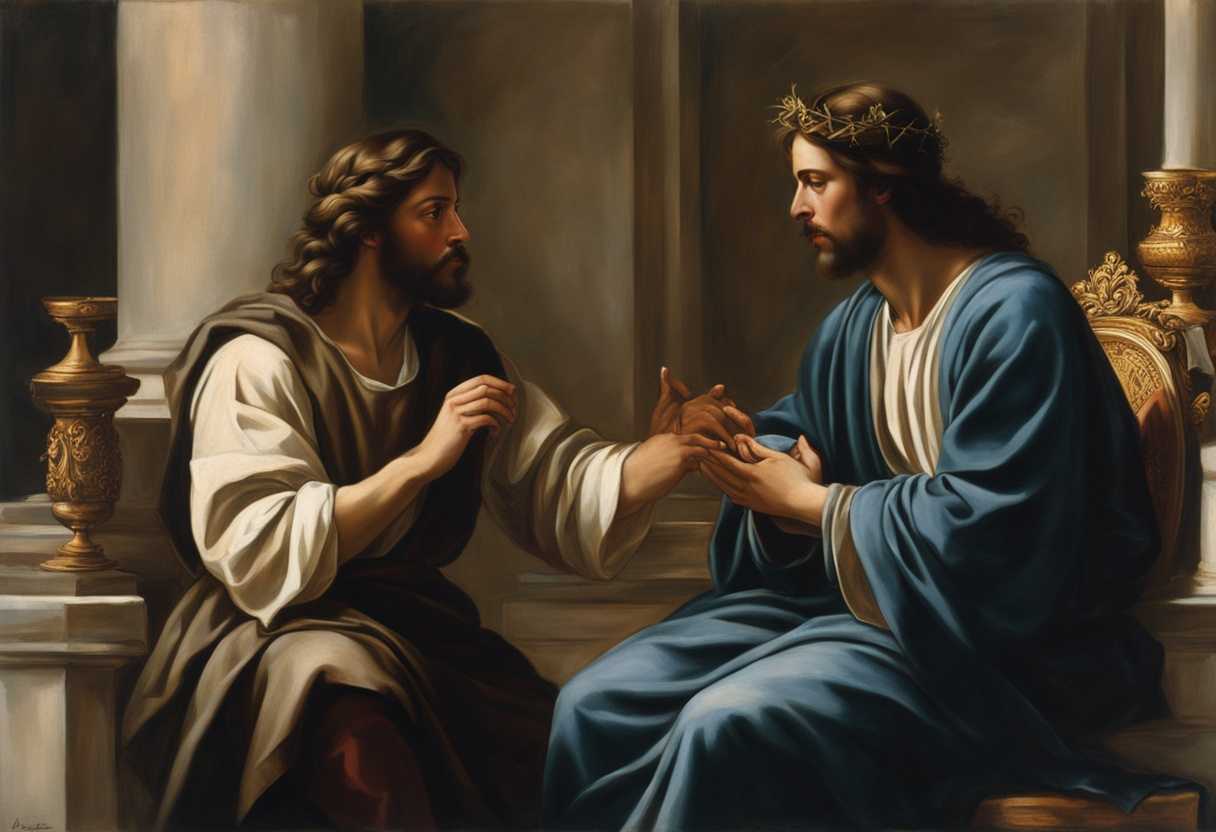
Setting the Scene for John 14:7-11
In John chapter 14, we find Jesus speaking to his disciples in the upper room in Jerusalem, just before his crucifixion. The room is dimly lit by oil lamps, casting a warm glow on the faces of those gathered. The disciples are seated around a low table, their expressions a mix of confusion and concern as Jesus talks about his impending departure.
Peter, Andrew, James, John, and the other disciples are all present, having followed Jesus faithfully throughout his ministry. They have come to trust him deeply, but now they are grappling with the news that he will soon be leaving them. Jesus speaks with a calm assurance, assuring them that although he will physically leave them, he will send the Holy Spirit to be with them always.
As Jesus talks about his unity with the Father and the importance of knowing him, the disciples listen intently, trying to grasp the depth of his words. They are witnessing a profound moment of teaching and intimacy with their beloved teacher, as he prepares them for the challenges that lie ahead.
What is John 14:7-11 about?
This verse from the Bible is an incredibly profound statement made by Jesus, emphasizing the interconnectedness and unity between Him and God the Father. Jesus is revealing in this statement that knowing Him is essentially knowing the Father, showcasing the divine relationship and oneness they share. This declaration not only highlights the closeness and intimacy between Jesus and God but also underscores their shared essence and nature.
Have you ever reflected on the significance of this verse and how it deepens our understanding of the Trinity? It’s truly remarkable to consider how Jesus, as the Son of God, embodies the essence of the Father, leading us to a deeper recognition of their unity. This verse challenges us to contemplate the mystery of the Trinity and the intricate relationship between the Father, Son, and Holy Spirit. We are drawn into a deeper exploration of the divine nature and the interconnectedness of the Trinity by recognizing Jesus as the embodiment of the Father.
Understanding what John 14:7-11 really means
During the Last Supper, Jesus spoke to His disciples, preparing them for His imminent departure. In this crucial moment, He emphasized the unity between Himself and the Father, revealing that knowing Him is synonymous with knowing God the Father. This intimate connection underscores Jesus as the visible representation of the invisible God, highlighting the profound relationship between the two. When Jesus declared, “Anyone who has seen me has seen the Father,” He was affirming His role as the physical manifestation of God on earth, reinforcing the concept of the Trinity where Jesus and the Father are distinct yet inseparable.
Moreover, Jesus made it clear that His words were not spoken on His own authority but were divinely inspired, carrying the weight of God’s truth and wisdom. This assurance was vital for the disciples, instilling confidence in the reliability and authenticity of Jesus’ teachings. By proclaiming, “Believe me when I say that I am in the Father and the Father is in me,” Jesus pointed to a deep unity and shared essence between Himself and God, calling for unwavering faith in His divine nature and unique relationship with the Father.
The passages in John 1:1-14, Colossians 1:15-20, and Hebrews 1:3 further illuminate the identity of Jesus as the Word made flesh, the image of the invisible God, and the exact representation of God’s being. Understanding Jesus’ divine nature not only strengthens believers’ trust in His teachings and promises but also provides a clearer revelation of God’s character and love. In a world marked by uncertainty, recognizing that Jesus speaks with the authority of God offers solace and direction, guiding believers in their faith journey.
Consider a child lost in a bustling crowd who finds immediate comfort and security upon seeing their parent. Similarly, when we grasp the unity between Jesus and the Father, we discover spiritual reassurance and peace in our relationship with God. Reflecting on personal experiences, individuals may resonate with a friend who, after grappling with understanding God’s nature, found profound insight in realizing that knowing Jesus intimately led to a deeper connection with God. This transformation in faith brought about a profound sense of trust and closeness to God’s presence in their life.
In conclusion, John 14:7-11 beckons us to delve deeper into our relationship with Jesus, recognizing that through Him, we encounter the fullness of God. This passage serves as a poignant reminder of Jesus’ divine authority and His pivotal role as the ultimate revelation of God’s love and character, inviting us to embrace His teachings with faith and conviction.
Do we truly know and reflect Jesus in our lives?
We are reminded in reflecting on the essence of these verses that knowing and reflecting Jesus in our lives is not merely about religious knowledge or external appearances. It involves a deep and intimate relationship with Him, embracing His teachings, and allowing His love and grace to transform us from the inside out. To truly know and reflect Jesus means to live in alignment with His character and values, to love others unconditionally, and to walk in obedience to His commands.
Jesus emphasizes the inseparable connection between knowing Him and knowing the Father. We understand and experience the love, truth, and power of God revealed through Jesus as we seek to grow in our relationship with Him. Our reflection of Jesus in our lives becomes a testament to the world of His presence in us, pointing others towards the source of our faith and hope.
Through our actions, words, and attitudes, we have the opportunity to mirror the character of Jesus to those around us. It is through our daily interactions, our commitment to love and serve others, and our unwavering faith in Him that we can authentically reflect Jesus in our lives. May we continually seek to deepen our relationship with Him, allowing His light to shine through us and draw others to Him.
Application
Think of life as a demanding job or nurturing a family. Just as you strive for success or care for loved ones, dive into John 14:7-11. Know Jesus, and you’ll understand the Father’s love and character, both essential to your life’s mission. Draw closer to Him each day—let His light guide your work and family. Aren’t the most rewarding paths in life those where we invest our hearts fully?

Reverend Michael Johnson is an experienced Church Minister with a profound expertise in spirituality and guidance. With a serene presence and a compassionate heart, he has faithfully served his congregation for over 20 years, leading them on a spiritual journey towards inner peace and enlightenment. Reverend Johnson’s extensive knowledge of religious philosophies and profound understanding of human nature have made him a trusted confidant and mentor to many, as he seamlessly weaves his profound wisdom into life teachings. Reverend Johnson’s calming demeanor and empathetic nature continue to uplift and heal souls, nurturing a sense of unity and tranquility within his community.